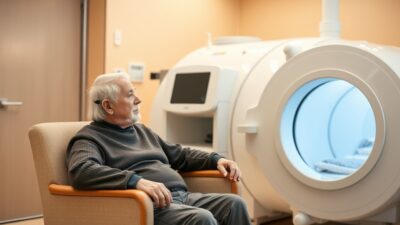
HBOT is studied across a wide range of brain conditions, and the evidence varies sharply by diagnosis. It is strongest for traumatic brain injury and chronic stroke recovery, moderate for PTSD and post-concussion syndrome, and only emerging for Alzheimer’s, dementia, depression, and Parkinson’s. The brain consumes 20% of the body’s oxygen while making up just 2% of its mass, which makes restoring oxygen delivery biologically plausible, though far from uniformly proven across these conditions.
What This Page Covers
When injury, inflammation, or disease disrupts the brain’s oxygen supply, brain tissue enters metabolic crisis. Hyperbaric oxygen therapy (HBOT) delivers 100% oxygen at increased atmospheric pressure, raising tissue oxygen far beyond what normal breathing achieves. More than two decades of research have tested whether that oxygen boost can meaningfully improve outcomes in stroke, TBI, cerebral palsy, and other neurological conditions.
This page is a navigation hub for our in-depth condition articles on HBOT and neurological health. Below you will find a short summary of the evidence for each condition, with links to the full articles. We also include a section on what to discuss with your neurologist before starting HBOT, plus general resources on cost, side effects, and the research landscape. The evidence varies significantly across conditions, and we aim to be honest about where the science is strong, where it is promising but preliminary, and where uncertainty still dominates.
Why Does the Brain Respond to Hyperbaric Oxygen?
Neurons are highly oxygen-dependent and vulnerable to hypoxia. When blood flow is disrupted by a stroke, when inflammation starves tissue of oxygen after a traumatic injury, or when neurodegeneration degrades vascular function, brain cells begin to malfunction or die. The penumbra around an injured area, the zone of tissue that is damaged but not yet dead, is of particular interest in HBOT research. Saturating this tissue with high-dose oxygen may prevent further cell death and support recovery of function.
HBOT also exerts anti-inflammatory effects that matter in neurological disease. Reactive oxygen species generated during pressurized oxygen exposure, at the right dose, appear to trigger adaptive cellular responses rather than cause damage. Hachmo and colleagues, publishing in the journal Aging in 2020, found that HBOT lengthened telomeres and reduced the burden of senescent immune cells in aging adults, pointing to mechanisms relevant to neurodegeneration beyond simple oxygen delivery.5
The therapy also stimulates the release of stem cells from bone marrow, promotes neuroplasticity, and supports the growth of new blood vessels in chronically hypoxic areas of the brain, mechanisms reviewed by Efrati and Ben-Jacob in 2014.2 These mechanisms are not fully understood and research is ongoing, but they offer a framework for why HBOT appears to help across a variety of neurological conditions rather than just one. For a broader look at the published research, see our HBOT research overview.
Conditions Covered
Strongest Evidence by Condition
| Condition | Strongest study to date | Design |
|---|---|---|
| Traumatic brain injury | Wang et al., 2016 | Meta-analysis of RCTs |
| Chronic stroke recovery | Efrati et al., 2013 | Randomized crossover RCT (74 patients) |
| Post-concussion syndrome | Hadanny et al., 2018 | Prospective study of chronic mTBI |
| PTSD (treatment-resistant) | Doenyas-Barak et al., 2022 | Randomized controlled trial in veterans |
| Aging / senescence mechanism | Hachmo et al., 2020 | Prospective clinical study |
| Alzheimer’s, dementia, Parkinson’s | Small pilots and case series | Preliminary, needs replication |
Traumatic Brain Injury
TBI is one of the most actively studied areas of HBOT in neurology. A 2016 meta-analysis by Wang and colleagues pooled randomized and controlled data and reported improvements in outcome measures, and a 2025 systematic review by Shahid and colleagues reached similar conclusions for neurocognitive deficits following TBI.14 The signal is particularly consistent in chronic TBI where conventional rehabilitation has plateaued. Read our full breakdown of the research and common protocols in our article on HBOT for brain injury.
Stroke Recovery
Animal research on HBOT for stroke has consistently shown reduced infarct size and better neurological outcomes when therapy is applied in the acute phase. Human research is more varied, partly because the window for acute HBOT is logistically difficult. For chronic stroke, a randomized crossover trial by Efrati and colleagues in 2013 found meaningful improvements in neurological function years after the event, with SPECT imaging showing reactivation of dormant tissue.6 See the full article on HBOT for stroke patients.
Dementia
Vascular contributions to dementia, including cerebral small vessel disease, are areas where HBOT’s ability to restore oxygenation to chronically hypoperfused regions is most plausible. Preliminary clinical data is cautiously encouraging, though large randomized trials are still needed. This is an evolving research area rather than an established treatment. Our article on HBOT for dementia covers the current evidence and ongoing trials.
Alzheimer’s Disease
Alzheimer’s involves both amyloid pathology and significant vascular dysfunction. HBOT research here is early stage, with a handful of small studies reporting improvements in cognition and cerebral blood flow. It is not a cure, and researchers frame current findings as preliminary. We cover the state of the evidence honestly in our article on HBOT for Alzheimer’s patients.
Concussion and Post-Concussion Syndrome
Persistent post-concussion symptoms are notoriously difficult to treat conventionally. A 2018 prospective study by Hadanny and colleagues in BMJ Open found improvements in cognitive function among patients with chronic deficits after mild TBI, and other trials have shown changes in symptom burden and neuroimaging markers.3 Read more in our guide to HBOT for concussion.
Depression
The relationship between inflammation, vascular health, and mood disorders has made HBOT a candidate for treatment-resistant depression. Research is limited but suggestive of benefit in some subgroups, particularly those with inflammatory or vascular components. This is one of the more speculative applications covered on this site. Our article on HBOT for depression lays out what the research says without overpromising.
PTSD
PTSD is associated with structural and functional changes in brain regions including the amygdala and hippocampus. A 2022 randomized controlled trial by Doenyas-Barak and colleagues found that HBOT improved symptoms, brain microstructure, and functional connectivity in veterans with treatment-resistant PTSD.7 The mechanisms are thought to involve neuroplasticity and reduced neuroinflammation. See our in-depth article on HBOT for PTSD for a full review.
Parkinson’s Disease
Parkinson’s involves oxidative stress and mitochondrial dysfunction, both theoretically addressable by HBOT. Clinical research is sparse, with mostly small observational studies and case reports. It is premature to call HBOT an effective treatment for Parkinson’s, but early findings warrant further study. Our article on HBOT for Parkinson’s disease covers what is known and what remains uncertain.
Cognitive Impairment
Age-related cognitive decline that does not yet meet the threshold for dementia is a large, underserved population. HBOT’s effects on cerebral blood flow, inflammation, and cellular aging have made it an area of active research in aging populations. Our article on HBOT for cognitive impairment addresses both the research and the practical questions patients have.
Memory Loss
Memory impairment can arise from vascular disease, TBI, aging, and early neurodegenerative change. HBOT’s role in restoring oxygenation to areas involved in memory formation makes it a plausible intervention across several of these causes. Read our focused discussion in HBOT for memory loss.
Cerebral Palsy
HBOT for cerebral palsy has a long and contested research history. Early observational enthusiasm was followed by a well-known Canadian randomized controlled trial in which both the active HBOT group and the pressurized-air control group improved, raising questions about what drove the benefit. Subsequent research has continued to show some positive outcomes, but methodological challenges remain. Our article on HBOT for cerebral palsy walks through this history fairly.
Mental Health (Broader)
Beyond specific diagnoses, HBOT is being explored for its general effects on neuroinflammation, autonomic regulation, and mood. Our broader overview of HBOT for mental health covers the shared mechanisms across psychiatric and psychological applications.
What to Discuss With Your Doctor
If you are considering HBOT for a neurological condition, several things are worth covering with your treating physician before you commit. First, ask whether your specific condition has been studied in published clinical trials, and at what pressure and session frequency. Not all HBOT is equivalent, and the mild hyperbaric chambers sold at wellness centers operate well below the pressures used in clinical research.
Second, discuss your baseline. Brain SPECT imaging or another cerebral blood flow assessment is used by some clinics to measure before-and-after effects and is worth asking about. Third, clarify whether your condition has any contraindications to HBOT, including certain medications, untreated pneumothorax, or severe claustrophobia. Fourth, understand the cost and logistics. Most neurological applications of HBOT are off-label and not covered by insurance, and a course typically involves 40 or more sessions. See our guide to hyperbaric chamber costs for a realistic budget.
Finally, understand the potential side effects. HBOT is generally well tolerated, but oxygen toxicity, middle ear barotrauma, and temporary vision changes are known risks. Read our full breakdown of hyperbaric chamber side effects before starting treatment. Many neurological conditions also overlap with systemic chronic illness; if you are researching conditions like multiple sclerosis, the evidence for HBOT in chronic conditions is also relevant, and the complete guide to hyperbaric chambers explains how the therapy works.
Sources
- Wang F, et al. Hyperbaric oxygen therapy for the treatment of traumatic brain injury: a meta-analysis. Neurological Sciences. 2016;37:693-701. DOI: 10.1007/s10072-015-2460-2
- Efrati S, Ben-Jacob E. Reflections on the neurotherapeutic effects of hyperbaric oxygen. Expert Review of Neurotherapeutics. 2014;14(3):233-236. DOI: 10.1586/14737175.2014.884928
- Hadanny A, et al. Effect of hyperbaric oxygen therapy on chronic neurocognitive deficits of post-traumatic brain injury patients: retrospective analysis. BMJ Open. 2018;8(9):e023387. DOI: 10.1136/bmjopen-2018-023387
- Shahid A, et al. Hyperbaric oxygen therapy for neurocognitive deficits following traumatic brain injury: a systematic review and meta-analysis. Annals of Medicine & Surgery. 2025. DOI: 10.1097/MS9.0000000000003902
- Hachmo Y, et al. Hyperbaric oxygen therapy increases telomere length and decreases immunosenescence in isolated blood cells: a prospective trial. Aging. 2020;12(22):22445-22456. DOI: 10.18632/aging.202188
- Efrati S, et al. Hyperbaric oxygen induces late neuroplasticity in post-stroke patients: randomized, prospective trial. PLoS ONE. 2013;8(1):e53716. DOI: 10.1371/journal.pone.0053716
- Doenyas-Barak K, et al. Hyperbaric oxygen therapy improves symptoms, brain’s microstructure and functionality in veterans with treatment-resistant PTSD. PLOS ONE. 2022;17(2):e0264161. DOI: 10.1371/journal.pone.0264161
Medical Disclaimer
The content on BaricBoost.com is for informational purposes only and is not intended as a substitute for professional medical advice, diagnosis, or treatment. Always seek the advice of your physician or other qualified health provider with any questions you may have regarding a medical condition. Never disregard professional medical advice or delay in seeking it because of something you have read on this website.

Author
Seph Fontane Pennock is the founder of BaricBoost.com and Regenerated.com, a clinic directory for regenerative medicine serving 10,000+ providers across the United States. He previously built and sold PositivePsychology.com, which grew to 19 million users and became the largest evidence-based positive psychology resource on the web. Seph brings direct experience as an HBOT patient, having completed protocols at clinics across three continents while navigating mold illness, systemic inflammation, and autoimmune conditions. His treatment journey includes hyperbaric oxygen therapy, peptide protocols, NAD+ therapy, and consultations with specialists from Dubai to Cape Town to Mexico. This combination of entrepreneurial track record and lived patient experience shapes everything published on BaricBoost.com. Every article is grounded in peer-reviewed research, informed by real clinical encounters, and written for patients making high-stakes treatment decisions. Seph's focus is on bringing transparency, scientific rigor, and practical guidance to the hyperbaric oxygen therapy space.