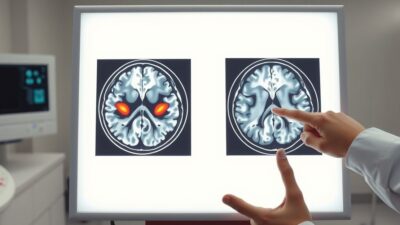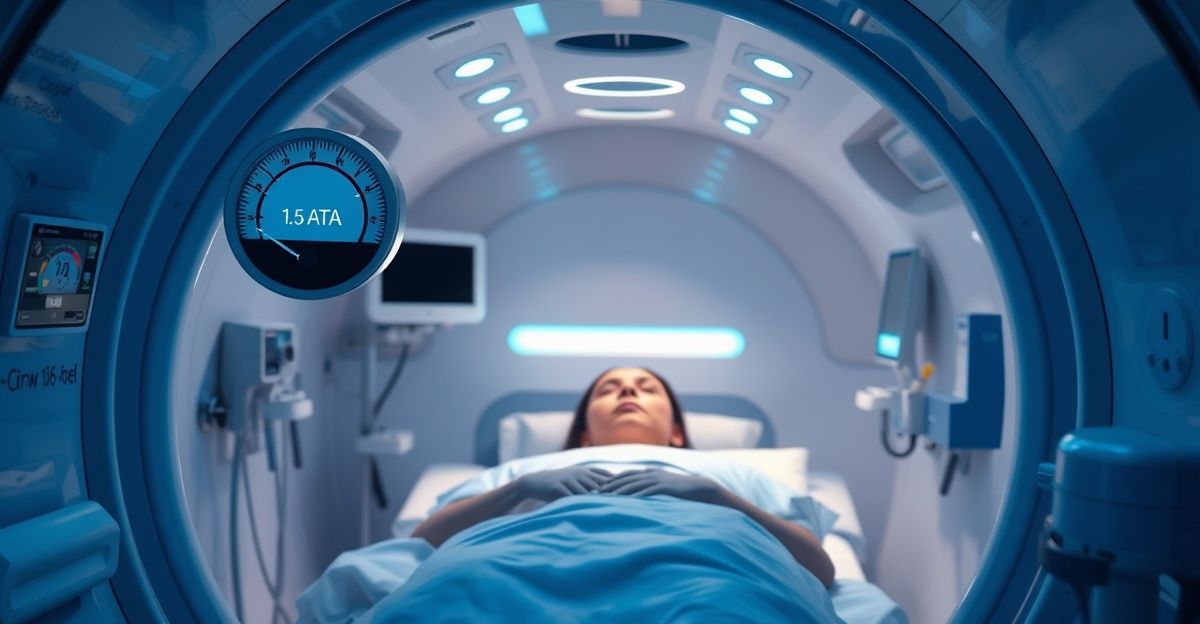
The standard HBOT protocol for concussion and mild TBI uses 1.5 ATA pressure with 100% oxygen, delivered in 60-minute sessions, five days per week, for 40 to 60 total sessions. This protocol emerged from two decades of clinical trials, most notably a 2022 systematic review by Harch that analyzed dosage across all published mild TBI studies and found 1.5 ATA consistently outperformed higher pressures. It differs significantly from wound-healing HBOT protocols, which use 2.0 to 2.4 ATA, and the distinction matters for outcomes. It is one of several spectrum of brain conditions where HBOT is applied currently being explored in clinical research.
Why 1.5 ATA and not higher?
The pressure question is central to understanding HBOT for brain injury. Standard HBOT for wound healing, carbon monoxide poisoning, and decompression sickness uses 2.0 to 2.4 ATA. This higher pressure works well for those conditions because the primary goal is maximal oxygen delivery to peripheral tissues. Brain tissue has different requirements.
At pressures above 2.0 ATA, cerebral vasoconstriction increases. This is a normal physiological response to hyperoxia. The blood vessels in the brain narrow, which paradoxically reduces cerebral blood flow even as dissolved oxygen content rises. For a healthy brain, this is manageable. For a brain already suffering from perfusion deficits (as in post-concussion syndrome), the additional vasoconstriction may offset the benefit of increased oxygen.
Harch’s 2022 systematic review in Frontiers in Neurology analyzed all published HBOT studies for mild TBI by pressure level. The findings were clear: studies using 1.5 ATA reported consistent positive outcomes on neurocognitive testing. Studies using 2.0 ATA or higher showed mixed or null results. The Cifu et al. 2014 trial, which compared 2.0 ATA, 1.5 ATA, and 1.3 ATA sham, found no advantage for the higher pressure group over the lower pressure group.
The proposed explanation is that 1.5 ATA hits a physiological sweet spot for injured brain tissue. It delivers enough additional oxygen to activate repair pathways (angiogenesis, stem cell mobilization, reduced neuroinflammation) without triggering the vasoconstriction that counteracts delivery. This is sometimes called the “Goldilocks” pressure for brain injury. For a detailed explanation of pressure measurements, see our ATA pressure guide.
The Harch protocol vs. the Efrati protocol
Two researchers dominate the HBOT brain injury literature, and their protocols differ in meaningful ways.
The Harch protocol (Paul Harch, LSU Health Sciences Center, New Orleans) specifies 1.5 ATA, 60 minutes at pressure, 40 sessions as the standard course with extension to 60 or 80 based on clinical response. Harch uses SPECT imaging before and after treatment to document perfusion changes. His published trials (2020 RCT in Medical Gas Research) focus on military veterans with mild TBI and persistent postconcussion symptoms. Harch has been the most vocal advocate for the 1.5 ATA pressure point and has argued that higher pressures are inappropriate for brain injury.
The Efrati protocol (Shai Efrati, Sagol Center, Tel Aviv) uses 2.0 ATA, 60 minutes at pressure, and typically 60 sessions. Efrati’s research spans a broader range of brain conditions, including post-stroke cognitive impairment, fibromyalgia, and age-related cognitive decline. His 2013 trial with Boussi-Gross (which used 1.5 ATA for PCS, interestingly) and subsequent aging studies at 2.0 ATA have produced positive results. Efrati’s center has also published the most advanced imaging data, including MRI-based perfusion mapping and DTI (diffusion tensor imaging) showing white matter changes.
The practical difference for patients: most U.S. HBOT clinics treating concussion and TBI follow the Harch protocol (1.5 ATA, 40 sessions). Clinics in Israel and some European centers follow the Efrati protocol (2.0 ATA, 60 sessions). The evidence does not definitively favor one over the other, because no head-to-head trial has compared them directly. The Harch dosage review suggests 1.5 ATA is superior for mild TBI specifically, but the Efrati group’s results at 2.0 ATA for broader neurological conditions are also positive.
40 sessions, 60 sessions, or more?
Session count is the second major protocol variable. The evidence base provides some guidance, but the optimal number remains debated.
40 sessions is the minimum therapeutic course supported by controlled trials. Both the Boussi-Gross 2013 study and the Harch 2020 trial used 40 sessions and found significant improvements. This is the standard starting point for most HBOT clinics treating concussion.
60 sessions is used in the pediatric protocol (Hadanny 2022) and in the Efrati group’s studies. The rationale for additional sessions is that neuroplastic changes continue to accumulate with additional exposures. Some practitioners report that patients who showed partial response at 40 sessions achieve further improvement with sessions 41 through 60. For guidance on session planning across conditions, see our HBOT sessions guide.
80 sessions is occasionally used for patients with severe or long-standing symptoms who show continued improvement after 60 sessions. No controlled trial has specifically evaluated 80 sessions. This number represents clinical judgment rather than evidence-based protocol.
Diminishing returns appear to set in at some point. The pattern described by practitioners is that the greatest gains occur between sessions 20 and 40, with incremental improvement from sessions 40 to 60, and minimal additional benefit beyond 60 for most patients. Individual variation is significant.
Session structure: what happens during treatment
Each HBOT session for concussion follows a predictable structure. Understanding it reduces anxiety and helps patients plan their days around treatment.
Pre-session (5 to 10 minutes): The patient changes into cotton clothing (synthetic fabrics are restricted in high-oxygen environments). Prohibited items include electronics, lighters, matches, petroleum-based products, and alcohol-based hand sanitizer. The technician reviews any symptoms since the last session and takes vital signs if clinically indicated.
Pressurization (10 to 15 minutes): The chamber pressurizes from ambient (1.0 ATA) to treatment pressure (1.5 ATA). This is the phase where ear equalization is required. Patients are instructed to swallow, yawn, or perform a gentle Valsalva maneuver as pressure increases. The technician controls the pressurization rate and can slow or pause if the patient has difficulty equalizing. Discomfort should be mild. Pain indicates inadequate equalization and requires stopping.
Treatment phase (60 minutes): Once at 1.5 ATA, the patient breathes 100% oxygen through a mask or hood. In monoplace chambers, the entire chamber is filled with oxygen. In multiplace chambers, patients wear individual masks. During this phase, patients can read, listen to audiobooks, sleep, or simply rest. Many patients report feeling drowsy during treatment.
Depressurization (10 to 15 minutes): The chamber returns to ambient pressure. This phase is typically more comfortable than pressurization. Some patients feel a brief “pop” in their ears.
Post-session: Total time from arrival to departure is approximately 90 to 100 minutes. Some patients feel mildly fatigued after early sessions. Others feel energized. Post-session restrictions are minimal: no flying or scuba diving for 24 hours. Normal activity can resume immediately.
Week-by-week improvement timeline
The trajectory of improvement during a concussion HBOT protocol is not linear. Patients and families should understand the typical pattern to set appropriate expectations.
Week 1 (sessions 1 to 5): Adaptation. The body adjusts to the hyperbaric environment. Some patients report mild headache or fatigue after the first few sessions. Meaningful symptom improvement at this stage is uncommon. The main goal is establishing tolerance and routine.
Week 2 (sessions 6 to 10): Some patients notice subtle improvements in sleep quality and energy levels. These are often the earliest signs that treatment is having a physiological effect. Cognitive symptoms typically do not improve this early.
Weeks 3 to 4 (sessions 11 to 20): The first measurable cognitive gains often appear. Patients may report improved concentration, better word-finding, or reduced brain fog. Headache frequency may begin to decrease. The Boussi-Gross study documented the beginning of neurocognitive score improvements during this window.
Weeks 5 to 6 (sessions 21 to 30): Improvement accelerates for responders. This is typically the period of greatest perceived benefit. Patients who will respond to HBOT usually know it by session 25 to 30. If no improvement is apparent by session 30, response for the remaining sessions is less likely (though not impossible).
Weeks 7 to 8 (sessions 31 to 40): Gains consolidate. The rate of improvement slows compared to weeks 5 to 6. Post-treatment assessment at this point determines whether additional sessions are warranted. For a broader view of the concussion evidence, see our HBOT for concussion overview.
Post-treatment: Improvements generally persist. Follow-up data from the Boussi-Gross trial showed that gains measured at session 40 were maintained at later assessments. Some patients elect maintenance sessions (one to two per week) to sustain benefits, though no controlled data guides this practice.
How concussion protocols differ from wound-healing protocols
The differences between HBOT for concussion and HBOT for its FDA-approved indications (wound healing, radiation injury, etc.) are significant enough that patients familiar with one should not assume the other works the same way.
Pressure: Wound healing protocols use 2.0 to 2.4 ATA. Concussion protocols use 1.5 ATA. As discussed above, the higher pressures appropriate for peripheral tissue are not optimal for injured brain tissue.
Session count: Wound healing protocols typically use 20 to 30 sessions. Concussion protocols use 40 to 60. The brain requires more exposure to achieve neuroplastic changes than peripheral tissue requires for angiogenesis and fibroblast activation.
Assessment: Wound healing is assessed visually (wound size, granulation tissue). Concussion is assessed through neurocognitive testing and symptom scales, which are inherently more subjective. SPECT imaging provides an objective measure but is not universally available or covered.
Insurance: Wound healing HBOT is typically covered by insurance when medically indicated. Concussion HBOT is not covered because TBI is not an FDA-cleared indication. This single difference accounts for most of the access barrier. For the full clinical evidence supporting brain injury protocols, see our HBOT for TBI data review.
How Do You Find the Right HBOT Clinic?
Not all HBOT facilities are equivalent for brain injury treatment. Many clinics primarily serve wound-healing patients and may lack experience with concussion protocols. Before committing to a 40-session treatment course, patients should evaluate the provider’s qualifications and approach.
Protocol specifics: Ask which pressure they use for concussion. The answer should be 1.5 ATA. A clinic that proposes 2.0 ATA or higher for post-concussion syndrome is either following the Efrati protocol (which is legitimate but less common in the U.S.) or may not be familiar with the brain injury literature. Ask why they use their chosen pressure and what evidence they reference.
Assessment method: A clinic serious about brain injury treatment should conduct pre-treatment neurocognitive testing and symptom assessment. They should repeat this at the midpoint (session 20) and completion (session 40) to track objective changes. Clinics that rely solely on “how do you feel?” without structured assessment make it difficult to evaluate whether treatment is working.
SPECT imaging: Not all clinics offer or require SPECT imaging. While SPECT provides the most objective measure of treatment response, it adds $1,000 to $2,000 to the total cost and is not universally available. Clinics that use SPECT can provide before-and-after perfusion maps showing which brain regions improved. Clinics without SPECT rely on neurocognitive testing and symptom scales, which are less objective but still informative.
Chamber type: Both monoplace (single-person) and multiplace (multiple-person) chambers can deliver the 1.5 ATA protocol effectively. The clinical difference is minimal. Monoplace chambers are more common in freestanding clinics. Multiplace chambers are more common in hospital-based programs and allow a technician to be present at pressure, which some patients find reassuring.
Experience with brain injury: Ask how many brain injury patients the clinic has treated. A clinic that has treated hundreds of concussion and TBI patients will have a different level of expertise than one that has treated a handful. Experience matters for protocol optimization, managing expectations, recognizing early signs of response or non-response, and handling the occasional patient who worsens transiently before improving.
Cost transparency: Get a clear quote for the full 40-session protocol before starting, including any add-ons (SPECT imaging, neurocognitive testing, physician consultations). Ask about package pricing, which is common and typically reduces the per-session cost by 10% to 25%. Ask about their cancellation and refund policy if you decide to discontinue treatment.
Combining HBOT with other therapies
HBOT is increasingly used as part of a multimodal concussion recovery program rather than as a standalone treatment. While no controlled trial has evaluated specific combinations, the rationale for combining therapies is that different interventions target different aspects of post-concussion pathology.
HBOT plus neurofeedback: HBOT addresses the metabolic and vascular substrate (blood flow, oxygenation, inflammation). Neurofeedback addresses the electrical signaling patterns that may have become dysregulated after injury. Some practitioners report that HBOT creates a more “trainable” brain by improving the metabolic foundation, making subsequent neurofeedback sessions more effective.
HBOT plus graded exercise: Prescribed sub-symptom-threshold aerobic exercise has its own evidence base for concussion recovery (Leddy et al., 2018). Exercise increases cerebral blood flow through cardiovascular demand. HBOT increases tissue oxygenation through dissolved oxygen. The mechanisms are complementary. Some patients do light exercise (walking, stationary cycling) on the same day as HBOT sessions.
HBOT plus cognitive rehabilitation: Formal cognitive rehabilitation (working with a neuropsychologist on memory strategies, attention training, and executive function exercises) may be more effective when the underlying brain tissue is receiving adequate oxygen. The logic is that rehabilitation exercises require metabolic resources, and HBOT improves the availability of those resources.
These combinations are reasonable but unproven. Patients pursuing multimodal treatment should track their progress systematically so that the contribution of each intervention can be assessed, at least approximately.
Sources
- Harch PG. “Systematic Review and Dosage Analysis: Hyperbaric Oxygen Therapy Efficacy in Mild Traumatic Brain Injury Persistent Postconcussion Syndrome.” Frontiers in Neurology. 2022;13:815056. DOI: 10.3389/fneur.2022.815056
- Boussi-Gross R, Golan H, Fishlev G, et al. “Hyperbaric oxygen therapy can improve post concussion syndrome years after mild traumatic brain injury.” PLoS One. 2013;8(11):e79995. DOI: 10.1371/journal.pone.0079995
- Harch PG, Andrews SR, Rowe CJ, et al. “Hyperbaric oxygen therapy for mild traumatic brain injury persistent postconcussion syndrome: a randomized controlled trial.” Medical Gas Research. 2020;10(1):8-20. DOI: 10.4103/2045-9912.279978
- Cifu DX, et al. “The Effect of Hyperbaric Oxygen on Persistent Postconcussion Symptoms.” Journal of Head Trauma Rehabilitation. 2014;29(1):11-20. DOI: 10.1097/HTR.0b013e3182a6aaf0
- Hadanny A, Catalogna M, Yaniv S, et al. “Hyperbaric oxygen therapy in children with post-concussion syndrome improves cognitive and behavioral function.” Scientific Reports. 2022;12:15233. DOI: 10.1038/s41598-022-19395-y
- Weaver LK, Ziemnik R, Deru K, Russo AA. “A double-blind randomized trial of hyperbaric oxygen for persistent symptoms after brain injury.” Scientific Reports. 2025;15. DOI: 10.1038/s41598-025-86631-6
- Biggs AT, Dainer H, Littlejohn LF. “Effect Sizes for Symptomatic and Cognitive Improvements in Traumatic Brain Injury Following Hyperbaric Oxygen Therapy.” Journal of Applied Physiology. 2021. DOI: 10.1152/japplphysiol.01084.2020
Medical Disclaimer
The content on BaricBoost.com is for informational purposes only and is not intended as a substitute for professional medical advice, diagnosis, or treatment. Always seek the advice of your physician or other qualified health provider with any questions you may have regarding a medical condition. Never disregard professional medical advice or delay in seeking it because of something you have read on this website.

Author
Seph Fontane Pennock is the founder of BaricBoost.com and Regenerated.com, a clinic directory for regenerative medicine serving 10,000+ providers across the United States. He previously built and sold PositivePsychology.com, which grew to 19 million users and became the largest evidence-based positive psychology resource on the web. Seph brings direct experience as an HBOT patient, having completed protocols at clinics across three continents while navigating mold illness, systemic inflammation, and autoimmune conditions. His treatment journey includes hyperbaric oxygen therapy, peptide protocols, NAD+ therapy, and consultations with specialists from Dubai to Cape Town to Mexico. This combination of entrepreneurial track record and lived patient experience shapes everything published on BaricBoost.com. Every article is grounded in peer-reviewed research, informed by real clinical encounters, and written for patients making high-stakes treatment decisions. Seph's focus is on bringing transparency, scientific rigor, and practical guidance to the hyperbaric oxygen therapy space.