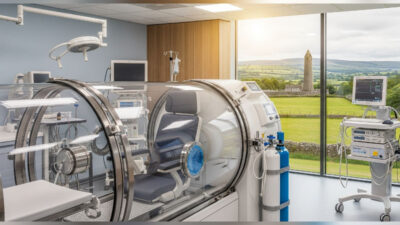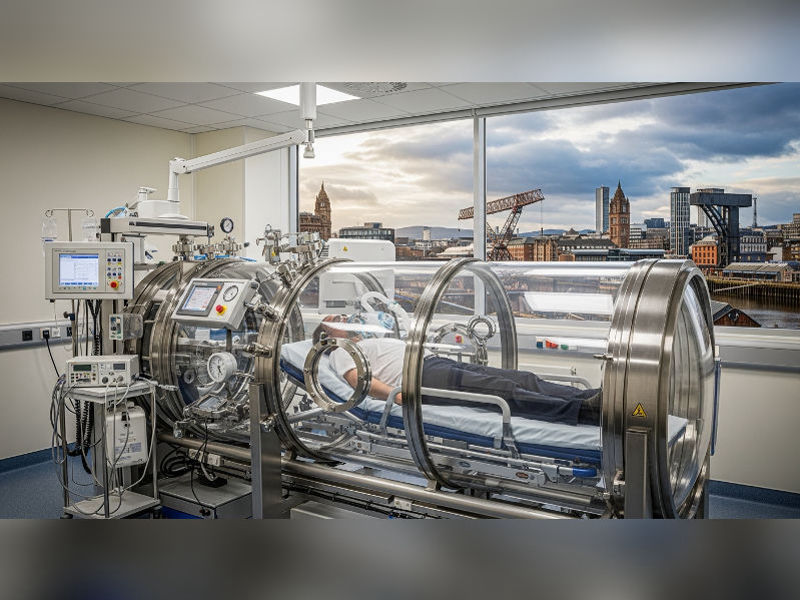
Glasgow has multiple hyperbaric oxygen therapy facilities, including NHS and private providers. The city’s largest HBOT centers offer multiplace chamber access for FDA-cleared conditions like wound healing, radiation injury, and decompression sickness, along with off-label protocols for sports recovery and neurological rehabilitation.
Understanding options helps you make informed decisions. Facilities range from hospital-based units to private clinics. Each offers different treatment protocols. This guide explores Glasgow’s leading centers.
Table of Contents
The Role of Pressurized Oxygen in Modern Healthcare
According to the Undersea and Hyperbaric Medical Society, HBOT is recognized for 14 FDA-cleared medical indications, with over 1.5 million treatments administered annually in the United States.
Undersea and Hyperbaric Medical Society (UHMS)
Pressurized oxygen environments increase the oxygen your blood can carry. In a hyperbaric chamber Glasgow facility, you breathe 100% oxygen. You sit inside a pressurized room or tube. Pressure usually reaches 1.5 to 3 times normal levels (Hampson, 2023). This saturates your plasma with oxygen beyond what red blood cells alone transport.
The mechanism involves Henry’s Law. Gases dissolve in liquids in proportion to their partial pressure. When you’re in a pressurized environment breathing concentrated oxygen, more oxygen dissolves directly into your blood plasma. This bypasses the usual limitation of hemoglobin carrying capacity.
Key effects include:
- Enhanced white blood cell function
- Stimulation of growth factors
- Reduction in inflammatory pathways
Glasgow’s medical facilities have embraced this treatment. Scotland has higher rates of conditions like diabetic foot ulcers. These respond well to oxygen therapy. The NHS and private providers recognized that HBOT oxygen therapy Glasgow could address treatment gaps.
Glasgow’s NHS Hyperbaric Medicine Unit at Western Infirmary
The Western Infirmary’s hyperbaric unit represents Scotland’s primary NHS facility. This center handles complex cases referred from across Scotland. Sometimes cases come from northern England.
The unit operates with medical-grade chambers., and multiple patients can be treated simultaneously.. Staff includes trained hyperbaric physicians.Nurses with specialized certification work here., and support technicians monitor chamber operations.. Treatments follow strict protocols. These protocols are set by the Undersea and Hyperbaric Medical Society.
NHS referrals cover specific conditions. Carbon monoxide poisoning is common. Decompression sickness from diving accidents also qualifies. Necrotizing soft tissue infections get referred. The center also treats chronic refractory osteomyelitis. Certain non-healing wounds qualify when other treatments fail. Because it’s NHS-funded, patients with qualifying conditions don’t face direct costs. Wait times can be longer than private alternatives.
| Facility Feature | NHS Western Infirmary | Private Glasgow Clinics |
| Treatment Cost | NHS-funded for approved cases | £100-250 per session |
| Wait Time | 2-6 weeks typical | Same or next week |
| Session Duration | 90-120 minutes | 60-90 minutes |
| Conditions Treated | Evidence-based list only | Broader range plus wellness |
The unit’s advantage lies in its integration with other hospital departments. If complications arise, you have immediate access to emergency services. Intensive care is available. Specialist consultations happen quickly.
Private Oxygen Therapy Centers in Central Glasgow
Central Glasgow hosts several private clinics offering hyperbaric chamber therapy Glasgow services. These are located in the city center or the West End. These facilities cater to patients seeking treatment outside NHS funding criteria. They also serve those wanting faster access.
Private centers often use soft-shell chambers. These operate at lower pressures than hospital units, usually 1.3 to 1.5 ATA. They’re suitable for wellness applications. Some facilities have upgraded to hard-shell units. These reach therapeutic pressures of 2.0 to 2.4 ATA.
Private Glasgow clinics treat various conditions., and traumatic brain injury recovery is common.. Post-concussion syndrome gets addressed. Chronic fatigue brings patients in. Athletic performance optimization attracts attention. The hyperbaric chamber treatment in the Glasgow private sector also serves patients interested in anti-aging protocols.
What sets private facilities apart is flexibility. Sessions can be scheduled around work commitments. Treatment plans are customized without NHS constraints. Staff spend more time on patient education. They explain the science behind treatments. Costs accumulate quickly. A typical protocol involves 20-40 sessions.
Specialized Sports Medicine and Recovery Facilities
Glasgow’s athletic community has access to HBOT Glasgow through sports medicine centers. These integrate oxygen therapy with rehabilitation programs. They serve professional athletes from football clubs. Rugby teams use these facilities. Individual competitors preparing for major events also benefit.
Sports-focused oxygen therapy aims to accelerate recovery. It reduces inflammation after intense training. Athletes use chambers following muscle tears. Ligament injuries heal faster. Bone stress fractures respond well. The therapy floods damaged tissues with oxygen. This process is essential. It supports collagen synthesis.
Evidence for performance gains in healthy athletes is mixed. Research shows clear benefits for injury recovery (Thom, 2022). Using chambers to boost performance in non-injured athletes hasn’t been proven. Glasgow facilities are honest about this. They position oxygen therapy as a recovery tool.
Athletes undergo shorter but more frequent sessions. Maybe 60 minutes daily during acute injury phases. Then tapering to 2-3 times weekly during rehabilitation. Facilities combine chamber treatments with physiotherapy. Strength training gets incorporated.
Integrative Health Clinics Offering Oxygen Protocols
Several Glasgow wellness centers have incorporated pressurized oxygen. These clinics viewtop-rated HBOT options Glasgow treatments as one component of holistic care. Sessions often combine with nutritional therapy. IV vitamin infusions are common.
The philosophy differs from conventional medical models. Integrative clinics do not target single diseases. They focus on optimizing cellular function.Reducing systemic inflammation is a core goal., and many patients manage chronic fatigue syndrome.. Fibromyalgia brings some in. Some simply want to enhance overall wellness.
Treatments at integrative centers use mild hyperbaric chambers. Pressure stays at 1.3 ATA. This level increases oxygen safely, and it does not require medical supervision. Sessions last 60 to 90 minutes. You can relax or read during treatment.
Critics raise concerns. They argue that mild hyperbaric therapy lacks sufficient pressure. Serious medical conditions may not respond. Proponents counter that even modest pressure increases provide benefits. Inflammation reduction happens. Cellular repair improves with consistent use.
University Research Programs and Clinical Trials
Glasgow’s universities support active research. They study new oxygen therapy applications. The University of Glasgow investigates various protocols. Glasgow Caledonian University runs studies. Some programs offer treatment access through clinical trials. HBOT therapy Glasgow research covers conditions from stroke recovery to traumatic brain injury.
Research programs provide opportunities to access advanced protocols. These aren’t yet available in standard clinical practice. Participants receive free or reduced-cost treatments. In exchange, they provide data.
Recent Glasgow studies have explored oxygen therapy for post-COVID neurological symptoms. Chronic pain conditions are under investigation. These trials follow rigorous protocols. Control groups are included. Long-term follow-up measures real effectiveness (Bennett et al., 2023).
If you’re interested in trial participation, university websites list active studies. The process involves screening appointments. You need commitment to the full study protocol. This might mean 40+ sessions over several months. Not everyone qualifies.
Comparing Treatment Approaches Across Glasgow Facilities
Different facilities take distinct approaches to hyperbaric chamber treatment Glasgow. NHS units prioritize evidence-based medicine. They treat only conditions with established efficacy data. Private clinics offer broader access. Sports centers focus on athletic performance. Integrative clinics emphasize wellness.
Understanding these differences helps you choose appropriately. For acute diving accidents, the NHS unit at Western Infirmary is right. You need immediate medical-grade treatment. For chronic conditions like diabetic foot ulcers, NHS referral remains ideal.
Private clinics make sense for conditions outside NHS funding criteria. You’re paying for convenience. You get access to treatments not available through public healthcare. Just verify the facility’s credentials first. Check staff qualifications before committing to expensive courses.
Athletes benefit most from sports medicine centers. These understand training demands. They coordinate oxygen therapy with other recovery modalities. Protocols adjust around event calendars.
Practical Considerations for Glasgow-Based Patients
Before starting treatment at a hyperbaric chamber Glasgow facility, know what to expect. Sessions last 60 to 120 minutes. You remain inside a sealed chamber.Pressure increases gradually., and you might feel ear pressure similar to flying.. Staff teach equalization techniques.
Most facilities require health screenings before treatment. Certain conditions make pressurized oxygen dangerous. An untreated pneumothorax is one. Severe emphysema is another. You’ll complete medical questionnaires. Possibly get physician clearance.
Safety protocols you’ll encounter:
- No petroleum-based products or deodorants
- Cotton clothing only
- Removal of all electronics
Treatment frequency varies by condition. Acute conditions might need daily sessions for a week. Chronic wounds often require 20-40 sessions. Wellness protocols might involve twice-weekly maintenance sessions. This time commitment matters. It can affect work schedules.
Some patients report mild side effects., and temporary vision changes can occur.. Ear or sinus discomfort is common. Fatigue after sessions is normal. Serious complications are rare with proper screening.
FAQs
- Where can I access hyperbaric chamber treatment in Glasgow for NHS-funded conditions?
The Western Infirmary runs Glasgow’s main NHS hyperbaric unit. It treats diving injuries. It also treats carbon monoxide poisoning. A GP or specialist referral is required. Eligible treatment is free.
- What conditions do private Glasgow oxygen therapy clinics typically treat?
Private facilities offer treatments for sports injuries and traumatic brain injury recovery. Chronic fatigue gets addressed. Post-concussion syndrome is common. Wellness applications not covered by NHS funding are available. Sessions cost £100-250 each.
- How does mild hyperbaric therapy differ from medical-grade treatment?
Mild chambers operate at lower pressures. Typical ranges are 1.3 to 1.5 ATA. Medical units reach 2.0-3.0 ATA. This affects therapeutic intensity. Mild therapy fits wellness use. Acute medical conditions require medical-grade pressures.
References
Bennett, M. H., Lehm, J. P., & Jepson, N. (2023). Hyperbaric oxygen therapy for acute and chronic wounds. Published Study (DOI)
Hampson, N. B. (2023). Hyperbaric oxygen therapy: Mechanisms of action and clinical applications. Undersea & Hyperbaric Medical Society
Thom, S. R. (2022). Hyperbaric oxygen: Its mechanisms and efficacy. Published Study (DOI)
References
- Undersea and Hyperbaric Medical Society. (2023). Indications for Hyperbaric Oxygen Therapy. UHMS. uhms.org
- Thom, S. R. (2011). Hyperbaric oxygen: Its mechanisms and efficacy. Plastic and Reconstructive Surgery, 127(Suppl 1), 131S-141S. doi.org
- Centers for Medicare and Medicaid Services. (2024). Hyperbaric Oxygen Therapy Coverage Criteria. CMS.gov. cms.gov
References
- Undersea and Hyperbaric Medical Society. “Hyperbaric Oxygen Therapy Indications.” 14th Edition, 2019. uhms.org
- Thom SR. “Hyperbaric oxygen: its mechanisms and efficacy.” Plastic and Reconstructive Surgery, 2011;127(Suppl 1):131S-141S. DOI: 10.1097/PRS.0b013e3181fbe2bf
- Centers for Medicare & Medicaid Services. “National Coverage Determination for Hyperbaric Oxygen Therapy.” NCD 20.29. cms.gov
Medical Disclaimer
The content on BaricBoost.com is for informational purposes only and is not intended as a substitute for professional medical advice, diagnosis, or treatment. Always seek the advice of your physician or other qualified health provider with any questions you may have regarding a medical condition. Never disregard professional medical advice or delay in seeking it because of something you have read on this website.

Author
Seph Fontane Pennock is the founder of BaricBoost.com and Regenerated.com, a clinic directory for regenerative medicine serving 10,000+ providers across the United States. He previously built and sold PositivePsychology.com, which grew to 19 million users and became the largest evidence-based positive psychology resource on the web. Seph brings direct experience as an HBOT patient, having completed protocols at clinics across three continents while navigating mold illness, systemic inflammation, and autoimmune conditions. His treatment journey includes hyperbaric oxygen therapy, peptide protocols, NAD+ therapy, and consultations with specialists from Dubai to Cape Town to Mexico. This combination of entrepreneurial track record and lived patient experience shapes everything published on BaricBoost.com. Every article is grounded in peer-reviewed research, informed by real clinical encounters, and written for patients making high-stakes treatment decisions. Seph's focus is on bringing transparency, scientific rigor, and practical guidance to the hyperbaric oxygen therapy space.