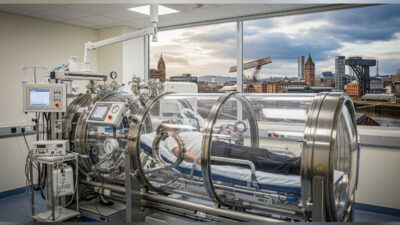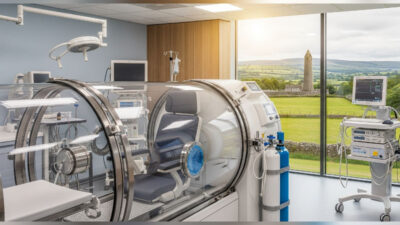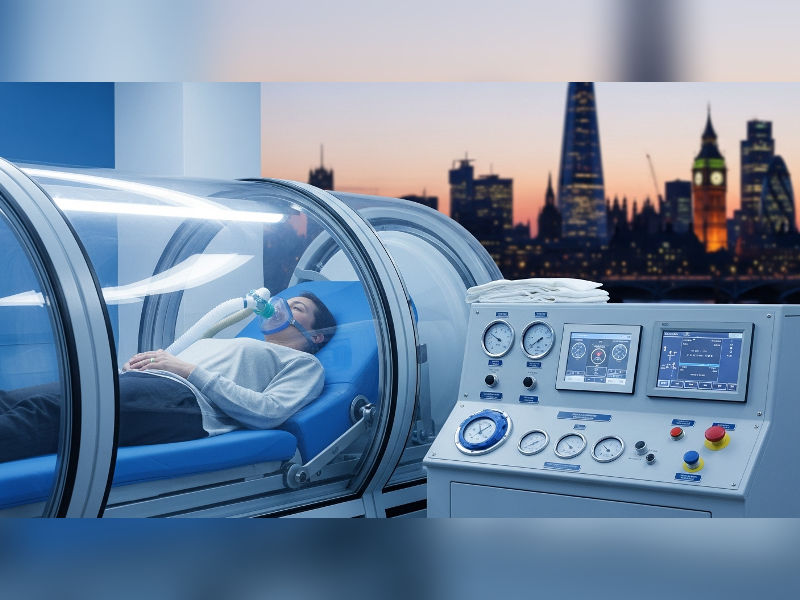
London has over a dozen hyperbaric oxygen therapy centers, from NHS wound-care units at major hospitals to private clinics in Mayfair charging upward of £150 per session. The range covers monoplace chambers at 2.4 ATA and mild soft-shell units at 1.3 ATA. Here are eight facilities worth evaluating.
You may be exploring wellness applications. Understanding what these centers provide makes a real difference. The HBOT London landscape has evolved significantly. This change has taken place over the past decade. Facilities now offer monoplace chambers. They also offer multiplace chambers. These chambers deliver pressurized oxygen at therapeutic levels. This guide walks you through eight standout centers. It also explains how to choose the right fit.
Table of Contents
Why London Has Become a Hub for Hyperbaric Oxygen Therapy
According to the Undersea and Hyperbaric Medical Society, HBOT is recognized for 14 FDA-cleared medical indications, with over 1.5 million treatments administered annually in the United States.
Undersea and Hyperbaric Medical Society (UHMS)
London attracts international patients., and its medical infrastructure is strong.. Technology is advanced. Practitioners are experienced. The scene is not just about machines. It’s about having teams who understand treatment protocols for diverse conditions.
Many centers collaborate with research institutions. Examples include University College London. Another is Imperial College London. Treatments reflect current clinical evidence. This research-backed foundation sets London apart from regions where HBOT remains more experimental.
Several factors contribute to the capital’s prominence:
- Regulatory standards are strict. They ensure proper chamber maintenance. They also ensure operational safety.
- Specialist networks allow cross-specialty consultations, so your HBOT provider coordinates with your neurologist.
- Equipment diversity ranges from portable soft chambers to clinical-grade hard-shell units reaching 2.4 ATA.
- Insurance pathways exist through established relationships between private health insurers and London centers.
The city benefits from international airport connections. This makes it accessible for patients traveling from Europe who seek British medical standards.
What Treatment Protocols Look Like at London’s Leading Centers
Treatment experiences vary by center. They also vary by the condition being treated. Most HBOT therapy London sessions last 60 to 90 minutes. You breathe 100% oxygen during treatment. Chamber pressure increases gradually.
| Treatment Phase | Duration | What Happens | Patient Experience |
| Compression | 10-15 minutes | Pressure rises to the prescribed level | Ear pressure similar to airplane descent |
| Therapeutic plateau | 45-60 minutes | Maintained at target pressure | Relaxed state for reading or resting |
| Decompression | 10-15 minutes | Return to normal pressure | Reverse ear sensation |
Before your first session, you attend a consultation. Practitioners review your medical history. They also review your current medications. Some conditions contraindicate HBOT. This screening process protects your safety.
During treatment, you might notice temporary vision changes or fatigue afterward. These typically resolve within hours. Most protocols involve 20 to 40 sessions, depending on condition severity.
The Eight Centers Setting Standards for Hyperbaric Treatment
London’s treatment landscape includes facilities with distinct specializations. Each center has differences. Knowing them helps.
The London Hyperbaric Oxygen Clinic in Kensington is research-affiliated. It is one of the few centers of its kind in the UK. The clinic focuses on neurological conditions. These include traumatic brain injury. Their protocols follow frameworks established by researchers at the LSE Centre.
OxyGeneration in Marylebone specializes in wellness and anti-aging applications. Their soft chambers appeal to athletes interested in recovery optimization. Soft chambers typically reach only 1.3 ATA compared to 2.0-2.4 ATA of hard chambers.
Diving Diseases Research Centre isn’t in London proper, it’s in Plymouth. Many London hospitals refer complex cases there. If you’re dealing with decompression sickness, this may be where you receive care.
The London Bridge Hospital houses a multiplace chamber primarily serving wound care patients. This includes those with diabetic foot ulcers. Their integration with the hospital’s vascular surgery department creates seamless care transitions.
MS National Therapy Centres scattered across Greater London offer HBOT specifically for multiple sclerosis patients. These centers operate on a membership model. Patients pay reduced rates for extended treatment courses.
Vitality Boost Clinic in Hampstead follows a functional medicine model. It combines HBOT with nutritional protocols. It also offers IV therapies. This approach appeals to wellness-focused patients. Many view oxygen therapy as part of a broader strategy.
The Hale Clinic in Regent’s Park integrates hyperbaric therapy into a complementary medicine setting. The center houses multiple practitioners. Some teams include complementary practitioners. These may include acupuncturists. They may include naturopaths.
Private hospitals also offer HBOT., and examples include The Wellington Hospital.. Another is The Cromwell Hospital. They work with external providers. They bring portable chambers onsite for specific patients.
How to Choose the Right Facility for Your Specific Condition
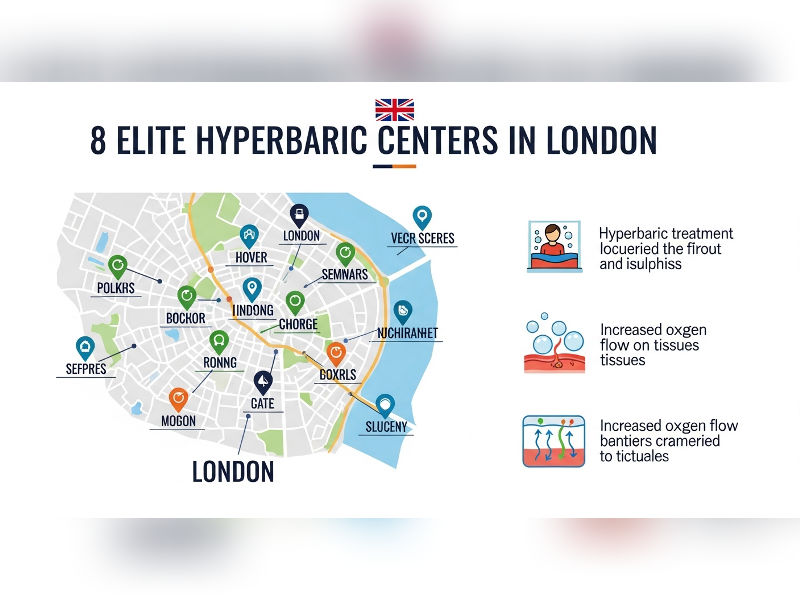
Choosing the right center takes planning., and you must ask clear questions.. Start by confirming chamber type. Monoplace chambers accommodate one person in a sealed tube. Multiplace chambers allow multiple patients and an attending technician inside.
For chronic conditions requiring extended treatment, multiplace chambers often prove more comfortable. You’re not confined to a narrow tube. However, monoplace units deliver 100% oxygen directly rather than through a mask.
Verify staff credentials carefully. In the UK, there’s no standardized hyperbaric technician certification. Training backgrounds vary widely. The best centers employ staff with backgrounds in diving medicine or nursing who’ve completed specialized HBOT courses (Bennett & Elliott, 2003).
Ask about chamber maintenance schedules and inspection records. Reputable facilities willingly share documentation showing regular pressure vessel testing. If staff seem hesitant, that’s a red flag.
Consider location logistics, too. Daily sessions mean travel time adds up quickly. A center that’s 20 minutes from home may serve you better than a top facility requiring long commutes.
Insurance coverage varies dramatically between centers. Some accept NHS referrals for specific approved conditions. Others operate purely private-pay. Get coverage confirmation in writing before starting.
Check whether the center offers connections for treatment if you’re splitting time between countries. Similar options exist in Australia’s hyperbaric centers or facilities across Scotland. Treatment continuity matters for outcomes.
Cost Considerations and What Insurance Might Cover
Private HBOT sessions in London typically cost £150 to £300 per session. Many centers offer package deals. These reduce the per-session cost.Packages are usually bundled., and many include 20 sessions.. Some include 40 sessions. Total cost ranges from £3,000 to £12,000.
NHS coverage exists but remains quite limited. The National Institute for Health and Care Excellence approves HBOT for decompression illness and gas embolism. Everything else falls into a grey area.
Private insurance coverage depends on your specific policy and the condition being treated. Policies often cover HBOT for diabetic ulcers. They exclude neurological or wellness applications. Some insurers require pre-authorization. This applies before treatment begins.
Medical tourism presents an alternative for cost-conscious patients. Facilities in nearby Ireland or counties like Kildare may charge less. Travel and accommodation costs still apply.
Overall value depends on condition severity. HBOT may prevent serious outcomes, and it can help avoid limb amputation. In those cases, the cost may be justified. Even £10,000 can mean savings.
What the Research Actually Shows About Treatment Effectiveness
The evidence base for HBOT remains somewhat fragmented. Strong support exists for certain conditions, while controversial applications exist in others. Understanding where your condition falls helps set realistic expectations.
Strong evidence exists for wound healing applications, particularly diabetic foot ulcers. A systematic review found that HBOT significantly reduced major amputation rates in diabetic patients compared to standard wound care alone (Kranke et al., 2015). The biological mechanism of HBOT is well established. Improved oxygenation supports angiogenesis. It also promotes collagen synthesis.
Neurological applications generate more debate. Some studies show promising results for traumatic brain injury when HBOT is administered within specific therapeutic windows. Others find minimal benefit. The challenge lies in study design differences.
Carbon monoxide poisoning represents the clearest emergency application. HBOT demonstrably reduces neurological problems when administered promptly after exposure. Most London emergency departments maintain transfer protocols with hyperbaric centers for this indication.
For conditions like fibromyalgia, evidence remains preliminary. You’ll find case reports and small pilot studies. Nothing approaches the rigor needed for definitive conclusions.
The placebo effect in HBOT studies presents methodological challenges. Creating a genuine sham control is complex. Some reported benefits may reflect expectation effects. These may not always stem from a physiological change.
Preparing for Your First Session and What to Expect
Your first visit involves extra paperwork., and orientation often takes more time than treatment.. Bring your medical records. Bring a current medication list. Bring relevant imaging results. Centers need this information to assess contraindications.
You’ll receive specific instructions about what to wear and bring inside the chamber. Cotton clothing is mandatory. Synthetic fabrics pose fire risks.Remove all makeup., and remove hair products and lotions.. Avoid petroleum-based substances. Jewelry usually must be removed.
The compression phase feels strange initially. That ear pressure sensation catches everyone off guard. Technicians will teach you equalization techniques before your first session. These are similar to what scuba divers use. If you experience pain, technicians will slow or pause compression.
Some people feel claustrophobic in monoplace chambers. Communicate this concern during your consultation. Staff can potentially arrange multiplace chamber access or teach anxiety management techniques.
Post-session effects vary individually. Mild fatigue is common initially as your body adapts. Some patients report euphoria. Others feel ready for a nap. These responses typically stabilize after the first few sessions.
Managing Treatment Logistics and Scheduling Considerations
Committing to 20 or 40 daily sessions requires planning. Many centers offer morning appointments. They also offer afternoon and evening slots. Evening availability fills quickly.
Some patients find it helpful to cluster sessions. Doing two per day compresses the overall treatment timeline if the center allows. This schedule often works best for out-of-town patients. Many stay in London temporarily.
Transportation logistics matter., and post-session fatigue is common early on.. Driving may feel difficult during the first week. Arrange rides if possible. Public transport can be a safer option.
Food timing affects comfort during sessions., and most centers advise eating lightly.. Eat one to two hours before treatment. Stable blood sugar helps. It reduces dizziness.
Keep a treatment journal., and track how you feel before sessions.. Track how you feel after. Changes can be subtle. Patterns appear over weeks.
Long-Term Outcomes and Realistic Expectations for Recovery
Setting realistic expectations is essential., and it prevents disappointment.. It also preserves hope. HBOT is not a miracle cure, and it is a supportive therapy, and it helps the body heal itself.
Acute conditions may improve quickly. Sudden hearing loss can respond within 10 sessions. Chronic neurological conditions take longer. Treatment courses are usually extended. Benefits build gradually over time.
Maintenance protocols remain debated. Some practitioners suggest periodic booster sessions. Others see diminishing returns after peak benefit. Research remains mixed on this topic.
Not everyone responds to HBOT., and individual physiology varies.. Baseline health plays a role. Diabetic patients with controlled blood sugar often respond better.
Other treatments matter too., and wound care needs proper debridement.. Neurological recovery needs rehab. Combined care works best.
FAQs
- How do I know if a London hyperbaric center is properly certified and safe?
Look for proper registration. Check UK Diving Medical Advisory Committee approval. Verify Health and Safety Executive oversight. Staff should have medical credentials.
- What’s the difference between soft and hard hyperbaric chambers available in London?
Soft hyperbaric chambers operate at lower pressure. They reach about 1.3 ATA. Hard chambers use higher pressure. They reach 2.0 to 2.4 ATA.Hard chambers use 100% oxygen., and they offer stronger therapy.. They cost more per session.
- Can I continue my regular medications while receiving HBOT treatment?
Most medications are safe with HBOT., and some chemotherapy drugs need changes.. Always review medications first.
- How soon after surgery or injury should I consider starting hyperbaric oxygen therapy?
Timing depends on the condition., and decompression sickness needs immediate care.. Wound healing starts after stabilization. Your doctor sets the schedule.
- Do London’s hyperbaric centers treat children, and are protocols different for pediatric patients?
Several London centers treat children., and pediatric care is different.. Safety rules are stricter. Parents are often present. Children tolerate multiplace chambers better since parents can accompany them inside.
UK Regulatory Framework for HBOT
HBOT in the UK operates under a different regulatory framework than in the United States, and understanding these differences is important when choosing a provider.
MHRA, Not FDA
In the UK, hyperbaric chambers are regulated by the Medicines and Healthcare products Regulatory Agency (MHRA), not the FDA. The MHRA classifies hyperbaric chambers as medical devices and regulates their safety, quality, and performance. Providers must ensure their chambers meet UK medical device standards.
CQC Registration
Any clinic providing HBOT as a medical treatment in England must be registered with the Care Quality Commission (CQC). CQC registration means the clinic has been inspected and meets standards for safety, effectiveness, and staff training. Before booking treatment at any London HBOT clinic, check that they are CQC registered. You can verify this on the CQC website.
NHS Access to HBOT
The NHS provides HBOT for a limited number of conditions, primarily:
- Decompression sickness (diving emergencies) – available 24/7 at NHS hyperbaric units
- Carbon monoxide poisoning – emergency treatment
- Gas gangrene and necrotizing soft tissue infections
- Radiation-induced tissue damage (osteoradionecrosis) – increasingly available through referral
For these conditions, treatment is free at point of use through NHS referral. However, the referral pathway can involve waiting times. Your GP refers you to a specialist, who then refers you to an NHS hyperbaric unit if appropriate. London has NHS hyperbaric capability at major trauma centres.
For conditions not covered by the NHS (most off-label uses including TBI, chronic fatigue, anti-aging), patients must access HBOT through private clinics. Private session costs in London typically range from 100-250 GBP per session depending on the provider and chamber type.
MS Therapy Centres
The UK has a network of charity-run MS Therapy Centres that offer HBOT at significantly reduced rates (often 10-25 GBP per session) for members. Originally established for multiple sclerosis patients, many centres now accept patients with other conditions. These centres operate multiplace chambers and are run largely by volunteers. There are several MS Therapy Centres within reach of London, making this the most affordable HBOT option for UK residents.
NHS vs. Private HBOT: Key Differences
- Cost: NHS is free (for approved conditions); private is 100-250 GBP per session; MS Therapy Centres are 10-25 GBP per session
- Wait times: NHS referral pathways can take weeks to months; private clinics typically offer same-week appointments
- Conditions treated: NHS covers only approved emergency and specific medical indications; private clinics treat a wider range including off-label uses
- Regulation: Both NHS and private providers must meet CQC standards. MS Therapy Centres are charities and may have different oversight structures
References
Bennett, M. H., & Elliott, D. (2003). Hyperbaric oxygen therapy for traumatic brain injury. Published Study (DOI)
Kranke, P., Bennett, M., Schnabel, A., & Weibel, S. (2015). Hyperbaric oxygen therapy for chronic wounds. Published Study (DOI)
Mathieu, D., Marroni, A., & Kot, J. (2017). Tenth European Consensus Conference on Hyperbaric Medicine. Diving and Hyperbaric Medicine, 47(1), 24-32.
References
- Undersea and Hyperbaric Medical Society. (2023). Indications for Hyperbaric Oxygen Therapy. UHMS. uhms.org
- Thom, S. R. (2011). Hyperbaric oxygen: Its mechanisms and efficacy. Plastic and Reconstructive Surgery, 127(Suppl 1), 131S-141S. doi.org
- Centers for Medicare and Medicaid Services. (2024). Hyperbaric Oxygen Therapy Coverage Criteria. CMS.gov. cms.gov
References
- Undersea and Hyperbaric Medical Society. “Hyperbaric Oxygen Therapy Indications.” 14th Edition, 2019. uhms.org
- Thom SR. “Hyperbaric oxygen: its mechanisms and efficacy.” Plastic and Reconstructive Surgery, 2011;127(Suppl 1):131S-141S. DOI: 10.1097/PRS.0b013e3181fbe2bf
- Centers for Medicare & Medicaid Services. “National Coverage Determination for Hyperbaric Oxygen Therapy.” NCD 20.29. cms.gov
Medical Disclaimer
The content on BaricBoost.com is for informational purposes only and is not intended as a substitute for professional medical advice, diagnosis, or treatment. Always seek the advice of your physician or other qualified health provider with any questions you may have regarding a medical condition. Never disregard professional medical advice or delay in seeking it because of something you have read on this website.

Author
Seph Fontane Pennock is the founder of BaricBoost.com and Regenerated.com, a clinic directory for regenerative medicine serving 10,000+ providers across the United States. He previously built and sold PositivePsychology.com, which grew to 19 million users and became the largest evidence-based positive psychology resource on the web. Seph brings direct experience as an HBOT patient, having completed protocols at clinics across three continents while navigating mold illness, systemic inflammation, and autoimmune conditions. His treatment journey includes hyperbaric oxygen therapy, peptide protocols, NAD+ therapy, and consultations with specialists from Dubai to Cape Town to Mexico. This combination of entrepreneurial track record and lived patient experience shapes everything published on BaricBoost.com. Every article is grounded in peer-reviewed research, informed by real clinical encounters, and written for patients making high-stakes treatment decisions. Seph's focus is on bringing transparency, scientific rigor, and practical guidance to the hyperbaric oxygen therapy space.