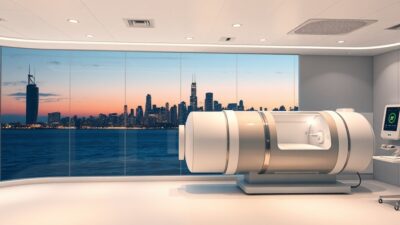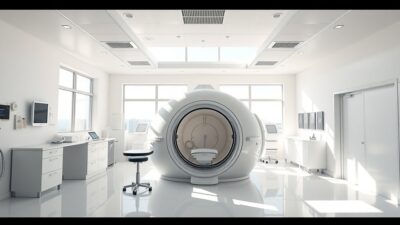
According to the Undersea and Hyperbaric Medical Society, HBOT is recognized for 14 FDA-cleared medical indications, with over 1.5 million treatments administered annually in the United States.
Undersea and Hyperbaric Medical Society (UHMS)
HBOT in Dallas: A Growing Treatment Landscape
Dallas has become one of the more active markets for hyperbaric oxygen therapy in Texas. The DFW metroplex is home to a large and medically sophisticated population, which has helped drive investment in both hospital-grade hyperbaric programs and newer standalone HBOT clinics that serve patients outside the traditional wound care setting.
Whether you are exploring HBOT for a wound that won’t heal, recovering from a sports injury, managing post-COVID symptoms, or investigating it as part of a broader integrative health plan, you have real options across Dallas, Fort Worth, Plano, Frisco, Irving, and surrounding suburbs. The challenge is knowing which type of provider fits your situation and how to evaluate what you find.
This guide walks you through the types of facilities available, what questions to ask, what you should expect to pay, and how to prepare for your first session. If you are new to the therapy itself, start with our overview of how hyperbaric chambers work before diving into the logistics.
Types of HBOT Providers in the Dallas Area
The Dallas-Fort Worth metro has three main categories of hyperbaric providers, and understanding the differences helps you match the right facility to your clinical situation.
Hospital-Based Wound Care Centers
Several major hospital systems in DFW operate dedicated wound care and hyperbaric medicine programs. These are the most clinically conservative option. They use hard-shell monoplace or multiplace chambers, have hyperbaric-certified physicians on staff, and typically operate under strict protocols tied to Medicare and insurance billing requirements.
These centers primarily treat patients with diabetic foot ulcers, radiation tissue injuries, osteomyelitis, and other conditions on the FDA-approved list. If your situation involves an insurable diagnosis and you want the highest level of physician oversight, this is usually the right starting point.
Wait times for hospital-based programs can be longer, and their intake process often requires a referral or prior authorization. Call ahead to understand their requirements before booking.
Standalone Hyperbaric Clinics
Dallas also has a growing number of freestanding HBOT clinics that operate outside hospital systems. These vary significantly in quality. Some are run by experienced hyperbaric physicians or supervised by board-certified practitioners with legitimate UHMS training. Others are lighter on oversight.
Standalone clinics often serve both insured medical patients and cash-pay wellness clients. They tend to have shorter intake processes and more scheduling flexibility than hospital programs. Some use hard-shell monoplace chambers. Others use soft-shell mild hyperbaric chambers, which operate at lower pressures (typically 1.3 ATA) and are generally considered appropriate for wellness use but not for treating serious medical conditions.
When evaluating a standalone clinic, the most important question is: who is supervising the treatment? There should be a licensed physician involved in the treatment protocol, not just a health coach or technician.
Integrative and Wellness Centers
A third category is the integrative health clinic that offers HBOT alongside other modalities like IV therapy, cryotherapy, ozone, or functional medicine. These are increasingly common in Dallas’s wellness-forward neighborhoods and suburbs.
These centers can be excellent options for patients using HBOT as part of a broader recovery or optimization protocol. Quality again depends heavily on the medical staff involved. The best integrative centers have a physician or nurse practitioner who has completed formal hyperbaric medicine training and can supervise your treatment with appropriate monitoring.
Before committing to any integrative center, ask what type of chamber they use and at what pressure they operate. Read our guide on the different types of hyperbaric chambers so you can ask informed questions.
What to Look for in a Dallas HBOT Provider
Regardless of which category of provider you are considering, there are several criteria that should guide your evaluation.
Physician Oversight
Hyperbaric oxygen therapy involves breathing 100% oxygen at elevated atmospheric pressure, which carries real physiological risks including oxygen toxicity, barotrauma, and contraindications for patients with certain medications or conditions. A physician should review your medical history before treatment begins and should be available throughout your sessions.
Ask directly: Is there a physician on-site during treatments? What are their hyperbaric-specific credentials? Reputable providers will answer this clearly and without hesitation.
Chamber Type
Hard-shell monoplace chambers (single-person) and multiplace chambers (two or more patients) operate at higher pressures (typically 2.0 to 3.0 ATA) and are used for medically supervised treatment. Soft-shell or mild hyperbaric chambers top out around 1.3 ATA and are generally used for wellness applications.
If you have a clinical indication like wound healing or radiation injury, you need a hard-shell chamber. If you are exploring HBOT for general recovery or cognitive support, mild chambers may still offer benefit, though the evidence base at those pressure levels is less established. Our article on how HBOT sessions work covers these distinctions in more detail.
UHMS Accreditation or Affiliation
The Undersea and Hyperbaric Medical Society (UHMS) offers accreditation for hyperbaric facilities and training programs for physicians and technicians. While not every excellent clinic is UHMS-accredited, accreditation is a meaningful signal of standards compliance. You can search the UHMS provider directory to find credentialed facilities near Dallas.
Experience with Your Specific Condition
Ask how many patients the clinic has treated for your specific diagnosis. A wound care center may have treated hundreds of diabetic foot ulcer patients but have limited experience with traumatic brain injury or post-COVID fatigue. A clinic that primarily serves athletes may not be the right fit for someone with radiation necrosis.
Cost of Hyperbaric Oxygen Therapy in Dallas
Pricing in Dallas varies depending on the facility type, the chamber type, and whether your condition is covered by insurance.
For medically supervised hard-shell sessions, you can generally expect to pay between $150 and $450 per session when paying out of pocket. Hospital-based programs often charge on the higher end of that range. Standalone clinics vary widely. Soft-shell wellness sessions at integrative centers are often priced lower, sometimes $75 to $150 per session, but these are almost never covered by insurance.
Most HBOT treatment protocols involve 20 to 40 sessions, sometimes more for complex conditions. That means total out-of-pocket costs for a full course of treatment can run from $3,000 to $18,000 or more, depending on where you go and how many sessions you need.
For a deeper breakdown of what affects pricing, see our guide to hyperbaric chamber costs.
Insurance and Coverage in Texas
Insurance coverage for HBOT depends almost entirely on whether your condition appears on the list of FDA-cleared indications. Medicare covers HBOT for 14 conditions, including diabetic lower extremity wounds that have not improved after 30 days of standard care, radiation tissue injuries, carbon monoxide poisoning, and a handful of others. Most major commercial insurers in Texas follow similar guidelines.
If your condition is on the approved list and you are seeking treatment at a hospital-based or UHMS-accredited facility, there is a reasonable path to coverage. You will likely need a referral, documentation of prior treatment failure, and prior authorization before your insurer will approve sessions.
For off-label uses such as long COVID, traumatic brain injury, autism, Lyme disease, or anti-aging, insurance does not cover HBOT. These are cash-pay situations, and the Dallas market has pricing that reflects that reality.
Before you start any course of treatment, call your insurer directly to verify benefits. Do not rely on the clinic’s billing team as your only source of information. Our full breakdown of HBOT insurance coverage explains what to ask and what to watch out for.
How to Prepare for Your First HBOT Session in Dallas
Once you have selected a provider and completed your intake process, there are practical steps that will help your first session go smoothly.
Wear comfortable, loose-fitting cotton clothing. Synthetic fabrics are not permitted inside the chamber due to fire risk. Most clinics will provide cotton garments if needed. Remove all jewelry, watches, and hearing aids before entering.
Avoid alcohol and carbonated beverages for at least four hours before your session. Do not smoke on the day of treatment. If you take any medications, inform the clinical staff in advance, as some medications interact with high-pressure oxygen.
The session itself typically lasts 60 to 90 minutes once you are at pressure. Monoplace chambers are enclosed and some patients find them claustrophobic. If this is a concern, discuss it with the clinic before your appointment. Most facilities can accommodate mild anxiety with breathing techniques or, in some cases, anti-anxiety medication prescribed by the supervising physician.
Your ears may feel pressure as the chamber pressurizes, similar to what you feel on an airplane. Clinic staff will coach you through equalization techniques. For a complete walkthrough of the experience, read our article on what to expect during HBOT.
After your session, you may feel fatigued or, conversely, more energized. Both are normal. Some patients experience mild side effects like ear pressure or temporary vision changes. These are usually transient. Serious adverse events are rare at accredited facilities with proper screening.
Frequently Asked Questions: HBOT in Dallas
Does Dallas have hospital-based HBOT programs covered by Medicare?
Yes. Several major hospital systems in the DFW area operate wound care centers with hyperbaric programs that accept Medicare and major commercial insurance for approved indications. You will typically need a referral from your primary care physician or specialist, and prior authorization may be required. Call the billing department at the specific facility to confirm your coverage before scheduling.
Can I use HBOT for post-COVID symptoms in Dallas?
Post-COVID or long COVID is not on the FDA-approved list for HBOT, so insurance will not cover it. However, a number of standalone clinics in the DFW area do offer cash-pay HBOT for long COVID patients. Research in this area is ongoing, and some early results are encouraging. If you pursue this route, choose a clinic with physician oversight and ask specifically about their experience treating post-COVID patients.
Are there HBOT clinics in North Dallas suburbs like Plano, Frisco, or McKinney?
Yes, the DFW metroplex is large enough that you are likely to find HBOT options in or near many northern suburbs, including Plano, Frisco, Allen, and McKinney. Searching the UHMS provider directory filtered to the Dallas-Fort Worth area will surface credentialed options across the metro. When evaluating suburban clinics, apply the same criteria you would downtown: physician oversight, chamber type, and clear intake protocols.
How many sessions will I need?
It depends on your condition. Standard wound care protocols for diabetic foot ulcers typically involve 30 to 40 sessions. Radiation injury protocols can range from 20 to 60 sessions. Off-label wellness protocols vary widely, with some practitioners recommending 10 to 20 sessions as an initial course. Your supervising physician should give you a written treatment plan with a clear rationale for the number of sessions recommended.
Sources
- Undersea and Hyperbaric Medical Society. (2023). Indications for Hyperbaric Oxygen Therapy. UHMS.
- Weaver, L.K. (Ed.). (2014). Hyperbaric Oxygen Therapy Indications, 13th Edition. Best Publishing Company.
- Centers for Medicare and Medicaid Services. (2024). Hyperbaric Oxygen Therapy Coverage Criteria. CMS.gov.
References
- Undersea and Hyperbaric Medical Society. “Hyperbaric Oxygen Therapy Indications.” 14th Edition, 2019. uhms.org
- Thom SR. “Hyperbaric oxygen: its mechanisms and efficacy.” Plastic and Reconstructive Surgery, 2011;127(Suppl 1):131S-141S. DOI: 10.1097/PRS.0b013e3181fbe2bf
- Centers for Medicare & Medicaid Services. “National Coverage Determination for Hyperbaric Oxygen Therapy.” NCD 20.29. cms.gov
Medical Disclaimer
The content on BaricBoost.com is for informational purposes only and is not intended as a substitute for professional medical advice, diagnosis, or treatment. Always seek the advice of your physician or other qualified health provider with any questions you may have regarding a medical condition. Never disregard professional medical advice or delay in seeking it because of something you have read on this website.

Author
Seph Fontane Pennock is the founder of BaricBoost.com and Regenerated.com, a clinic directory for regenerative medicine serving 10,000+ providers across the United States. He previously built and sold PositivePsychology.com, which grew to 19 million users and became the largest evidence-based positive psychology resource on the web. Seph brings direct experience as an HBOT patient, having completed protocols at clinics across three continents while navigating mold illness, systemic inflammation, and autoimmune conditions. His treatment journey includes hyperbaric oxygen therapy, peptide protocols, NAD+ therapy, and consultations with specialists from Dubai to Cape Town to Mexico. This combination of entrepreneurial track record and lived patient experience shapes everything published on BaricBoost.com. Every article is grounded in peer-reviewed research, informed by real clinical encounters, and written for patients making high-stakes treatment decisions. Seph's focus is on bringing transparency, scientific rigor, and practical guidance to the hyperbaric oxygen therapy space.