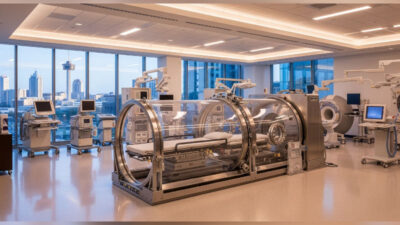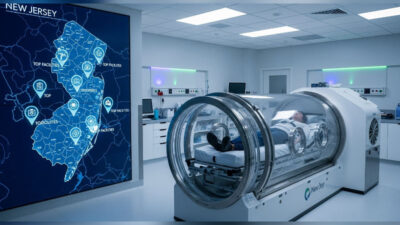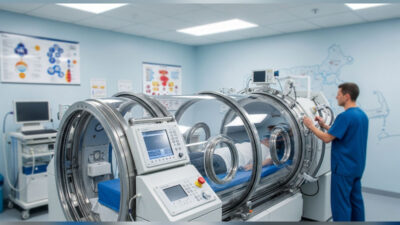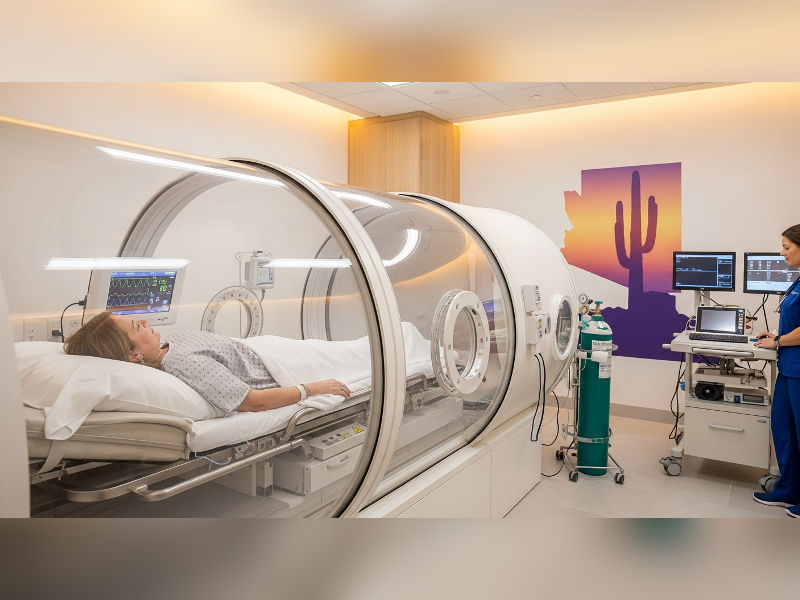
Phoenix and the surrounding Valley host six hyperbaric oxygen therapy clinics, combining hospital wound-care programs with integrative wellness centers. Sessions typically run $150 to $300, with clinical chambers operating at 2.0 to 2.4 ATA.
These treat chronic wounds., and they also support neurological recovery.. Arizona’s dry climate helps. The growing medical community also helps. Together, they support thriving HBOT Phoenix facilities. They provide residents access to FDA-approved chambers and experienced staff. Understanding what Phoenix offers helps you make informed decisions.
Table of Contents
Phoenix’s Medical Landscape and Why HBOT Facilities Are Expanding Here
According to the Undersea and Hyperbaric Medical Society, HBOT is recognized for 14 FDA-cleared medical indications, with over 1.5 million treatments administered annually in the United States.
Undersea and Hyperbaric Medical Society (UHMS)
Phoenix isn’t just growing in population. It’s becoming a healthcare destination. The city’s medical infrastructure has expanded significantly. This growth has continued over time, and it has attracted new specialists. Many focus on regenerative medicine. Others specialize in wound care.
Several factors make Phoenix suited for hyperbaric medicine. The region’s large retiree population creates demand for treatments addressing diabetic complications. Phoenix’s reputation as a sports medicine hub has increased interest in oxygen therapy.
The desert environment plays a role. Patients recovering from surgery appreciate the consistent weather. It allows for regular clinic visits. The lack of humidity reduces infection risks.
The city hosts facilities ranging from hospital departments to wellness centers. Each offers different chamber types. Some focus on FDA-approved indications. Others explore emerging applications like traumatic brain injury recovery (Harch et al., 2017).
Understanding Chamber Types Available Across Phoenix Facilities
Not all hyperbaric chamber Phoenix facilities operate identical equipment. The chamber type impacts treatment experience.
Monoplace chambers accommodate one person., and the patient lies horizontally inside the chamber.. These chambers are made of acrylic. The tubes are pressurized with 100% oxygen. They eliminate the need for masks. Many patients find monoplace units less intimidating. Most Phoenix outpatient clinics use these chambers.
Multiplace chambers are walk-in rooms holding multiple patients. You’ll breathe oxygen through masks. These systems reach higher pressures. That’s crucial for treating decompression sickness. Hospital programs maintain multiplace chambers.
There’s a distinction between hard-shell and soft chambers. FDA-approved facilities use rigid chambers. These range from 2.0 to 3.0 ATA. Soft hyperbaric chambers operate at lower pressures. They aren’t approved for most conditions.
| Chamber Type | Capacity | Pressure | Best For |
| Monoplace Hard-Shell | 1 patient | 2.0-3.0 ATA | Wound care, radiation injury |
| Multiplace Hard-Shell | 2-12 patients | 2.0-6.0 ATA | Emergency cases |
| Soft/Mild Chamber | 1-2 patients | 1.3-1.5 ATA | Wellness (not FDA-approved) |
The hyperbaric chamber in Arizona market includes these variations. Clarifying what type of facility operates should be your first question.
Six Established Hyperbaric Facilities Serving Phoenix Residents
Phoenix offers several reputable options., and these specialize in pressurized oxygen therapy.. Each facility differs in focus. Together, they represent the full range of available services.
Banner Health System operates hospital hyperbaric departments at multiple Valley locations. Their programs focus on FDA-approved indications. They work with wound care specialists. You’ll find certified technicians and board-certified physicians.
Mayo Clinic’s Arizona campus includes hyperbaric services integrated into its wound program. Their approach emphasizes evidence-based protocols. Patients with radiation tissue damage often receive referrals here.
Scottsdale-based facilities extend services to Phoenix residents. Some offer medical and wellness programs. The hyperbaric chamber Scottsdale corridor combines traditional wound care with emerging applications.
Several independent wellness centers throughout Phoenix provide HBOT services. These facilities cater to patients exploring oxygen therapy for conditions outside the FDA-approved list. Insurance coverage varies.
Outpatient wound care centers form another category. Many are affiliated with hospital systems. These clinics focus on complex wounds. Diabetic foot ulcers are a primary specialty. They maintain monoplace chambers.
Sports medicine clinics have begun incorporating hyperbaric protocols. Some Phoenix facilities offer treatment packages for reducing inflammation.
Medical Conditions Addressed Through Phoenix HBOT Programs
Phoenix clinics treat a wide spectrum of health challenges. The FDA recognizes 14 specific indications where hyperbaric therapy has demonstrated benefit. Most facilities focus on approved uses.
Chronic wound management dominates Phoenix hyperbaric practice. Diabetic foot ulcers often resist standard care. Those who have not healed may respond to oxygen therapy. The treatment delivers high oxygen levels. It targets tissue with compromised blood flow. It supports new blood vessel formation.
Radiation tissue injury affects patients who’ve undergone cancer treatment. Radiation damages blood vessels in healthy tissue. This leads to complications months or years later. Hyperbaric oxygen stimulates healing. It supports repair in damaged areas. This effect has been documented in clinical research (Thom, 2011).
Phoenix facilities also address carbon monoxide poisoning. This occurs through emergency departments. The high-pressure oxygen rapidly displaces carbon monoxide.
Other conditions treated include:
- Sudden hearing loss
- Gas gangrene
- Compromised skin grafts
- Thermal burns
Some Phoenix clinics explore off-label applications like traumatic brain injury recovery. They also treat Lyme disease management. These treatments are not FDA-approved. Because of this, insurance does not cover them.
Treatment Protocols and What to Expect During Phoenix Sessions
HBOT Phoenix treatments follow structured protocols. Standard wound care follows a defined schedule. Treatment usually includes 30 to 40 sessions.This occurs over 6 to 8 weeks., and each session lasts 90 to 120 minutes.. Chamber pressure ranges from 2.0 to 2.4 atmospheres.
You will change into cotton clothing. The clothing must be 100% cotton. Synthetic fabrics can create static electricity. This creates a safety risk. Personal items like phones stay outside. Petroleum products remain outside. Many deodorants contain petroleum or alcohol. That’s why you can’t wear deodorant in a hyperbaric chamber.
The chamber pressurizes slowly., and this process takes 10 to 15 minutes.. You may feel pressure in your ears. It feels similar to an airplane descent. Technicians teach equalization techniques beforehand. Once at target pressure, you’ll breathe normally. Many patients read during treatments.
Depressurization occurs slowly., and this prevents complications.. The entire process takes about two hours. Most Phoenix facilities schedule multiple patients daily.
Side effects are mild., and ear discomfort occurs occasionally.. Temporary vision changes happen. Serious complications are rare when facilities follow protocols (Bennett et al., 2012).
Financial Considerations and Insurance Coverage in Phoenix
Cost represents a significant factor when considering hyperbaric chamber Phoenix treatments. Pricing varies based on facility type. Coverage depends on your condition. Eligibility matters.
For FDA-approved indications, coverage is common., and medicare typically covers therapy.. Most private insurers also provide coverage.Medical necessity must be clearly documented., and you’ll need physician referrals.. Coverage includes 30 to 40 sessions.
Out-of-pocket costs vary widely., and this applies to non-covered treatments.. Single sessions at wellness centers range in price. Most cost between $250 and $500. Treatment packages offer reduced rates.
Hospital programs charge higher rates., and they offer comprehensive oversight.. Ask about per-session costs. Ask about required packages. Inquire about cancellation policies.
| Treatment Type | Sessions | Cost |
| Diabetic ulcer | 30-40 | Usually covered |
| Radiation damage | 30-60 | Usually covered |
| Brain injury | 40-80 | $10,000-$40,000 |
| Athletic recovery | 10-20 | $2,500-$10,000 |
Evaluating Phoenix Facilities and Making Informed Treatment Decisions
Choosing the right hyperbaric chamber Phoenix facility requires more than comparing prices. Accreditation status matters. Staff credentials matter. Safety records matter.
Look for facilities accredited by the Undersea and Hyperbaric Medical Society. This organization sets standards for chamber operation. UHMS-accredited programs undergo inspections.
Staff qualifications vary across facilities. Medical programs should have board-certified physicians. They should have certified technicians. Ask about the medical director’s credentials.
Chamber maintenance deserves attention., and maintained chambers undergo inspections.. They receive pressure testing. Facilities should have emergency procedures.
Treatment philosophy matters., and some facilities take a conservative approach.. Others embrace emerging applications. You should understand where a facility stands.
Consider logistics., and treatment requires consistent attendance.. Choose a location you can reach. Some facilities offer early morning appointments.
Trust your instincts during consultations., and quality facilities explain your treatment plan.. They answer questions without pressure.
FAQs
- What conditions can be treated at hyperbaric chamber Phoenix facilities?
Phoenix clinics treat FDA-approved conditions., and fDA-approved indications include diabetic wounds.. Radiation tissue damage is also included. Some facilities treat traumatic brain injury. Insurance usually does not cover these treatments.
- How much does HBOT Phoenix treatment typically cost?
Costs depend on coverage status., and fDA-approved treatments are often covered.. Non-covered sessions are paid out of pocket. Prices typically range from $250 to $500.
- How many treatment sessions will I need in Phoenix?
Standard protocols are well established., and most involve 30 to 40 sessions.. Treatment spans 6 to 8 weeks. Each session lasts 90 to 120 minutes. Complex conditions require 60 sessions.
- Are Phoenix hyperbaric facilities safe and properly regulated?
Reputable facilities maintain UHMS accreditation., and they employ certified technicians.. Facilities follow strict safety protocols. Staff receive specialized training. Serious complications are rare.
- Can I use hyperbaric therapy for athletic recovery in Phoenix?
Some facilities offer HBOT for sports injury recovery. These treatments are not FDA-approved. Insurance does not cover them. Some athletes still pursue these protocols. They follow emerging and experimental approaches.
References
Bennett, M. H., N., & Wastell, C. (2012). Hyperbaric oxygen therapy for acute coronary syndrome. Published Study (DOI)
Harch, P. G., Andrews, S. R., P. K., & Van Meter, K. W. (2017). A phase I study of low-pressure hyperbaric oxygen therapy for blast-induced post-concussion syndrome and post-traumatic stress disorder. Published Study (DOI)
Thom, S. R. (2011). Hyperbaric oxygen: Its mechanisms and efficacy. Link
References
- Undersea and Hyperbaric Medical Society. (2023). Indications for Hyperbaric Oxygen Therapy. UHMS. uhms.org
- Thom, S. R. (2011). Hyperbaric oxygen: Its mechanisms and efficacy. Plastic and Reconstructive Surgery, 127(Suppl 1), 131S-141S. doi.org
- Centers for Medicare and Medicaid Services. (2024). Hyperbaric Oxygen Therapy Coverage Criteria. CMS.gov. cms.gov
References
- Undersea and Hyperbaric Medical Society. “Hyperbaric Oxygen Therapy Indications.” 14th Edition, 2019. uhms.org
- Thom SR. “Hyperbaric oxygen: its mechanisms and efficacy.” Plastic and Reconstructive Surgery, 2011;127(Suppl 1):131S-141S. DOI: 10.1097/PRS.0b013e3181fbe2bf
- Centers for Medicare & Medicaid Services. “National Coverage Determination for Hyperbaric Oxygen Therapy.” NCD 20.29. cms.gov
Medical Disclaimer
The content on BaricBoost.com is for informational purposes only and is not intended as a substitute for professional medical advice, diagnosis, or treatment. Always seek the advice of your physician or other qualified health provider with any questions you may have regarding a medical condition. Never disregard professional medical advice or delay in seeking it because of something you have read on this website.

Author
Seph Fontane Pennock is the founder of BaricBoost.com and Regenerated.com, a clinic directory for regenerative medicine serving 10,000+ providers across the United States. He previously built and sold PositivePsychology.com, which grew to 19 million users and became the largest evidence-based positive psychology resource on the web. Seph brings direct experience as an HBOT patient, having completed protocols at clinics across three continents while navigating mold illness, systemic inflammation, and autoimmune conditions. His treatment journey includes hyperbaric oxygen therapy, peptide protocols, NAD+ therapy, and consultations with specialists from Dubai to Cape Town to Mexico. This combination of entrepreneurial track record and lived patient experience shapes everything published on BaricBoost.com. Every article is grounded in peer-reviewed research, informed by real clinical encounters, and written for patients making high-stakes treatment decisions. Seph's focus is on bringing transparency, scientific rigor, and practical guidance to the hyperbaric oxygen therapy space.