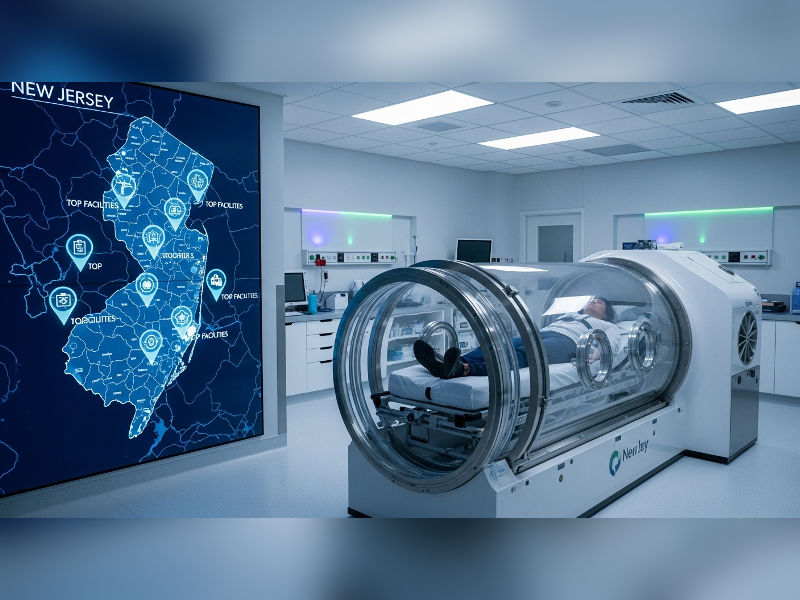
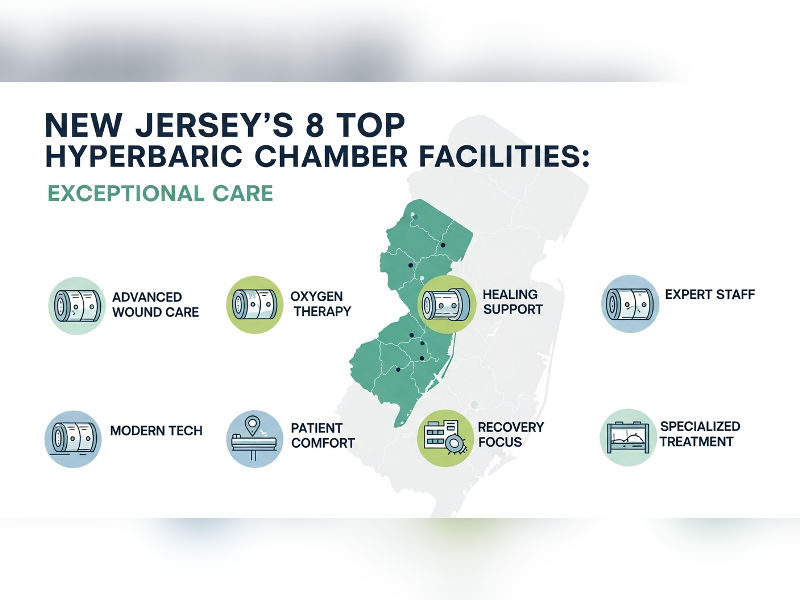
New Jersey has eight hyperbaric oxygen therapy facilities spread across the state, from hospital wound-care programs in Newark and Hackensack to private clinics along the Jersey Shore. Clinical chambers here operate at 2.0 to 2.4 ATA, treating FDA-cleared conditions and off-label cases alike.
They employ experienced clinical staff. The state’s proximity to major research hospitals means you’ve got options. But not all facilities are equal. Some specialize in wound care. Others focus on sports recovery or neurological conditions. A few offer comprehensive programs addressing multiple health concerns. Understanding what each center offers helps you decide.
Table of Contents
Why New Jersey Has Become a Hub for Hyperbaric Oxygen Therapy
According to the Undersea and Hyperbaric Medical Society, HBOT is recognized for 14 FDA-cleared medical indications, with over 1.5 million treatments administered annually in the United States.
Undersea and Hyperbaric Medical Society (UHMS)
New Jersey’s medical landscape has evolved significantly. HBOT NJ availability reflects that growth. The state sits between major metropolitan areas. The state attracts top-tier medical professionals. It also draws advanced equipment. You can find hyperbaric programs in hospital systems. You will also see standalone wellness centers. Specialized wound care clinics are common.
What makes New Jersey HBOT accessible is the concentration of board-certified physicians. These aren’t general practitioners dabbling in oxygen therapy. They’re specialists who understand pressurized oxygen delivery. Facilities tailor treatment protocols to individual needs. Care plans adjust based on diagnosis. This approach follows established clinical guidance (Weaver, 2014). The state’s regulatory environment enforces safety standards.
Insurance coverage has improved. Many providers work with major insurance companies. They verify coverage for FDA-approved indications like diabetic foot ulcers. Not every treatment gets covered. Off-label uses often require out-of-pocket payment. But the billing infrastructure is more developed here.
Top Hyperbaric Facilities Across New Jersey Worth Considering
Atlantic Health System Morristown Medical Center operates one of the region’s most comprehensive wound healing programs. Their multiplace hyperbaric chamber New Jersey accommodates multiple patients simultaneously. Many centers offer round-the-clock emergency access. Medical teams include vascular surgeons. They also include certified hyperbaric technicians.
Inspira Health Network runs several locations in South Jersey. Facilities in Vineland and Mullica Hill focus on wound care integration. You’re getting comprehensive wound management, including debridement. Their monoplace chambers are newer models with improved visibility.
RWJBarnabas Health maintains programs at multiple hospitals. That includes Robert Wood Johnson University Hospital. These are academic medical centers. Physicians stay current with emerging research. They treat conditions beyond standard wound care.
Baromedical Associates in Trenton operates as a freestanding center. They have a strong reputation for treating radiation injuries. Their protocols follow Undersea and Hyperbaric Medical Society guidelines. The facility uses monoplace chambers exclusively.
Englewood Hospital and Medical Center provides hyperbaric chamber NJ services in North Jersey. They have expertise in treating crush injuries. Their location makes them accessible to Bergen County patients. The staff emphasizes patient education. They explain what’s happening during sessions.
CentraState Medical Center in Freehold offers hyperbaric therapy. They’ve built a track record with diabetic foot complications. Their approach integrates podiatry and hyperbaric medicine. Treatment sessions run six days weekly.
Hackensack Meridian Health operates hyperbaric programs. These programs run across several facilities statewide. They’ve invested in newer chamber technology. They maintain certifications through multiple accrediting bodies. Their referral network is extensive.
Shore Hyperbaric Center in Toms River focuses on medically necessary treatments. They also offer wellness protocols. They treat FDA-approved conditions. They work with patients exploring HBOT for post-concussion syndrome. Evidence for off-label uses varies.
| Facility Name | Location | Chamber Type | Primary Specialties |
| Atlantic Health Morristown | Morristown | Multiplace | Emergency care, wounds |
| Inspira Health Network | Vineland, Mullica Hill | Monoplace | Diabetic wounds |
| RWJBarnabas Health | New Brunswick, Neptune | Both | Diverse conditions |
| Baromedical Associates | Trenton | Monoplace | Radiation injury |
| Englewood Hospital | Englewood | Monoplace | Crush injuries |
| CentraState Medical | Freehold | Monoplace | Diabetic complications |
| Hackensack Meridian | Multiple sites | Both | Comprehensive care |
| Shore Hyperbaric Center | Toms River | Monoplace | Medical and wellness |
What Treatment Protocols Look Like at NJ HBOT Centers
Treatment duration follows standardized patterns across most NJ HBOT facilities. Individual protocols get adjusted based on your condition. Most patients undergo daily sessions five or six days a week. Each session lasts 90 to 120 minutes. That time includes pressurization. It also includes treatment and decompression.
Patients breathe 100% medical-grade oxygen. Chamber pressure rises to 2.0 to 2.5 atmospheres. At that level, blood plasma dissolves more oxygen. This oxygen-rich blood reaches tissues with poor circulation. It reduces inflammation. It stimulates growth factors promoting healing (Thom, 2011).
Sessions aren’t thrilling., and you’re lying in an enclosed tube.. The hardest part is ear pressure equalization. It feels like an airplane descent. You’ll need to clear your ears during pressurization. Staff teach you techniques before your first session.
Most treatment courses last 20 to 40 sessions. Wound healing often requires 30 to 40 treatments. Carbon monoxide poisoning may need far fewer sessions. Some patients notice improvements within ten sessions. Others don’t see changes until later.
Patients might also consider hyperbaric chamber Boston programs. Some travel to centers offering hyperbaric chamber San Diego treatments for complex cases.
Insurance Coverage and Out-of-Pocket Costs You Should Expect
Insurance coverage for hyperbaric chamber NJ treatments depends on your diagnosis. It must match FDA-approved indications. Medicare covers 14 specific conditions. Most private insurers follow similar guidelines. Diabetic wounds with documentation usually get covered. Chronic fatigue syndrome rarely gets covered.
Pre-authorization requires detailed medical records. You must demonstrate failed conventional treatments first. For diabetic foot ulcers, that means documented attempts at offloading. For radiation damage, you need radiation oncology records. You need evidence of tissue injury unresponsive to standard care.
When insurance covers treatment, costs depend on your deductible. Each session might be billed at $500 to $1,500. Insurance rates bring that down. If you haven’t met your deductible, you could pay $200 to $400 per session. A 30-session course can cost $6,000 to $12,000 upfront.
Patients exploring hyperbaric chamber Michigan or hyperbaric chamber Portland options should compare pricing. Facility charges vary regionally.
Self-pay rates for non-covered conditions vary wildly. Some facilities charge $150 to $250 per session. Others charge $400 or more per visit. Wellness centers sometimes bundle sessions. Get the total estimated cost in writing before committing.
What Are the Side Effects and Risks?
Hyperbaric oxygen therapy involves risks. The most common complication is barotrauma. That’s pressure-related injury to air-filled spaces. Particularly your ears and sinuses. Patients who cannot equalize ear pressure face a higher risk. In severe cases, this can lead to eardrum rupture. Sinus congestion makes equalization harder.
Oxygen toxicity is rare at treatment pressures used clinically. Extended exposure to high-pressure oxygen can cause seizures. This typically happens at pressures above 3.0 ATA. Or with treatment times exceeding two hours. Facilities monitor for warning signs.
Fire risk remains the most catastrophic complication. 100% oxygen environments are flammable. Facilities prohibit petroleum-based products inside chambers. Reputable centers maintain strict safety protocols. Verify that staff receive fire safety training.
Vision changes happen in about 20% of patients (Bennett & Elliott, 2003). Temporary nearsightedness develops. The lens of your eye swells from oxygen exposure. This usually resolves within weeks. But it’s annoying during a 40-session protocol.
Some patients experience claustrophobia., and this occurs more often in monoplace chambers.. These chambers are clear acrylic tubes. You’re lying flat for two hours. Claustrophobic patients should seek multiplace chambers. These allow sitting upright. They also provide more space during treatment.
How to Choose the Right Facility for Your Specific Needs
Begin by confirming facility accreditation. Look for approval from the Undersea and Hyperbaric Medical Society. This means they’ve met standards for equipment maintenance. Not every good facility pursues UHMS accreditation. But it’s a useful baseline indicator.
Check the medical director’s credentials. Board certification in hyperbaric medicine requires additional training. Some facilities have physicians who completed comprehensive training programs. Others have supervising physicians less involved. You want someone who understands nuances, making treatment decisions.
Ask about the chamber type and why they use it., and monoplace chambers treat one patient at a time.. They allow higher pressures but are more confining. Multiplace chambers accommodate multiple patients. They allow staff inside during treatment. Neither is universally better.
Location and scheduling are critical factors., and a 30- to 40-session course spans about six weeks.. Consistent access makes completion easier. A center an hour away might have better equipment. But if you’re missing sessions because of traffic, you’re not getting optimal treatment. Consistency matters more.
Talk to other patients if possible. Most facilities can connect you with previous patients. Ask about wait times. Ask whether the facility delivered on initial promises.
Geographic Distribution of HBOT Access Throughout New Jersey
Northern New Jersey has the highest facility density. Bergen County offers several options. Essex and Hudson counties do as well. Patients in Englewood or Newark have multiple choices. They can select hospital-based programs. Freestanding centers are also available.
Central New Jersey has facilities in Freehold., and new Brunswick also hosts several programs.. Major systems like RWJBarnabas provide access. Monmouth County residents have emergency coverage. Middlesex County patients do as well. These facilities integrate into larger health systems.
South Jersey maintains coverage through Inspira Health Network. Facilities in the Atlantic City area help. Patients in Cumberland and Cape May counties might face longer drives. But existing facilities offer comprehensive services.
Western New Jersey has fewer options., and access is limited in many areas.. Warren County is particularly sparse.Sussex County faces similar constraints., and residents often travel to Morris County centers.. Some go to Pennsylvania facilities. This creates barriers for patients with mobility limitations.
FAQs
- What conditions qualify for insurance coverage at hyperbaric chamber NJ facilities?
Insurance often covers FDA-approved indications., and diabetic foot ulcers usually qualify.. Insurers require documentation first. Records must show that standard treatments failed.
- How long does a typical treatment course last at New Jersey HBOT centers?
Most patients complete 20 to 40 sessions., and treatment spans six to eight weeks.. Daily sessions last 90 to 120 minutes. Final totals depend on the condition treated.
- Are there risks associated with hyperbaric oxygen therapy I should know about?
The main risk is ear barotrauma. Pressure changes cause discomfort. Temporary vision changes affect about 20% of patients. Oxygen toxicity is rare. Proper technique reduces overall risk.
References
Bennett, M. H., & Elliott, D. (2003). The eye and diving. South Pacific Underwater Medicine Society Journal, 33(1), 13-20.
Thom, S. R. (2011). Hyperbaric oxygen: Its mechanisms and efficacy. Published Study (DOI)
Weaver, L. K. (2014). Hyperbaric oxygen therapy indications (13th ed.). Undersea and Hyperbaric Medical Society.
References
- Undersea and Hyperbaric Medical Society. (2023). Indications for Hyperbaric Oxygen Therapy. UHMS. uhms.org
- Thom, S. R. (2011). Hyperbaric oxygen: Its mechanisms and efficacy. Plastic and Reconstructive Surgery, 127(Suppl 1), 131S-141S. doi.org
- Centers for Medicare and Medicaid Services. (2024). Hyperbaric Oxygen Therapy Coverage Criteria. CMS.gov. cms.gov
References
- Undersea and Hyperbaric Medical Society. “Hyperbaric Oxygen Therapy Indications.” 14th Edition, 2019. uhms.org
- Thom SR. “Hyperbaric oxygen: its mechanisms and efficacy.” Plastic and Reconstructive Surgery, 2011;127(Suppl 1):131S-141S. DOI: 10.1097/PRS.0b013e3181fbe2bf
- Centers for Medicare & Medicaid Services. “National Coverage Determination for Hyperbaric Oxygen Therapy.” NCD 20.29. cms.gov
Medical Disclaimer
The content on BaricBoost.com is for informational purposes only and is not intended as a substitute for professional medical advice, diagnosis, or treatment. Always seek the advice of your physician or other qualified health provider with any questions you may have regarding a medical condition. Never disregard professional medical advice or delay in seeking it because of something you have read on this website.

Author
Seph Fontane Pennock is the founder of BaricBoost.com and Regenerated.com, a clinic directory for regenerative medicine serving 10,000+ providers across the United States. He previously built and sold PositivePsychology.com, which grew to 19 million users and became the largest evidence-based positive psychology resource on the web. Seph brings direct experience as an HBOT patient, having completed protocols at clinics across three continents while navigating mold illness, systemic inflammation, and autoimmune conditions. His treatment journey includes hyperbaric oxygen therapy, peptide protocols, NAD+ therapy, and consultations with specialists from Dubai to Cape Town to Mexico. This combination of entrepreneurial track record and lived patient experience shapes everything published on BaricBoost.com. Every article is grounded in peer-reviewed research, informed by real clinical encounters, and written for patients making high-stakes treatment decisions. Seph's focus is on bringing transparency, scientific rigor, and practical guidance to the hyperbaric oxygen therapy space.