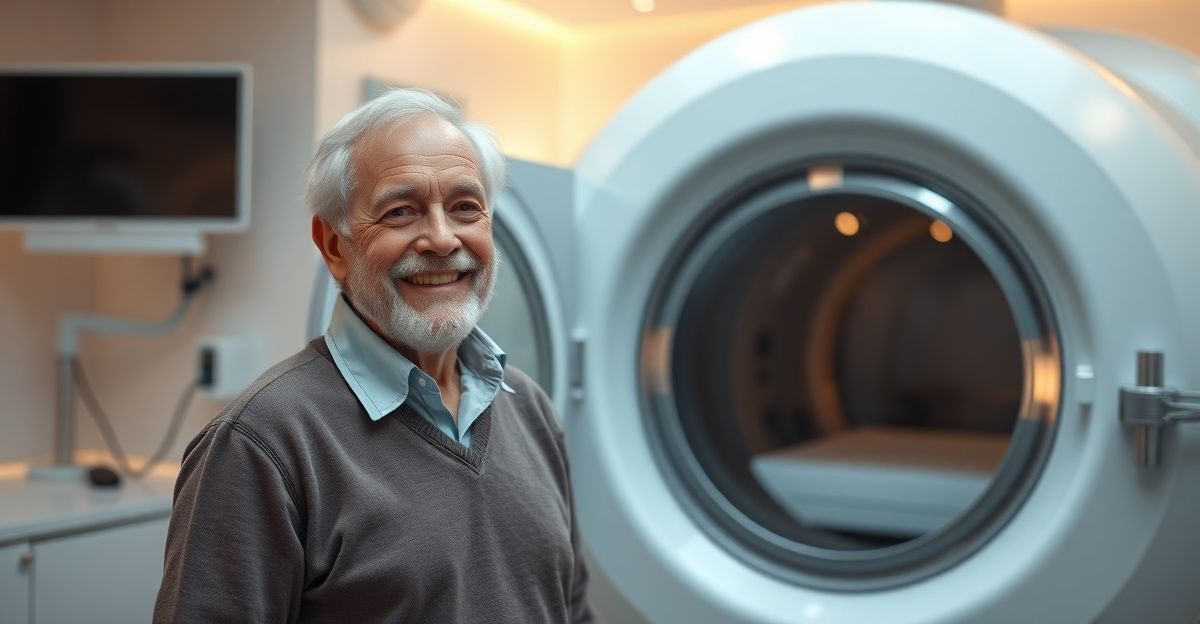
Yes. Published research shows HBOT can produce meaningful improvements in stroke patients months to years after the event. A retrospective study of 162 chronic stroke patients found that 86% achieved clinically significant cognitive improvement after 40 to 60 Hyperbaric Oxygen Therapy (HBOT) sessions at 2.0 ATA (atmospheres absolute), including patients up to 190 months (nearly 16 years) post-stroke. Cognitive gains were more consistent than motor gains, and brain imaging confirmed the biological basis for these late improvements.
Why Doctors Used to Say “It’s Too Late”
For decades, the prevailing view in neurology was that meaningful stroke recovery was limited to the first 6 to 12 months. After that window, whatever deficits remained were considered permanent. This belief was based on the observation that most spontaneous recovery occurs in the early months, and that conventional rehabilitation produces diminishing returns over time.
The logic seemed sound: dead brain cells do not regenerate, so recovery beyond the early neuroplasticity window was presumed impossible. Patients who had plateaued were told to adapt to their limitations rather than pursue further recovery.
Research from the last decade has challenged this view. The brain retains the capacity for plasticity well beyond the conventional recovery window, particularly when the right stimulus is applied. The question is not whether late neuroplasticity is possible, but what triggers it.
The Efrati 2013 Trial: Proof of Concept
The first rigorous evidence came from a 2013 prospective randomized crossover trial by Efrati et al., published in PLoS ONE. This study enrolled 74 patients (59 completed) who had suffered strokes 6 to 36 months earlier. All patients had completed standard rehabilitation and were no longer improving.
The protocol: 40 HBOT sessions at 2.0 ATA, 90 minutes per session, five days per week over two months.
The crossover design was critical. Half the patients received HBOT immediately. The other half served as controls for two months (no treatment), then crossed over to receive HBOT. During the control period, no patient improved. Once HBOT began, significant improvements appeared in NIHSS scores, activities of daily living, and quality of life.
SPECT brain imaging revealed the mechanism. Before treatment, certain brain regions showed intact anatomical structure but suppressed metabolic activity. After HBOT, these same regions showed significantly increased activity. The therapy was reactivating viable but dormant neurons in the ischemic penumbra, tissue that had survived the stroke but had been “switched off” for months.
The Hadanny 2020 Study: Larger Numbers, Longer Timeframes
The Hadanny et al. 2020 retrospective analysis, published in Restorative Neurology and Neuroscience, expanded the evidence base significantly. This study included 162 chronic stroke patients (75.3% male, mean age 60.75) who were all at least 3 months post-stroke. The range extended to 190 months post-stroke, nearly 16 years.
After 40 to 60 HBOT sessions at 2.0 ATA, the results were consistent across time windows:
- 86% of patients achieved clinically significant cognitive improvement (defined as >0.5 standard deviation improvement in cognitive scores)
- All cognitive domains improved significantly (P < 0.05): memory, attention, information processing speed, executive function
- No significant difference between cortical and subcortical strokes
- Hemorrhagic stroke patients showed greater improvement in information processing speed than ischemic stroke patients
- Left hemisphere strokes showed greater motor domain improvement
The most important finding for the “is it too late?” question: baseline cognitive function was the strongest predictor of improvement across all domains, not time since stroke. Patients who were years removed from their stroke still improved, provided they had recoverable brain tissue.
Advanced Imaging: Seeing the Changes
The Khairy et al. 2025 case report, published in the Journal of Medical Case Reports, provided the most detailed imaging evidence to date of late recovery. A 45-year-old man with hemorrhagic stroke began HBOT 15 months post-event. After 83 sessions over 16 weeks at 2.0 ATA:
- SPECT: 15.83% increase in right motor cortex perfusion, 15.92% increase in right frontal lobe perfusion
- DTI (diffusion tensor imaging): Increased fractional anisotropy in major white matter tracts, indicating improved structural connectivity
- Functional: Progressed from wheelchair dependence to ambulation with a cane
- Cognitive: Improved attention, verbal memory, and processing speed
The imaging data demonstrates that the clinical improvements are not placebo effects. Real, measurable biological changes are occurring in the brain, even more than a year after the stroke.
Cognitive Recovery vs. Motor Recovery: What to Expect Years Later
The evidence consistently shows that cognitive improvement is more reliably achieved than motor improvement in chronic stroke patients treated with HBOT.
Cognitive Outcomes
Cognitive function responds well to HBOT even years after stroke. The 86% clinically significant improvement rate from the Hadanny 2020 study is across cognitive domains broadly. Memory, attention, information processing speed, and executive function all showed gains. This makes sense: cognitive function relies on distributed neural networks across the brain, and reactivating dormant neurons in multiple regions can produce meaningful cognitive improvement even when the stroke damage is old.
Motor Outcomes
Motor recovery in chronic stroke is more variable. The Khairy 2025 case showed dramatic motor improvement (wheelchair to cane), but this was a single patient who received 83 sessions, more than the standard 40-session protocol. The Efrati 2013 trial showed improvements in activities of daily living, which include motor components, but the primary signal was in overall neurological function rather than isolated motor recovery.
The challenge with motor recovery is that it often depends on specific neural tracts (particularly the corticospinal tract) that may be more severely damaged than the diffuse networks supporting cognition. If the motor tract is destroyed rather than dormant, HBOT cannot reactivate what is not there.
Setting Realistic Expectations
For chronic stroke patients considering HBOT years after the event:
- Cognitive improvement is the most likely outcome. Think clearer thinking, better memory, improved processing speed, stronger attention.
- Motor improvement is possible but less predictable. Some patients see significant gains. Others see modest or no motor changes.
- Quality of life improvements are common. Even when specific neurological scores change modestly, patients often report feeling better overall.
- The response is not all-or-nothing. Different domains may improve at different rates and to different degrees.
The 40-Session Protocol: What It Involves
The standard evidence-based protocol for chronic stroke HBOT involves:
- Chamber type: Hard chamber (monoplace or multiplace), not a soft chamber
- Pressure: 2.0 ATA with 100% medical-grade oxygen
- Session duration: 90 minutes, including periodic air breaks
- Frequency: 5 sessions per week
- Minimum course: 40 sessions (approximately 8 weeks)
- Extended course: Up to 60 or more sessions for patients showing continued improvement
The 40-session minimum is consistent across the Efrati 2013 RCT, the Hadanny 2020 retrospective, and other chronic stroke studies. Shorter courses have not been studied in rigorous trials, and there is no evidence that fewer sessions produce equivalent results.
Soft chambers operating at 1.3 ATA with ambient air have not been validated for stroke recovery. The clinical evidence specifically uses hard chambers at 2.0 ATA with 100% oxygen.
Who Is the Best Candidate for Late HBOT?
Based on the published research, the ideal candidate for HBOT years after stroke has these characteristics:
- Identifiable penumbral tissue: Brain imaging (SPECT, perfusion MRI) that shows regions with intact structure but suppressed metabolic activity. These are the neurons HBOT can reactivate.
- Plateaued conventional recovery: Standard rehabilitation has been completed and is no longer producing gains.
- Adequate baseline cognitive function: Higher baseline cognitive function predicts better outcomes (Hadanny 2020).
- Medical stability: No uncontrolled seizures, no untreated pneumothorax, no active contraindications to HBOT.
- Realistic expectations: Understanding that cognitive gains are more likely than motor gains, and that results vary.
Limitations of the Current Evidence
The evidence for HBOT in chronic stroke is promising but has important limitations:
- Single research group: Most positive data comes from the Efrati/Hadanny group at the Sagol Center for Hyperbaric Medicine in Israel. Independent replication from other centers is needed.
- Sham control gap: The Efrati 2013 trial used a waitlist crossover design, not a sham-controlled design. The Harrison et al. 2024 sham-controlled chronic stroke trial addresses this gap, but full published results should be reviewed.
- Retrospective data: The 86% improvement rate comes from a retrospective study, which is inherently weaker than a prospective RCT.
- Not FDA-cleared: HBOT for stroke is considered investigational. It is not among the 14 FDA-cleared indications for HBOT.
- Long-term durability: How long the improvements last beyond 3 to 6 months post-treatment is not well established in large cohorts.
Despite these limitations, the consistency of findings across the Efrati 2013 RCT, the Hadanny 2020 retrospective, the Khairy 2025 imaging data, and the Rosario 2018 functional outcomes study creates a coherent evidence picture.
Case Studies: What Late Recovery Actually Looks Like
Abstract statistics do not capture what late stroke recovery means in daily life. The published case reports and outcomes data paint a more concrete picture.
The Khairy 2025 Patient: From Wheelchair to Walking
This 45-year-old man had a hemorrhagic stroke 15 months before starting HBOT. He was wheelchair-dependent, had significant cognitive deficits, and had completed standard rehabilitation without further improvement. After 83 HBOT sessions over 16 weeks at 2.0 ATA, he could walk with a cane. His attention, verbal memory, and processing speed all improved. SPECT imaging confirmed a 15.83% increase in motor cortex perfusion.
What stands out about this case is the magnitude of the motor recovery. Going from wheelchair to cane ambulation is a functional threshold that dramatically changes independence. The extended protocol (83 sessions rather than the standard 40) suggests some patients may benefit from longer courses.
The Rosario 2018 Cohort: Sustained Gains
Seven ischemic stroke patients completed 40 HBOT sessions over 12 weeks. Improvements appeared in cognition, executive function, gait, sleep quality, and quality of life. At the 3-month follow-up after treatment ended, the functional improvements remained. This is important because it demonstrates that the gains from HBOT are not merely transient effects that disappear once the oxygen is withdrawn. The neural changes, once established, appear to persist.
Sleep quality improvement is an underappreciated finding. Sleep disruption is extremely common after stroke and impairs cognitive and physical recovery. If HBOT improves sleep quality, this creates a positive feedback loop: better sleep supports further neural recovery, which may compound the direct effects of the HBOT sessions.
The Hadanny 2020 Cohort: Cognitive Transformation
In the largest chronic stroke HBOT study, 162 patients showed improvements across the full spectrum of cognitive function. For patients years removed from their stroke, the cognitive gains were described as “clinically significant” in 86% of cases. In practical terms, this means improved ability to follow conversations, remember appointments, process information quickly enough to participate in social interactions, and make decisions. For many chronic stroke patients, these cognitive deficits are more limiting to quality of life than motor deficits.
What “Clinically Significant” Means in Practice
The Hadanny 2020 study defined clinically significant improvement as greater than 0.5 standard deviation improvement in cognitive test scores. This is a recognized threshold in neuropsychological research, roughly corresponding to the minimum change that patients and their families notice in daily life.
A 0.5 SD improvement in information processing speed, for example, might mean the difference between struggling to follow a normal-paced conversation and being able to keep up. In attention, it could mean the difference between losing track of a task after a few minutes and being able to sustain focus for 15 to 20 minutes. These are not abstract numbers. They map directly onto functional independence.
That said, “clinically significant” does not mean “fully recovered.” Most chronic stroke patients who respond to HBOT improve meaningfully but do not return to pre-stroke function. The improvements are often described as moving from “significantly impaired” to “mildly impaired,” or from “dependent” to “partially independent.” These changes matter enormously for quality of life even when they fall short of complete recovery.
Why Some Patients Respond and Others Do Not
The 86% figure means that 14% of patients in the Hadanny 2020 study did not achieve clinically significant improvement. Understanding why some patients respond and others do not is one of the key questions in HBOT stroke research.
The strongest predictor identified so far is baseline cognitive function. Patients with higher baseline cognition tended to improve more. This makes sense: patients with more viable but dormant neural tissue have more to reactivate. Patients whose stroke damage was more extensive, with less recoverable penumbra, may have less tissue available for HBOT to target.
Other potential factors include the location of the stroke (some brain regions may be more responsive to reoxygenation), the presence of other medical conditions (diabetes, vascular disease) that could limit the brain’s repair capacity, and the completeness of the HBOT protocol (patients who completed all 40 or more sessions may have better outcomes than those who stopped early).
Pre-treatment brain imaging (SPECT or perfusion MRI) may help predict who will respond by identifying the presence and extent of viable penumbral tissue. Patients with large areas of anatomy-physiology mismatch (intact structure, suppressed function) are theoretically the best candidates. However, this predictive approach has not yet been validated in a prospective trial.
The Bottom Line for Chronic Stroke Patients
The data is clear on one point: the old belief that stroke recovery stops after 6 to 12 months is wrong. Patients treated with HBOT years after their stroke have shown measurable, meaningful improvements in cognitive function, supported by brain imaging showing biological changes.
HBOT is not a guaranteed solution. It is an investigational therapy with a growing but still incomplete evidence base. But for chronic stroke patients who have exhausted conventional rehabilitation and are looking for additional options, the published data suggests it deserves serious consideration.
For the full overview, see our guide to HBOT for stroke patients. For the detailed numbers, see HBOT stroke recovery statistics. For information on the financial side, see our HBOT success rate data.
Sources
- Efrati S, Fishlev G, Bechor Y, et al. “Hyperbaric Oxygen Induces Late Neuroplasticity in Post Stroke Patients – Randomized, Prospective Trial.” PLoS ONE. 2013;8(1):e53716. DOI: 10.1371/journal.pone.0053716
- Hadanny A, et al. “Hyperbaric oxygen therapy improves neurocognitive functions of post-stroke patients.” Restorative Neurology and Neuroscience. 2020;38(1):93-108.
- Khairy S, et al. “Anatomical and metabolic brain imaging correlation of neurological improvements following HBOT.” Journal of Medical Case Reports. 2025;19:87. DOI: 10.1186/s13256-025-05577-5
- Rosario ER, et al. “The Effect of HBOT on Functional Impairments Caused by Ischemic Stroke.” Neurology Research International. 2018;2018:3172679. DOI: 10.1155/2018/3172679
- Bennett MH, et al. “Hyperbaric oxygen therapy for acute ischaemic stroke.” Cochrane Database of Systematic Reviews. 2014;(11):CD004954. DOI: 10.1002/14651858.CD004954.pub3
- Iqbal J, et al. “Hyperbaric Oxygen and Outcomes Following the Brain Injury: A Systematic Review.” Journal of Neurology Research Reviews & Reports. 2023;5:178. DOI: 10.47363/jnrrr/2023(5)178
- Carson S, et al. “Hyperbaric oxygen therapy for stroke: a systematic review.” Clinical Rehabilitation. 2005;19(8):819-833. DOI: 10.1191/0269215505cr907oa
- Harrison DW, Brasher PM, Eng J, et al. “Hyperbaric Oxygen Post Established Stroke.” 2024.
Medical Disclaimer
The content on BaricBoost.com is for informational purposes only and is not intended as a substitute for professional medical advice, diagnosis, or treatment. Always seek the advice of your physician or other qualified health provider with any questions you may have regarding a medical condition. Never disregard professional medical advice or delay in seeking it because of something you have read on this website.

Author
Seph Fontane Pennock is the founder of BaricBoost.com and Regenerated.com, a clinic directory for regenerative medicine serving 10,000+ providers across the United States. He previously built and sold PositivePsychology.com, which grew to 19 million users and became the largest evidence-based positive psychology resource on the web. Seph brings direct experience as an HBOT patient, having completed protocols at clinics across three continents while navigating mold illness, systemic inflammation, and autoimmune conditions. His treatment journey includes hyperbaric oxygen therapy, peptide protocols, NAD+ therapy, and consultations with specialists from Dubai to Cape Town to Mexico. This combination of entrepreneurial track record and lived patient experience shapes everything published on BaricBoost.com. Every article is grounded in peer-reviewed research, informed by real clinical encounters, and written for patients making high-stakes treatment decisions. Seph's focus is on bringing transparency, scientific rigor, and practical guidance to the hyperbaric oxygen therapy space.