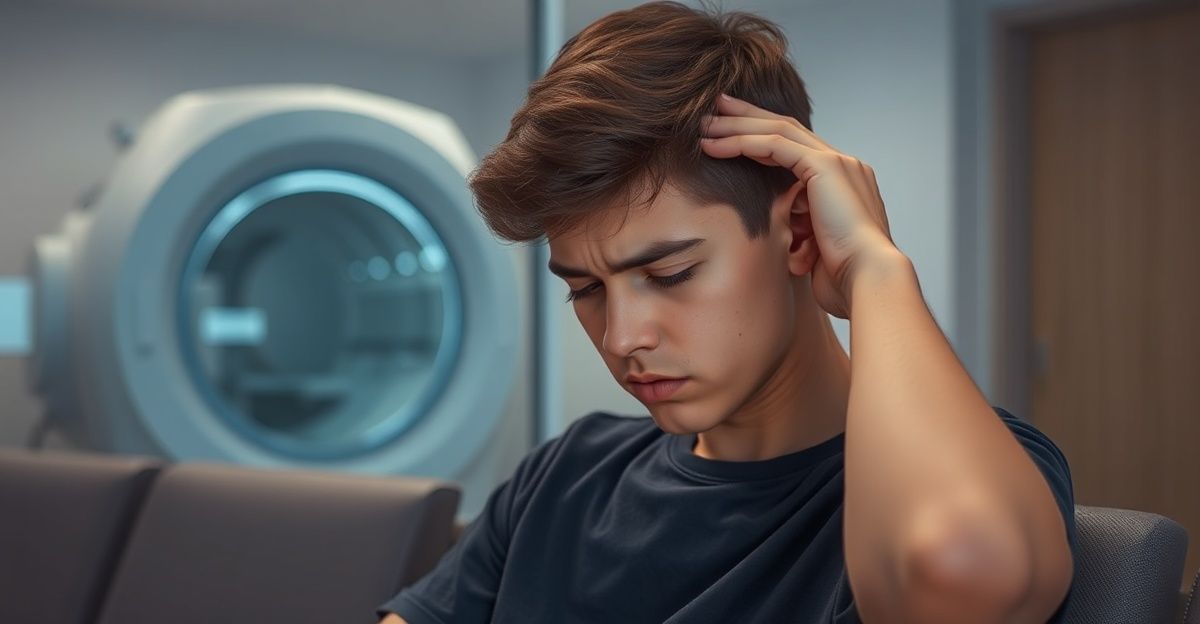
Between 15% and 30% of concussion patients develop post-concussion syndrome (PCS), a condition where headaches, cognitive fog, and fatigue persist months or years after the initial injury. A 2013 randomized controlled trial by Boussi-Gross et al. (n=56) found that 40 sessions of hyperbaric oxygen therapy at 1.5 ATA produced significant improvements in memory, attention, and quality of life in PCS patients 1 to 5 years post-injury. The evidence positions HBOT as one of the few interventions with controlled trial support for persistent post-concussion symptoms. It is one of several broader list of brain conditions and HBOT currently being explored in clinical research.
What is post-concussion syndrome and why does it persist?
Post-concussion syndrome is defined by symptoms lasting beyond the expected 7 to 14 day recovery window after a mild traumatic brain injury. The ICD-10 criteria require at least three persistent symptoms: headache, dizziness, fatigue, irritability, insomnia, concentration difficulty, or memory problems. The condition affects roughly 1.5 million Americans at any given time, based on annual concussion rates of 3.8 million (CDC) and a conservative 15% chronicity rate.
The traditional explanation blamed structural damage visible on CT or MRI. But most PCS patients have normal imaging. Advanced neuroimaging tells a different story. SPECT scans consistently show regions of decreased cerebral blood flow in PCS patients, even when structural scans appear clean. A 2022 systematic review by Harch documented that these perfusion deficits correlate directly with symptom severity and location.
The underlying pathology involves a cascade that begins at injury and can become self-sustaining. The initial mechanical force disrupts axons and small blood vessels. This triggers neuroinflammation, mitochondrial dysfunction, and impaired oxygen metabolism. In most patients, these processes resolve within weeks. In PCS patients, they do not. The brain enters a state of chronic metabolic crisis: enough oxygen to keep neurons alive but not enough for normal function.
This metabolic model explains why rest alone fails for PCS. Rest reduces oxygen demand, which helps in the acute phase. But it does nothing to restore the damaged microvasculature or resolve chronic neuroinflammation that drives persistent symptoms. A patient who rests for six months still has the same perfusion deficits and inflammatory markers as one who rested for six weeks.
Why rest and standard rehabilitation fail for chronic PCS
Standard concussion management follows a graded return-to-activity protocol. Physical and cognitive rest in the acute phase, then gradual reintroduction of activity over days to weeks. For 70% to 85% of concussion patients, this works. Symptoms resolve, and the brain heals on its own timeline.
For PCS patients, the protocol stalls. The standard toolkit includes vestibular rehabilitation for dizziness, cognitive behavioral therapy for mood disturbance, medication for headaches (often triptans or amitriptyline), and graded exercise therapy. Each targets a symptom. None addresses the metabolic root.
A 2014 study by Cifu et al. in the Journal of Head Trauma Rehabilitation tracked military service members with persistent post-concussion symptoms through standard rehabilitation programs. Symptom improvement was modest and often incomplete. The authors noted that “despite comprehensive rehabilitation, many participants continued to experience significant cognitive and behavioral symptoms.”
Pharmacological options for PCS are largely borrowed from other conditions. SSRIs for depression, stimulants for attention, sleep aids for insomnia. None were developed for or specifically tested in PCS populations. A 2021 review in Brain Sciences concluded that no pharmacological agent has demonstrated consistent efficacy for PCS in randomized trials.
This treatment gap is what makes HBOT significant. It targets the metabolic and vascular pathology that standard treatments ignore.
The 1.5 ATA protocol: what the evidence shows
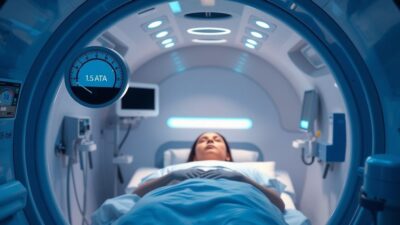
The protocol that has accumulated the most controlled evidence for PCS uses 1.5 ATA (atmospheres absolute) with 100% oxygen, delivered in 60-minute sessions, five days per week, for 40 to 60 total sessions. This is lower pressure than traditional wound-healing protocols (which typically use 2.0 to 2.4 ATA) and reflects the specific demands of brain tissue.
The Boussi-Gross 2013 trial remains the most cited study. Fifty-six patients with PCS lasting 1 to 5 years were randomized to immediate HBOT or a crossover control group. After 40 sessions at 1.5 ATA, treated patients showed statistically significant improvements on standardized neurocognitive tests, including memory, executive function, and information processing speed. SPECT imaging confirmed increased cerebral blood flow in previously hypoperfused regions.
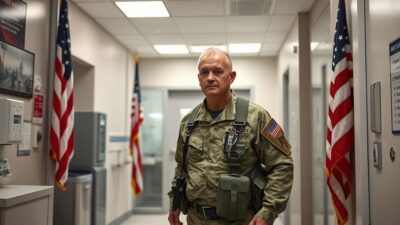
Harch et al. published results from a 2020 randomized controlled trial in Medical Gas Research, testing 1.5 ATA HBOT in military veterans with mild TBI and persistent symptoms. The treatment group received 40 sessions. Results showed significant improvement in post-concussion symptoms, PTSD symptoms, and cognitive function compared to the sham group.
Harch’s 2022 systematic review in Frontiers in Neurology analyzed dosage across all published mild TBI HBOT studies. The review concluded that 1.5 ATA produced the most consistent positive results, while pressures above 2.0 ATA showed diminishing or no benefit for brain injury. The proposed mechanism: 1.5 ATA delivers enough oxygen to activate neuroplasticity pathways without the vasoconstriction that occurs at higher pressures.
A 2025 double-blind RCT by Weaver et al. in Scientific Reports enrolled participants with persistent symptoms after brain injury. The study used rigorous sham controls and found that HBOT at 1.5 ATA produced measurable improvements in symptom scores, though the magnitude of sham response was also notable, a consistent finding across HBOT brain injury trials that complicates interpretation.
Which PCS symptoms respond best to HBOT?
Not all PCS symptoms respond equally. The evidence suggests a hierarchy of responsiveness based on the underlying pathology each symptom reflects.
Cognitive symptoms show the strongest response. Memory deficits, attention problems, processing speed, and executive function consistently improve across trials. The Boussi-Gross trial found the largest effect sizes for memory and attention. A 2021 analysis by Biggs et al. in the Journal of Applied Physiology calculated medium to large effect sizes for cognitive outcomes across multiple HBOT TBI trials.
Headache frequency and severity improve in most studies. The mechanism likely involves reduced neuroinflammation and improved cerebral blood flow to pain-processing regions. Patients in the Harch 2020 trial reported significant reductions in headache frequency, though complete resolution was uncommon.
Fatigue and sleep disturbance show moderate improvement. These symptoms often improve in parallel with cognitive gains, suggesting they share underlying metabolic drivers. The 2022 pediatric study by Hadanny et al. documented improved sleep quality alongside cognitive and behavioral gains.
Mood and emotional symptoms are more variable. Depression and anxiety scores improve in some trials but not others. The Harch 2020 veteran trial found significant improvement in PTSD symptoms (which overlap substantially with PCS mood symptoms), but this finding has not been consistently replicated.
Vestibular symptoms (dizziness, balance problems) show the least consistent response to HBOT alone, likely because these symptoms often involve peripheral vestibular damage that oxygen therapy cannot reverse. Patients with primarily vestibular PCS may benefit more from vestibular rehabilitation than HBOT.
Timeline: what to expect week by week
Patients beginning a 40-session HBOT protocol for PCS should not expect linear improvement. The clinical pattern described across trials and practitioner reports follows a general trajectory, though individual variation is substantial.
Weeks 1 to 2 (sessions 1 to 10): Most patients notice little change. Some report temporary worsening of fatigue or headache during this period, which practitioners attribute to the initial inflammatory response as damaged tissue begins to metabolize oxygen more actively. This is not a reason to stop treatment.
Weeks 3 to 4 (sessions 11 to 20): Subtle improvements in energy and sleep quality often appear first. Patients may notice they are reading longer before losing focus, or that their end-of-day fatigue is less severe. These changes are typically modest.
Weeks 5 to 6 (sessions 21 to 30): Cognitive improvements become more apparent. The Boussi-Gross study found that most measurable neurocognitive gains emerged in the second half of the treatment course. Headache frequency often decreases during this window.
Weeks 7 to 8 (sessions 31 to 40): Gains typically consolidate. Some patients experience a plateau, while others continue to improve. Post-treatment SPECT scans at this stage show the perfusion improvements that correlate with symptom reduction.
Post-treatment (months 1 to 3): Improvements generally persist after treatment ends. The Boussi-Gross crossover design allowed researchers to assess durability: gains measured at the end of treatment were maintained at follow-up assessments. Some practitioners recommend maintenance sessions (1 to 2 per week) for patients who respond well but notice gradual symptom return.
Not every patient responds. Across the controlled trials, roughly 60% to 70% of PCS patients show measurable improvement with HBOT. The remaining 30% to 40% experience minimal or no benefit. Predictors of non-response are poorly understood, though longer time since injury and more severe initial trauma appear to correlate with lower response rates in some (but not all) studies.
Cost, access, and insurance reality
HBOT for PCS is not covered by most insurance plans in the United States. The FDA has not approved HBOT for traumatic brain injury or post-concussion syndrome, and most insurers follow FDA indications for coverage decisions. Patients typically pay out of pocket.
A 40-session protocol at a freestanding HBOT clinic costs between $6,000 and $16,000, depending on location and facility type. Hospital-based programs tend to charge more ($200 to $400 per session) than independent clinics ($150 to $250 per session). Some clinics offer package pricing that reduces the per-session cost.
Access varies significantly by region. Major metropolitan areas typically have multiple HBOT providers, while rural areas may have none within reasonable driving distance. The treatment schedule (five sessions per week for eight weeks) requires significant time commitment, which creates a practical barrier for working patients. For more on insurance and cost considerations, see our guide to HBOT insurance coverage.
Several nonprofit organizations provide funded HBOT for veterans and first responders with PCS (see our HBOT for veterans guide). For civilians, financing options through some clinics or medical credit companies can spread the cost over time.
How HBOT for PCS differs from other brain injury treatments
HBOT occupies a specific niche in the PCS treatment landscape. It targets the metabolic and vascular pathology rather than managing individual symptoms. This distinction matters when evaluating whether HBOT is appropriate for a given patient.
Compared to neurofeedback (another treatment gaining traction for PCS), HBOT addresses tissue-level physiology rather than cortical signaling patterns. Some practitioners combine the two approaches. Compared to transcranial magnetic stimulation (TMS), HBOT affects the entire brain rather than targeted cortical regions. For a broader view of HBOT’s role in brain health, see our HBOT for brain health overview.
The strongest argument for HBOT in PCS is the imaging evidence: SPECT scans before and after treatment consistently show improved cerebral perfusion in regions that correspond to the patient’s symptoms. This objective biomarker sets HBOT apart from most PCS interventions, which rely solely on subjective symptom reporting.
The strongest argument against is the sham response. Multiple HBOT brain injury trials have found that sham groups (typically receiving air at 1.2 to 1.3 ATA) also improve, sometimes substantially. The 2025 Weaver trial documented this clearly. Whether this means HBOT’s true effect is smaller than reported, or that even low-dose pressurization has therapeutic value, remains an open question. For a comprehensive look at the clinical evidence, see our HBOT for TBI data review.
Sources
- Boussi-Gross R, Golan H, Fishlev G, et al. “Hyperbaric oxygen therapy can improve post concussion syndrome years after mild traumatic brain injury: randomized prospective trial.” PLoS One. 2013;8(11):e79995. DOI: 10.1371/journal.pone.0079995
- Harch PG, Andrews SR, Rowe CJ, et al. “Hyperbaric oxygen therapy for mild traumatic brain injury persistent postconcussion syndrome: a randomized controlled trial.” Medical Gas Research. 2020;10(1):8-20. DOI: 10.4103/2045-9912.279978
- Harch PG. “Systematic Review and Dosage Analysis: Hyperbaric Oxygen Therapy Efficacy in Mild Traumatic Brain Injury Persistent Postconcussion Syndrome.” Frontiers in Neurology. 2022;13:815056. DOI: 10.3389/fneur.2022.815056
- Weaver LK, Ziemnik R, Deru K, Russo AA. “A double-blind randomized trial of hyperbaric oxygen for persistent symptoms after brain injury.” Scientific Reports. 2025;15. DOI: 10.1038/s41598-025-86631-6
- Cifu DX, et al. “The Effect of Hyperbaric Oxygen on Persistent Postconcussion Symptoms.” Journal of Head Trauma Rehabilitation. 2014;29(1):11-20. DOI: 10.1097/HTR.0b013e3182a6aaf0
- Biggs AT, Dainer H, Littlejohn LF. “Effect Sizes for Symptomatic and Cognitive Improvements in Traumatic Brain Injury Following Hyperbaric Oxygen Therapy.” Journal of Applied Physiology. 2021. DOI: 10.1152/japplphysiol.01084.2020
- Hadanny A, Catalogna M, Yaniv S, et al. “Hyperbaric oxygen therapy in children with post-concussion syndrome improves cognitive and behavioral function.” Scientific Reports. 2022;12:15233. DOI: 10.1038/s41598-022-19395-y
- Leddy JJ, Haider MN, Ellis MJ, Willer BS. “Exercise is Medicine for Concussion.” Current Sports Medicine Reports. 2018;17(8):262-270. DOI: 10.1249/JSR.0000000000000505
- Polito F, et al. “Pharmacological approaches for post-concussion syndrome: a systematic review.” Brain Sciences. 2021;11(8):1024. DOI: 10.3390/brainsci11081024
Medical Disclaimer
The content on BaricBoost.com is for informational purposes only and is not intended as a substitute for professional medical advice, diagnosis, or treatment. Always seek the advice of your physician or other qualified health provider with any questions you may have regarding a medical condition. Never disregard professional medical advice or delay in seeking it because of something you have read on this website.

Author
Seph Fontane Pennock is the founder of BaricBoost.com and Regenerated.com, a clinic directory for regenerative medicine serving 10,000+ providers across the United States. He previously built and sold PositivePsychology.com, which grew to 19 million users and became the largest evidence-based positive psychology resource on the web. Seph brings direct experience as an HBOT patient, having completed protocols at clinics across three continents while navigating mold illness, systemic inflammation, and autoimmune conditions. His treatment journey includes hyperbaric oxygen therapy, peptide protocols, NAD+ therapy, and consultations with specialists from Dubai to Cape Town to Mexico. This combination of entrepreneurial track record and lived patient experience shapes everything published on BaricBoost.com. Every article is grounded in peer-reviewed research, informed by real clinical encounters, and written for patients making high-stakes treatment decisions. Seph's focus is on bringing transparency, scientific rigor, and practical guidance to the hyperbaric oxygen therapy space.