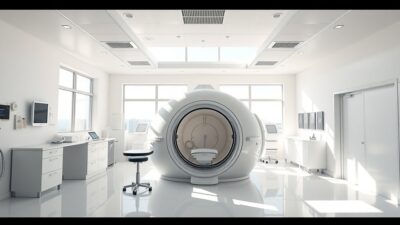
According to the Undersea and Hyperbaric Medical Society, HBOT is recognized for 14 FDA-cleared medical indications, with over 1.5 million treatments administered annually in the United States.
Undersea and Hyperbaric Medical Society (UHMS)
HBOT in Austin: A Market Shaped by Wellness Culture
Austin occupies a unique position in the Texas HBOT market. The city has a strong wellness and biohacking culture, and that has accelerated the growth of clinics offering hyperbaric oxygen therapy outside the traditional hospital setting. You will find HBOT options in Austin ranging from hospital wound care programs to upscale integrative clinics positioning HBOT for recovery, cognitive performance, and longevity.
That breadth is genuinely useful if you know how to evaluate what you find. But Austin’s wellness culture also means more marketing noise than in some other cities. Some providers lead with HBOT as a performance tool and underplay the clinical oversight required to do it safely and effectively. This guide helps you cut through that and ask the right questions.
Whether you are exploring HBOT for a wound that is slow to heal, post-COVID fatigue, athletic recovery, or another reason, the same evaluation criteria apply. Start with our overview of how hyperbaric chambers work if you want a foundation before digging into Austin-specific information.
Types of HBOT Providers in Austin
Austin and the surrounding Central Texas area have three main types of HBOT providers. Understanding each one will help you match your situation to the right clinical environment.
Hospital-Based Wound Care Programs
Several hospitals in the Austin metro operate wound care centers with hyperbaric medicine programs. These are the most clinically supervised option and the one most likely to work with insurance for approved indications.
Hospital hyperbaric programs use hard-shell monoplace or multiplace chambers at therapeutic pressure levels (typically 2.0 to 2.4 ATA). They are staffed by hyperbaric-trained physicians and follow strict clinical protocols. Patient intake is thorough, often requiring a physician referral and documentation of your condition and prior treatment history.
If you have a diabetic wound, radiation injury, or another condition on the Medicare-approved list, starting with a hospital-based program is often the most straightforward path to insurance coverage. The tradeoffs are longer intake timelines and less scheduling flexibility than you would find at a standalone clinic.
Standalone Hyperbaric Clinics
Freestanding HBOT clinics in Austin operate outside hospital systems and typically serve a mix of insured patients with qualifying conditions and cash-pay patients pursuing HBOT for off-label indications. The quality range in this category is real. Austin has some excellent standalone clinics with physician-supervised programs and legitimate hard-shell chambers. It also has operators that are lighter on medical oversight.
The key questions for any standalone clinic: Is there a physician with hyperbaric medicine training who supervises your treatment? What type of chamber do they use and at what pressure? Can they give you a written treatment plan before you pay for sessions?
Standalone clinics often have more flexible scheduling than hospital programs, shorter intake timelines, and more willingness to discuss off-label use in an informed clinical context. For patients with cash-pay situations like long COVID or TBI, a quality standalone clinic can be the most practical option if hospital-based programs are not accessible or appropriate.
Integrative and Biohacking-Oriented Centers
Austin has a particularly active integrative health and biohacking scene, and a number of clinics in the city offer HBOT alongside NAD+ infusions, ozone therapy, cryotherapy, red light, and functional medicine. These centers often serve a wellness and performance market as much as a clinical one.
The best of these are medically sound, with a physician or nurse practitioner who has formal hyperbaric training and provides real clinical oversight. The ones to avoid are those where the medical supervision is thin, the marketing is heavy on vague longevity claims, and the chamber is a soft-shell mild unit at 1.3 ATA being presented as equivalent to therapeutic HBOT.
Soft-shell chambers can be a legitimate option for certain wellness applications. But they should be presented honestly, with clear communication about what pressure level they operate at and what the evidence base looks like at those pressures. For a breakdown of what these distinctions mean clinically, see our guide on how HBOT sessions are structured.
Evaluating Austin HBOT Providers: What to Ask
Given Austin’s wellness culture, knowing how to evaluate providers critically is more important here than in many other markets. These are the criteria that matter most.
Who Is the Supervising Physician?
Every legitimate HBOT provider should have a physician with hyperbaric medicine training involved in your care. Ideally this is someone who has completed a UHMS-approved hyperbaric medicine course and has experience treating patients in a hyperbaric environment. Ask the clinic to name the supervising physician and describe their training. If they cannot answer clearly, that tells you something important.
Hard-Shell vs. Soft-Shell Chamber
Therapeutic HBOT uses hard-shell chambers at pressures of 2.0 ATA and above. Mild hyperbaric therapy uses soft-shell chambers at approximately 1.3 ATA. Both have legitimate uses, but they are not interchangeable, and a provider who implies otherwise is not giving you accurate information.
If you have a clinical indication for which the published evidence involves therapeutic pressure (wound healing, radiation injury, brain injury), you need a hard-shell chamber. If you are exploring HBOT for general wellness, recovery, or biohacking purposes, a mild chamber may be appropriate, but you should know that is what you are getting and make your decision accordingly.
Our article on the different types of hyperbaric chambers gives a clear breakdown you can reference when talking to any clinic.
Accreditation and Professional Affiliations
The Undersea and Hyperbaric Medical Society operates an accreditation program for hyperbaric facilities and maintains a searchable provider directory. Checking the UHMS provider directory for Austin-area listings is a fast way to identify facilities that have met a recognized standard. UHMS accreditation is not the only marker of quality, but it is a meaningful one.
What Does the HBOT Protocol Look Like?
Any serious clinic should be willing to give you a written treatment plan with a recommended number of sessions, the rationale for that recommendation, and an estimate of total cost before you commit. Be cautious of clinics that push you to buy a large upfront package before you have had an initial consultation or before you have seen any response to treatment.
Cost of HBOT in Austin
Austin’s HBOT pricing reflects the city’s cost of living, though it is generally more accessible than major coastal markets. For medically supervised hard-shell HBOT at a standalone clinic, expect to pay approximately $125 to $400 per session when paying out of pocket. Hospital-based programs tend to be priced higher at list rate, though insurance billing can change the effective cost significantly.
Mild hyperbaric sessions at integrative or wellness centers in Austin often run $75 to $150 per session. Package pricing is common across all clinic types and can reduce the per-session cost if you commit to a protocol upfront.
Most HBOT protocols involve 20 to 40 sessions. That means a full course of treatment can cost anywhere from $2,500 to $16,000 or more depending on the type of facility, the chamber, and how many sessions you need. For a detailed breakdown of what drives these costs, see our guide to hyperbaric chamber costs.
Insurance and Coverage in Texas
Insurance coverage for HBOT in Texas follows the same federal framework that applies nationally. Medicare covers the therapy for 14 FDA-approved conditions, and most commercial insurers in Texas follow similar guidelines. The most commonly covered outpatient indications are diabetic lower extremity wounds that have not responded to 30 days of standard care and chronic radiation tissue injuries.
To get coverage, you will need a referral from your treating physician, documentation of your condition and treatment history, and prior authorization from your insurer. Working with a hospital-based or UHMS-accredited facility typically makes the billing process smoother, as these providers are more experienced navigating insurer requirements.
For off-label indications including long COVID, traumatic brain injury, Lyme disease, autism, and anti-aging use, insurance does not cover HBOT in Texas or anywhere else in the US. These are cash-pay situations regardless of which Austin clinic you choose. Our comprehensive guide to HBOT insurance coverage explains what is and is not covered, what documentation helps, and what questions to ask your insurer before you start treatment.
Getting Started: Preparing for Your First HBOT Session in Austin
After completing your intake and getting cleared for treatment, preparation for your first session is practical and straightforward. Your clinic will provide specific instructions, but these guidelines apply broadly.
Wear loose-fitting cotton clothing to your session. Synthetic fabrics are not permitted in the chamber due to fire risk in a high-oxygen environment. Remove all jewelry, watches, hearing aids, and metal objects before entering. Most clinics will provide cotton garments if needed.
On the day of your session, avoid alcohol, carbonated beverages, and smoking. If you take medications, notify the clinic at intake, as some drugs interact with high-pressure oxygen and may require timing adjustments or monitoring.
Arrive a few minutes early to go through any pre-session checks. Sessions typically last 60 to 90 minutes at pressure. As the chamber pressurizes, you will feel pressure in your ears, similar to descending on a flight. Clinic staff will coach you through equalization. Most people find this easy after the first session.
For a full picture of what the session experience feels like, our guide on what to expect during HBOT walks through everything from entering the chamber to post-session effects. After treatment, some people feel tired, others feel unusually alert. Both are normal responses. Mild ear pressure, slight vision changes, and temporary lightheadedness are also common and typically resolve quickly. Our article on HBOT side effects explains which effects are expected and which warrant contacting your provider.
Frequently Asked Questions: HBOT in Austin
Is there a difference between HBOT clinics in Austin proper vs. Round Rock, Cedar Park, or Georgetown?
Not necessarily. The Austin metro area has HBOT providers spread across the city and surrounding suburbs. A clinic in Cedar Park or Round Rock is not inherently better or worse than one in central Austin. What matters is physician oversight, chamber type, and clinical experience with your specific condition. Proximity and scheduling convenience are practical factors once you have identified providers that meet the quality criteria.
Austin has a big biohacking scene. Does that mean HBOT clinics here are better?
Not automatically. Austin’s biohacking culture has brought genuine innovation and high-quality providers to the market. It has also attracted operators who are better at marketing than at clinical practice. The biohacking label is not a quality signal by itself. Evaluate each clinic on physician credentials, chamber type, and the transparency of their treatment protocols regardless of how they position themselves.
Can I use HBOT for athletic recovery in Austin without a medical diagnosis?
Yes, a number of Austin clinics offer HBOT for athletic recovery and performance on a cash-pay basis. This is an off-label use, so insurance will not cover it. For recovery applications, mild hyperbaric chambers at 1.3 ATA are often used, though some athletes prefer higher-pressure sessions. Ask the clinic to describe their specific protocol for recovery use and who is responsible for medical oversight during your treatment.
What should I do if a Austin HBOT clinic seems more focused on selling packages than on medical evaluation?
Trust that instinct. A legitimate clinic will conduct a thorough medical intake before recommending any specific number of sessions. If a clinic is pushing you to buy a large package at your first consultation, before any physician has reviewed your case, that is a red flag. Slow down, ask to speak with the supervising physician, and if you are not satisfied with what you hear, look elsewhere. There are good options in Austin and it is worth taking the time to find the right one.
Sources
- Undersea and Hyperbaric Medical Society. (2023). Indications for Hyperbaric Oxygen Therapy. UHMS.
- Thom, S.R. (2011). Hyperbaric oxygen: Its mechanisms and efficacy. Plastic and Reconstructive Surgery, 127(Suppl 1), 131S-141S.
- Centers for Medicare and Medicaid Services. (2024). Hyperbaric Oxygen Therapy Coverage Criteria. CMS.gov.
References
- Undersea and Hyperbaric Medical Society. “Hyperbaric Oxygen Therapy Indications.” 14th Edition, 2019. uhms.org
- Thom SR. “Hyperbaric oxygen: its mechanisms and efficacy.” Plastic and Reconstructive Surgery, 2011;127(Suppl 1):131S-141S. DOI: 10.1097/PRS.0b013e3181fbe2bf
- Centers for Medicare & Medicaid Services. “National Coverage Determination for Hyperbaric Oxygen Therapy.” NCD 20.29. cms.gov
Medical Disclaimer
The content on BaricBoost.com is for informational purposes only and is not intended as a substitute for professional medical advice, diagnosis, or treatment. Always seek the advice of your physician or other qualified health provider with any questions you may have regarding a medical condition. Never disregard professional medical advice or delay in seeking it because of something you have read on this website.

Author
Seph Fontane Pennock is the founder of BaricBoost.com and Regenerated.com, a clinic directory for regenerative medicine serving 10,000+ providers across the United States. He previously built and sold PositivePsychology.com, which grew to 19 million users and became the largest evidence-based positive psychology resource on the web. Seph brings direct experience as an HBOT patient, having completed protocols at clinics across three continents while navigating mold illness, systemic inflammation, and autoimmune conditions. His treatment journey includes hyperbaric oxygen therapy, peptide protocols, NAD+ therapy, and consultations with specialists from Dubai to Cape Town to Mexico. This combination of entrepreneurial track record and lived patient experience shapes everything published on BaricBoost.com. Every article is grounded in peer-reviewed research, informed by real clinical encounters, and written for patients making high-stakes treatment decisions. Seph's focus is on bringing transparency, scientific rigor, and practical guidance to the hyperbaric oxygen therapy space.