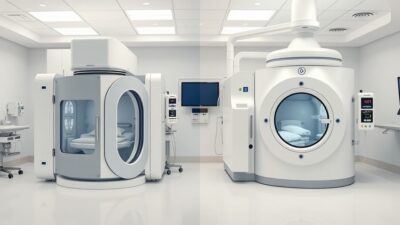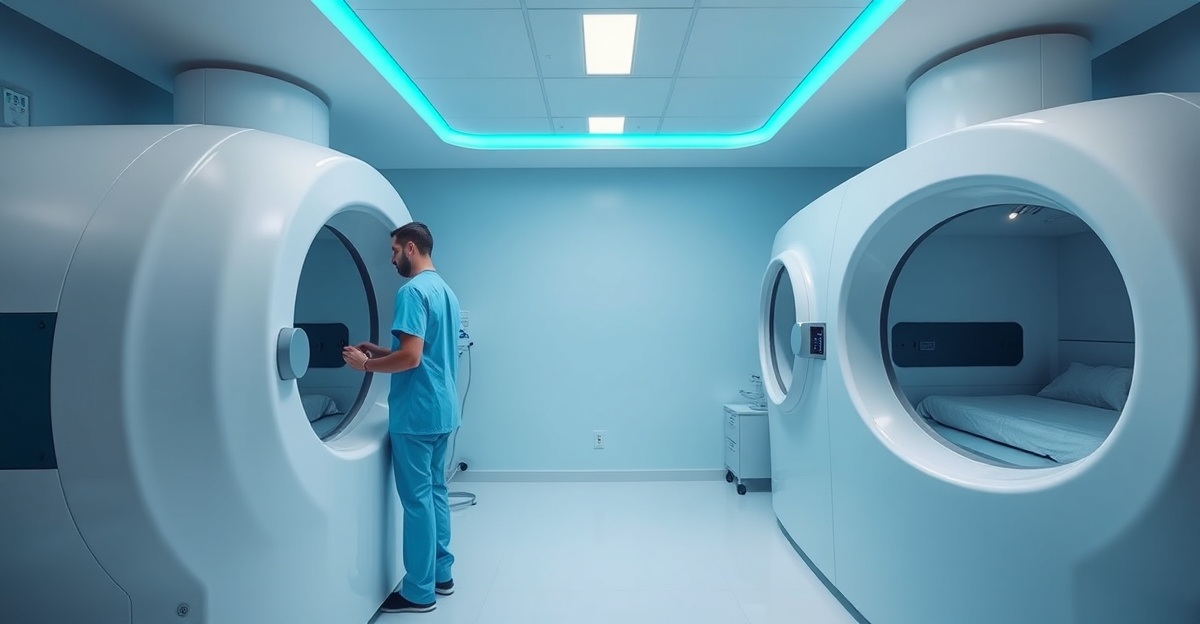
Most hyperbaric oxygen therapy (HBOT) protocols call for 20 to 60 sessions, each lasting 60 to 90 minutes, performed 5 days per week for clinical conditions or 2 to 3 times per week for general wellness. The exact number depends on what you are treating. Chronic wounds and traumatic brain injuries sit at the higher end, while athletic recovery and general wellness protocols need far fewer sessions. Below is a breakdown of session length, frequency, condition-specific protocols, and how to plan a full course. For a step-by-step walkthrough, see our guide on what to expect during your first session.
From the author
I have done HBOT sessions across clinics in three countries. The biggest thing I wish I had known before my first session: the ear equalization is the hardest part, and it gets dramatically easier by session three. If you struggle with it initially, ask your technician to slow the pressurization rate. Most clinics will accommodate this without any issue.
How long is a typical HBOT session?
A single hyperbaric oxygen therapy session generally lasts between 60 and 90 minutes of treatment time, though you should budget about 2 hours total once preparation and the compression and decompression phases are included. Each session has three distinct phases, described in the Cleveland Clinic’s guide to hyperbaric oxygen therapy.
1. Compression (5 to 15 minutes)
The chamber gradually increases in pressure, typically reaching 1.5 to 3.0 ATA (atmospheres absolute) depending on your protocol. During this phase, you may feel fullness in your ears, similar to airplane descent. Your technician will guide you through equalization techniques like swallowing, yawning, or the Valsalva maneuver (gently blowing against pinched nostrils).
2. Treatment phase (60 to 90 minutes)
Once the chamber reaches target pressure, you breathe 100% oxygen (or near-100%, depending on the chamber type) for the prescribed duration. UHMS clinical guidance specifies 90 minutes at pressure for FDA-cleared indications such as diabetic foot ulcers and radiation tissue injury.1 Some wellness and off-label protocols use shorter 60-minute treatments at lower pressures (1.3 to 1.5 ATA). See also our breakdown of treatment costs.
3. Decompression (5 to 15 minutes)
The chamber slowly returns to normal atmospheric pressure. Rushing this phase risks barotrauma, so technicians follow a controlled decompression schedule. You may feel a slight popping in your ears again as pressure normalizes.
Under UHMS clinical guidelines, the standard treatment frequency is 5 sessions per week, with each session lasting 60 to 120 minutes at pressures between 2.0 and 3.0 ATA for most FDA-cleared indications.1
How many HBOT sessions do you need?
There is no single answer. The number of sessions varies with the condition, its severity, and how your body responds. Research-backed clinical protocols provide useful ranges, but your provider will adjust the plan based on your progress.
For FDA-cleared conditions like chronic non-healing wounds, the standard protocol is 20 to 40 sessions. Medicare data confirms a dose-response effect: patients receiving 40 or more HBOT sessions for radiation cystitis had significantly better outcomes and $11,548 lower costs per patient than those receiving fewer treatments.2 Registry data shows the average diabetic foot ulcer patient received 28 HBOT treatments.3
Standard session count for wound healing and radiation protocols, with dose-response evidence confirming better outcomes at 40+ sessions2
How many sessions does each condition need?
The table below summarizes commonly referenced session ranges by condition, drawn from published clinical studies, UHMS guidelines, and widely used clinical protocols. Your provider may adjust these based on your individual response. If you are weighing the cost, our guide to HBOT insurance coverage is worth reading.
| Condition | Typical Sessions | Pressure (ATA) | Frequency | Notes |
|---|---|---|---|---|
| Carbon monoxide poisoning | 3-5 (acute) | 2.5-3.0 | 1-2x/day initially | FDA-cleared. Emergency protocol. |
| Decompression sickness | 1-5 | 2.8 | Per Navy Table 6 | Standard of care. Emergency use. |
| Gas gangrene | 5-10 | 3.0 | 3x/day initially, then 2x | FDA-cleared. Adjunct to surgery. |
| Wound healing (diabetic ulcers, surgical wounds) | 20 to 40 | 2.0 to 2.4 | 5 days/week | FDA-cleared indication. UHMS-recommended. Reassess at 20 sessions. |
| Radiation tissue injury | 30 to 40+ | 2.0 to 2.4 | 5 days/week | FDA-cleared. Dose-response confirmed: 40+ sessions shows better outcomes.2 |
| Osteoradionecrosis (irradiated jaw) | 30 to 60 | 2.0 to 2.4 | 5 days/week | FDA-cleared. Often used before and after dental procedures in irradiated bone. |
| Traumatic brain injury (TBI) | 40 to 60 | 1.5 to 2.0 | 5 days/week | Off-label. Multiple studies use 40-session protocols. |
| Stroke recovery | 40 to 60 | 1.5 to 2.0 | 5 days/week | Off-label. Tel Aviv University studies used 60 sessions at 2.0 ATA. |
| Anti-aging / longevity | 40 to 60 | 2.0 | 5 days/week | Off-label. Based on the Hachmo/Tel Aviv telomere study (60 sessions, 20%+ telomere increase).4 |
| Athletic recovery | 5 to 10 | 1.3 to 1.5 | 2 to 3x/week | Off-label. Short protocols for soft tissue repair and inflammation reduction. |
| Long COVID | 10 to 40 | 1.5 to 2.0 | 5 days/week | Off-label. Emerging evidence. Tel Aviv RCT used 40 sessions at 2.0 ATA.5 |
| Lyme disease | 20 to 40 | 2.0 to 2.4 | 5 days/week | Off-label. Used alongside antimicrobial treatment. Limited evidence. |
Important: Many of these conditions (TBI, stroke, Long COVID, Lyme, anti-aging) are off-label uses of HBOT. The FDA has cleared hyperbaric oxygen therapy for a specific set of indications, and insurance coverage is typically limited to those. Always discuss the evidence with your provider before starting a protocol.
What are the side effects and risks?
The largest HBOT safety analysis to date covered 1,529,859 treatments at Healogics wound care centers from 2012 to 2015. The overall adverse event rate was 0.68% per treatment, with zero deaths in the dataset.6 A 2023 meta-analysis of 24 RCTs found that adverse events were more common when chamber pressure exceeded 2.0 ATA or when treatment courses ran beyond 10 sessions.10
The most common side effects are:7
- Middle ear barotrauma: reported in roughly 3.8% to 15% of patients (most mild; 42.8% of cases self-resolve)
- Ear pain or discomfort: up to 17% of patients (transient, not permanent damage)
- Oxygen toxicity seizure: fewer than 0.05 per 1,000 treatments at standard pressures, and zero seizures at 2.0 ATA across 16,430 sessions in one study8
- Temporary visual changes (myopia): reversible within weeks after completing treatment
How often should you do HBOT per week?
Frequency depends on whether you are following a clinical protocol or a wellness protocol.
Clinical protocols: 5 days per week
For FDA-cleared and most condition-specific uses, the standard is once daily, 5 days per week (Monday through Friday). This is the frequency used in the vast majority of published clinical trials. Each session stimulates angiogenesis (new blood vessel growth), reduces inflammation, and promotes stem cell mobilization. Consistent daily exposure keeps these mechanisms active. Some intensive protocols use twice-daily sessions separated by at least 4 hours, but this is uncommon outside research settings or severe acute cases.
Wellness protocols: 2 to 3 times per week
For general health optimization, post-exercise recovery, or maintenance after a full course, most clinics recommend 2 to 3 sessions per week. There is no strong clinical evidence defining a minimum effective dose for wellness use, so these recommendations rest on clinical experience rather than controlled trials.
Do you need maintenance sessions after your initial protocol?
For some conditions, yes. Maintenance sessions can help sustain the benefits of an initial course.
- Chronic conditions (Lyme, Long COVID, autoimmune-related issues): many providers recommend 1 to 2 sessions per week after the initial protocol, or periodic booster blocks of 5 to 10 sessions every few months.
- TBI and neurological conditions: some patients do a second full course of 40 sessions after a break, or transition to 1 to 2 weekly maintenance sessions.
- Anti-aging and longevity: protocols based on the Tel Aviv telomere studies are typically done as a defined 60-session block, though some clinics offer quarterly maintenance blocks.
- Wound healing: once the wound has healed, maintenance is generally not needed.
How do you prepare for your HBOT sessions?
Before each session
- Eat a light meal. Do not go in on an empty stomach, since low blood sugar combined with high oxygen can cause lightheadedness.
- Stay hydrated. Drink plenty of water before and after your session.
- Wear comfortable, 100% cotton clothing. Most facilities require cotton inside the chamber for safety, since synthetic fabrics can generate static. Some clinics provide scrubs.
- Skip perfume, hairspray, and petroleum-based products. These are not permitted in hyperbaric chambers due to fire risk in oxygen-enriched environments.
- Leave electronics outside. Most personal electronics are not allowed inside the chamber.
- Clear your sinuses if needed. Severe congestion can make equalization painful or impossible, and your session may need to be rescheduled.
What does a full HBOT treatment plan look like?
- Initial consultation. Your provider reviews your medical history, discusses your goals, and recommends a protocol.
- Baseline assessment. Depending on your condition, this may include wound measurements, cognitive testing, bloodwork, or imaging.
- Treatment phase. You complete your prescribed sessions, typically over 4 to 12 weeks depending on protocol length and frequency.
- Mid-course review. Most providers reassess at the halfway mark to evaluate progress and adjust the plan if needed.
- End-of-course assessment. Repeat baseline measurements to quantify improvement.
- Maintenance plan (if applicable). Your provider recommends ongoing sessions or periodic booster blocks based on your results.
Sessions typically range from $75 to $300 each at independent clinics, and up to $400 or more at hospital-based programs. A 40-session protocol at standard HBOT session costs would run approximately $6,000. Most clinics offer reduced rates for a full course paid upfront.
Approximate cost of a full 40-session HBOT protocol at typical independent-clinic rates of $75 to $300 per session
BaricBoost HBOT cost analysis
Frequently asked questions
Can you do HBOT every day?
Yes. Most clinical protocols are designed for daily sessions, 5 days per week, which is the frequency used in the majority of published trials.1 Some intensive protocols use twice-daily sessions. Daily treatment is safe for the vast majority of patients when administered by a trained provider, with an overall adverse event rate of 0.68% per treatment.6
How soon will I feel results from HBOT?
This varies by condition and individual. Some people notice improved energy or mental clarity within the first 5 to 10 sessions. For wound healing, visible tissue changes typically appear after 10 to 15 sessions. For neurological conditions like TBI, cognitive improvements often become measurable after 20 to 40 sessions. See how long HBOT effects last for what happens after a course ends.
Is one HBOT session enough to do anything?
A single session temporarily increases blood oxygen levels and may give a short-term boost in energy or focus. The meaningful clinical benefits, including new blood vessel formation, stem cell mobilization, and tissue repair, require repeated sessions over time. A single session is like a single workout: beneficial, but the real results come from consistency across a full course.
Can I use a home hyperbaric chamber instead of going to a clinic?
Home chambers (also called mild or soft chambers) typically operate at 1.3 to 1.4 ATA, well below clinical-grade hard chambers (1.5 to 3.0 ATA). They may suit general wellness and athletic recovery, but they cannot replicate the protocols used in clinical studies for wound healing, TBI, or other medical conditions. A 2024 study found tissue oxygenation at 1.4 ATA was roughly half that achieved at 2.0 ATA.9 For a specific health issue, clinic-based treatment with a hard chamber at the appropriate pressure is recommended.
Sources
- Undersea and Hyperbaric Medical Society. Indications for hyperbaric oxygen therapy and treatment protocols. uhms.org
- Feldmeier JJ, et al. Controlled CMS data demonstrates a cost and clinical advantage for hyperbaric oxygen for radiation cystitis. Undersea and Hyperbaric Medicine. 2024. DOI: 10.22462/704
- Fife CE, Eckert KA. The Hyperbaric Oxygen Therapy Registry. Undersea and Hyperbaric Medicine. 2018. DOI: 10.22462/01.02.2018.1
- Hachmo Y, Hadanny A, Abu Hamed R, et al. Hyperbaric oxygen therapy increases telomere length and decreases immunosenescence in isolated blood cells. Aging. 2020. DOI: 10.18632/aging.202188
- Zilberman-Itskovich S, Catalogna M, Sasson E, et al. Hyperbaric oxygen therapy improves neurocognitive functions and symptoms of post-COVID condition. Scientific Reports. 2022;12:11252. DOI: 10.1038/s41598-022-15565-0
- Jokinen-Gordon H, Barry R, Watson B, Covington DS. A retrospective analysis of adverse events in hyperbaric oxygen therapy (2012-2015): lessons learned from 1.5 million treatments. Advances in Skin & Wound Care. 2017. DOI: 10.1097/01.ASW.0000508712.86959.c9. PMID: 28198743
- Voigt A, Laspro M, Thys E, et al. Systematic review of otologic adverse events in hyperbaric oxygen therapy. Undersea and Hyperbaric Medicine. 2025. DOI: 10.22462/736
- Heyboer M, Jennings S, Grant WD, et al. Seizure incidence by treatment pressure in patients undergoing hyperbaric oxygen therapy. Undersea and Hyperbaric Medicine. 2014. PMID: 25558546
- Sack RA, et al. Transcutaneous oximetry values in chronic ulcer patients during hyperbaric treatment at 1.4 ATA versus 2 ATA. Undersea and Hyperbaric Medicine. 2024. PMID: 38615347
- Zhang Y, Zhou Y, Jia Y, et al. Adverse effects of hyperbaric oxygen therapy: a systematic review and meta-analysis of 24 RCTs. Frontiers in Medicine. 2023. DOI: 10.3389/fmed.2023.1160774
Medical Disclaimer
The content on BaricBoost.com is for informational purposes only and is not intended as a substitute for professional medical advice, diagnosis, or treatment. Always seek the advice of your physician or other qualified health provider with any questions you may have regarding a medical condition. Never disregard professional medical advice or delay in seeking it because of something you have read on this website.

Author
Seph Fontane Pennock is the founder of BaricBoost.com and Regenerated.com, a clinic directory for regenerative medicine serving 10,000+ providers across the United States. He previously built and sold PositivePsychology.com, which grew to 19 million users and became the largest evidence-based positive psychology resource on the web. Seph brings direct experience as an HBOT patient, having completed protocols at clinics across three continents while navigating mold illness, systemic inflammation, and autoimmune conditions. His treatment journey includes hyperbaric oxygen therapy, peptide protocols, NAD+ therapy, and consultations with specialists from Dubai to Cape Town to Mexico. This combination of entrepreneurial track record and lived patient experience shapes everything published on BaricBoost.com. Every article is grounded in peer-reviewed research, informed by real clinical encounters, and written for patients making high-stakes treatment decisions. Seph's focus is on bringing transparency, scientific rigor, and practical guidance to the hyperbaric oxygen therapy space.