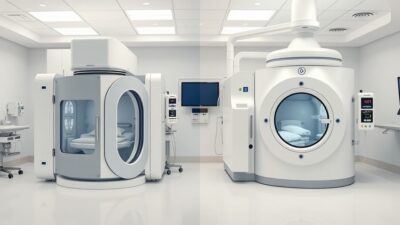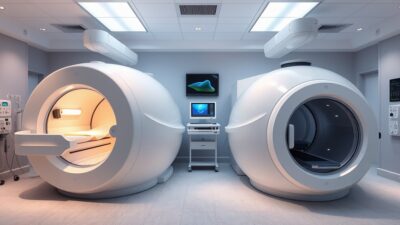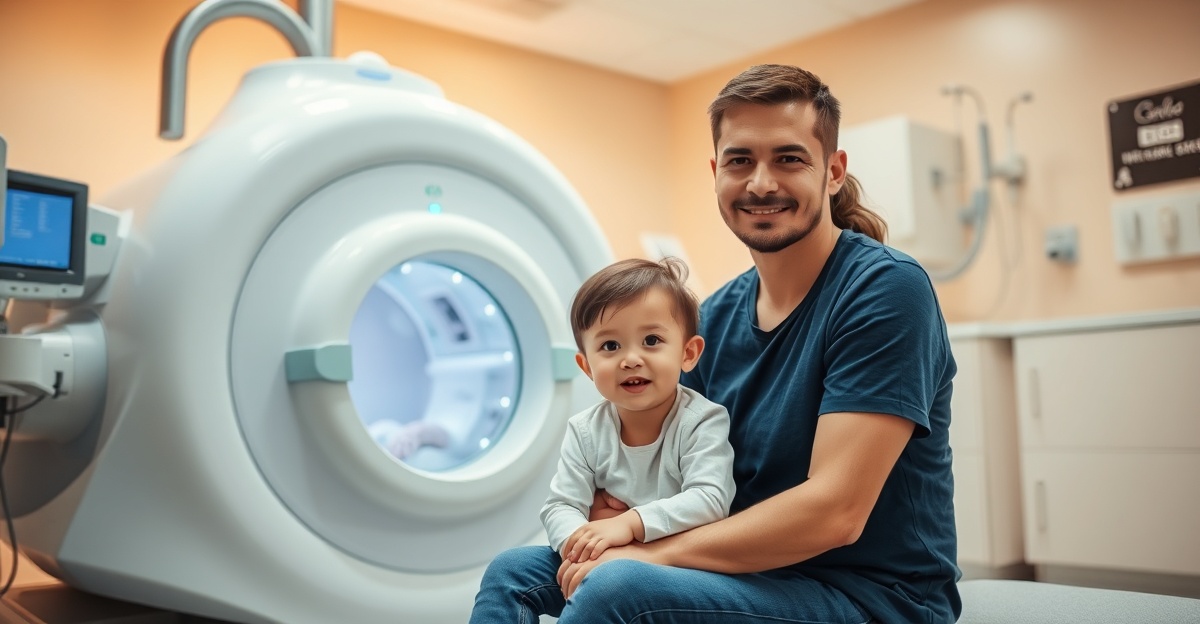
Children receive hyperbaric oxygen therapy for two very different reasons. For approved emergencies such as carbon monoxide poisoning, gas gangrene, crush injuries, and radiation tissue damage, the therapy is a recognized standard of care. For neurological conditions such as autism and cerebral palsy, it is off-label, not covered by insurance, and, importantly, not supported by the highest-quality trials. Pediatric protocols run 1.5 to 2.4 ATA for 60 to 90 minutes.
If you are researching HBOT for a child with a developmental or neurological condition, the most useful thing this guide can do is state the evidence plainly. The controlled trials that best isolate whether the oxygen itself helps have not shown a benefit for autism or cerebral palsy over a placebo pressure condition. That finding should come before any discussion of individual clinics or hopeful anecdotes, so the rest of this page is built around it.
What Does the Evidence Say for Autism and Cerebral Palsy?
The best-controlled trials show no benefit beyond placebo. For autism, a 2016 Cochrane review (Xiong et al.) found no persuasive evidence that HBOT improves core symptoms. For cerebral palsy, a randomized trial of 111 children (Collet et al., Lancet, 2001) found HBOT no better than slightly pressurized air. Both remain off-label, unproven, and uninsured.
The autism evidence is the clearest example of why the placebo condition matters. A 2009 double-blind trial (Rossignol et al., BMC Pediatrics) of 62 children using mild HBOT at 1.3 ATA did report improvements in physician-rated functioning, and it is the study most often cited by clinics.4 Independent groups then tried to reproduce it and could not. Granpeesheh et al. (2010) found no consistent effect in a randomized trial.5 Jepson et al. (2011) found no benefit in 16 children.6 Sampanthavivat et al. (2012) ran 60 Thai children through HBOT or sham air and found both groups improved with no difference between them.7 When Xiong et al. pooled the controlled evidence for the 2016 Cochrane review, the conclusion was that no persuasive evidence supports HBOT for autism.1 Ghanizadeh’s 2012 systematic review reached the same cautious verdict.3
A 2025 meta-analysis (Tu et al.) pooled 17 studies and reported statistically significant effects on some behavioral measures. It matters how that result is read: the authors themselves rated the evidence as low-to-moderate quality, flagged high heterogeneity between studies, and combined weaker quasi-experimental designs with randomized trials.2 A pooled number from mixed, low-quality studies does not overturn the controlled finding that oxygen delivered under pressure did not beat a placebo pressure. The honest summary is that autism remains an unproven, off-label use.
Cerebral palsy follows the same pattern. The theory is that dormant but viable brain tissue near an injury might be reactivated with more oxygen. In the Collet et al. trial, 111 children aged 3 to 12 received either HBOT or slightly pressurized room air for 40 sessions. Both groups improved across every measured dimension, and HBOT was not superior, which points to attention, practice, and expectation effects rather than the oxygen.8 Two systematic reviews reached the same place: McDonagh et al. (2007) called the evidence inadequate to establish a functional benefit, and Laureau et al. (2022) confirmed that the higher-quality randomized trials do not support routine use.910
None of this means a family’s hope is foolish, and it does not mean HBOT is dangerous. It means the strongest studies do not show the oxygen itself changes the course of these conditions. Read the full review of HBOT and autism and the detailed breakdown of HBOT and cerebral palsy before making any decision, and treat any clinic that presents these uses as proven with caution.
Why Would a Child Be in a Hyperbaric Chamber?
Two categories account for nearly all pediatric HBOT. The first is approved emergency and wound indications, where increasing dissolved oxygen in the blood is a recognized treatment. The second is off-label neurological and developmental use, where families explore HBOT alongside conventional care despite weak or absent supporting evidence. The distinction drives everything, including insurance.
On the approved side, children can need HBOT urgently for some of the same reasons adults do. Carbon monoxide poisoning is the clearest example. When a child is exposed to CO from a faulty heater, generator, or house fire, the gas binds hemoglobin and starves tissues of oxygen, and breathing 100 percent oxygen at pressure accelerates its clearance. Other approved indications that can affect children include decompression sickness in young divers (Vann et al., Lancet, 2011), gas gangrene and necrotizing soft tissue infections, radiation tissue damage after cancer treatment, and crush injuries or compromised skin grafts.15 HBOT is also used at times to support healing after pediatric reconstructive surgery, such as the hyperbaric chamber for hypospadias, where better oxygen delivery may help grafts and flaps survive.
The off-label group is where most non-emergency pediatric HBOT happens. Beyond autism and cerebral palsy, families ask about traumatic brain injury, covered in our guide to HBOT and brain injury, and about attention conditions, addressed in our review of the hyperbaric chamber for ADHD. The rationale in each case is biologically plausible and the controlled evidence is thin. Our overview of HBOT for neurological conditions weighs these uses across age groups.
Which Pediatric Uses Are FDA-Cleared or Approved?
The approved indications are the same across age groups: carbon monoxide poisoning, decompression sickness, gas gangrene and necrotizing infections, crush injuries and compromised grafts, radiation tissue damage, and selected non-healing wounds. These carry an evidence base ranging from strong to moderate, and insurance generally covers them when a physician documents medical necessity.
For carbon monoxide poisoning, a landmark double-blind trial (Weaver et al., N Engl J Med, 2002) found that HBOT reduced cognitive problems six weeks after poisoning compared with normobaric oxygen.11 The picture is not unanimous: a Cochrane review (Buckley et al., 2011) judged the overall trial evidence conflicting and called it insufficient to settle the question, which is why emergency physicians weigh HBOT case by case rather than automatically.12 For crush injuries, a randomized double-blind trial of 36 patients (Bouachour et al., J Trauma, 1996) found better wound healing and fewer additional surgeries with HBOT.13 For gas gangrene and necrotizing soft tissue infections, HBOT is used adjunctively because clostridial bacteria are anaerobic and high tissue oxygen levels are bacteriostatic and halt toxin production; a 2025 review (Gregory and Sethuraman, J Clin Med) links adjunctive HBOT to reduced mortality and amputation in severe cases, though the evidence is observational.19 For late radiation tissue injury, a Cochrane review (Bennett et al., 2016) found HBOT improves outcomes in irradiated tissue such as the jaw, anus, and bladder.14 The UHMS approved indications list is the clinical reference for what has sufficient evidence.18
How Does HBOT Work in Children?
The mechanism is identical to adults. A child breathes 100 percent oxygen inside a pressurized chamber. Under pressure, oxygen dissolves directly into blood plasma and other tissues, reaching areas that red blood cells struggle to supply where circulation is compromised. There is no physiological reason children respond differently, and pediatric protocols have been used in major medical centers for decades.
Beyond simply raising tissue oxygen, HBOT influences several downstream processes described by Thom (Plastic and Reconstructive Surgery, 2011): it promotes new blood vessel growth, mobilizes stem and progenitor cells, and modulates inflammation and immune signaling.16 These effects explain why the therapy helps wounds and infections heal. They do not, on their own, prove it changes the trajectory of a developmental condition, which is a separate question that the controlled trials above were designed to answer. Siewiera et al. (2019) note that close cooperation between pediatricians and hyperbaric teams is important to match the therapy to indications where the mechanism actually translates into benefit.20
What Are the Risks and Side Effects for Children?
HBOT has a strong safety record in children at properly equipped facilities, but it is not risk-free. The most common side effect is middle-ear barotrauma from pressure changes. Rarer risks include temporary vision changes, confinement anxiety, and, uncommonly, oxygen-toxicity seizures. The single most important contraindication is an untreated pneumothorax.
The reassuring data come from a 15-year pediatric series of 329 children across 3,164 treatments, where ear barotrauma occurred in only 1.5 percent of patients (0.2 percent of sessions) with no resulting disability and no central nervous system oxygen toxicity recorded.21 Across all ages, a review of 80,679 treatments found oxygen-toxicity seizures in just 2.4 per 100,000 sessions (Yildiz et al., 2004), and risk rises with pressure.17 Heyboer et al. (2017) catalog the fuller side-effect profile, most of which is mild and reversible.22
Practical points for parents:
- Ear equalization is the main challenge for young children, since they cannot follow the Valsalva maneuver. Facilities use slower pressurization, and yawning, swallowing, or a pacifier can help.
- Oxygen toxicity can rarely trigger a seizure. Risk is low at standard therapeutic pressures, and staff monitor for early signs and use air breaks.
- Fire safety is why chambers require approved 100 percent cotton or specified cotton-blend garments and prohibit electronics, cosmetics, and petroleum products, per the NFPA 99 hyperbaric facility code. The oxygen-enriched environment makes any ignition source dangerous.
- Contraindications include untreated pneumothorax, active ear or sinus infection, and certain congenital heart defects. A seizure history warrants extra caution.
For confinement anxiety, multiplace chambers let a parent sit with the child, and our article on HBOT side effects covers the full adverse-effect picture across ages.
What Do Pediatric Protocols and Sessions Look Like?
Pediatric protocols vary by indication. Emergency treatment uses higher pressures of 2.4 to 3.0 ATA for a small number of sessions. Off-label neurological courses typically use 1.5 to 2.0 ATA for 20 to 40 sessions of 60 to 90 minutes, once or twice daily. The higher session counts drive the cost of off-label use, which insurance does not cover.
- Pressure: 1.5 to 2.0 ATA for most neurological protocols; 2.4 to 3.0 ATA for emergency indications.
- Duration: 60 to 90 minutes at pressure, plus 10 to 20 minutes of compression and decompression.
- Frequency: once or twice daily, five days a week for intensive courses.
- Number of sessions: a few for emergencies; 20 to 40 for neurological protocols.
For a broader walkthrough of how treatment is structured, see our guide to HBOT sessions.
What Will a Child Experience During a Session?
Most children adapt quickly. They wear cotton clothing, lie or sit in the chamber, and feel a fullness in the ears during pressurization, similar to an airplane descent. Many facilities provide screens for movies, and for younger or anxious children a parent can often be present, which makes the biggest difference to comfort.
Preparation is simple. Children wear 100 percent cotton clothing only, since synthetic fabrics, metal, and electronics are prohibited for fire safety. A parent or caregiver can usually accompany a younger child, either inside a multiplace chamber or in the room for a monoplace unit. Practicing ear-clearing through yawning or swallowing at home helps, and bringing a cotton comfort item can ease the first session. For a complete walkthrough that works for parents and older children alike, see what to expect from HBOT, and for anxious children, our guidance on managing claustrophobia during HBOT.
What Does Pediatric HBOT Cost and Is It Covered?
Cost depends entirely on the indication. For approved emergencies and wound care, insurance typically covers HBOT when a physician documents medical necessity. For off-label uses such as autism or cerebral palsy, coverage is generally unavailable, so families pay out of pocket at roughly $200 to $500 per session, and a 20 to 40 session course can reach $10,000 to $20,000.
That price gap is the practical consequence of the evidence gap. Payers cover indications backed by adequate research and decline those that are not, which is why an off-label neurological course is both unproven and expensive. Our guide to HBOT insurance coverage breaks down what is and is not typically reimbursed, and any family weighing an off-label course should confirm cost in writing before starting.
Pediatric HBOT at a Glance: Indication, Evidence, and Coverage
The table below maps each pediatric use to its approval status, the strength of the evidence behind it, a typical protocol, and whether insurance usually covers it. It is built from the primary trials and reviews cited on this page, with a source column so each row can be checked.
Pediatric HBOT: Indication, Evidence, and Coverage
| Condition | Status | Evidence tier | Typical protocol | Insurance | Key source |
|---|---|---|---|---|---|
| Carbon monoxide poisoning | Approved | Strong (RCT; some conflicting) | 1 to 3 sessions, 2.4 to 3.0 ATA | Usually covered | Weaver 2002; Buckley 2011 |
| Gas gangrene / necrotizing infection | Approved | Moderate (observational + mechanism) | Adjunctive, 2.0 to 3.0 ATA | Usually covered | Gregory 2025; UHMS |
| Crush injury / compromised graft | Approved | Moderate (small RCT) | ~2.0 to 2.5 ATA, several sessions | Usually covered | Bouachour 1996 |
| Late radiation tissue injury | Approved | Moderate (Cochrane) | 20 to 40 sessions, 2.0 to 2.4 ATA | Often covered | Bennett 2016 |
| Decompression sickness | Approved | Standard of care | Recompression tables | Usually covered | Vann 2011 |
| Cerebral palsy | Off-label | No proven benefit (RCT null) | 40 sessions, 1.5 to 1.75 ATA | Not covered | Collet 2001; Laureau 2022 |
| Autism spectrum disorder | Off-label | No persuasive evidence (Cochrane) | 40 sessions, 1.3 ATA | Not covered | Xiong 2016 |
| Traumatic brain injury | Off-label | Emerging / inconclusive | Varies, 1.5 to 2.0 ATA | Not covered | See TBI guide |
Does HBOT help children with autism?
The best evidence says no. A 2016 Cochrane review (Xiong et al.) found no persuasive evidence that HBOT improves core autism symptoms. One 2009 double-blind trial reported gains at 1.3 ATA, but independent randomized trials (Granpeesheh 2010, Jepson 2011, Sampanthavivat 2012) did not reproduce them, and a 2025 meta-analysis rated the pooled evidence low-to-moderate quality. It remains an off-label, uninsured use.
Is hyperbaric oxygen safe for babies and toddlers?
Yes, when medically indicated and performed at a proper facility. A pediatric series of 329 children across 3,164 treatments recorded ear barotrauma in 0.2 percent of sessions with no lasting harm and no oxygen toxicity (Diving and Hyperbaric Medicine, 2023). The main challenge in young children is ear equalization, so facilities use slower pressurization. The key contraindication is an untreated pneumothorax.
What conditions are FDA-approved for pediatric HBOT?
The approved indications are the same across age groups: carbon monoxide poisoning, decompression sickness, gas gangrene and necrotizing infections, crush injuries and compromised grafts, radiation tissue damage, and selected non-healing wounds. The UHMS approved indications list is the clinical reference. Autism, cerebral palsy, and traumatic brain injury are off-label and are not covered by insurance.
Will my child be alone in the chamber?
Usually not. Younger children typically have a parent accompany them, especially in multiplace chambers where several people share the space. For monoplace chambers, where the child is enclosed alone, a parent stays in the room and remains visible throughout. Facilities that treat children are set up to reduce anxiety, and most children settle quickly after the first session.
How much does pediatric HBOT cost?
For approved indications, insurance usually covers treatment when documented as medically necessary. For off-label conditions such as autism or cerebral palsy, families generally pay out of pocket at about $200 to $500 per session, so a 20 to 40 session course can reach $10,000 to $20,000. Because these uses are unproven, confirm the total cost in writing before starting.
Sources
- Xiong T, Chen H, Luo R, Mu D. “Hyperbaric oxygen therapy for people with autism spectrum disorder (ASD).” Cochrane Database of Systematic Reviews, 2016;(10):CD010922. PMID: 27737490. 10.1002/14651858.CD010922.pub2
- Tu P, et al. “The effectiveness of hyperbaric oxygen therapy in children and adolescents with autism spectrum disorders: a systematic review and meta-analysis.” Progress in Neuro-Psychopharmacology & Biological Psychiatry, 2025. ScienceDirect
- Ghanizadeh A. “Hyperbaric oxygen therapy for treatment of children with autism: a systematic review of randomized trials.” Medical Gas Research, 2012;2:13. PMID: 22577817. 10.1186/2045-9912-2-13
- Rossignol DA, Rossignol LW, Smith S, et al. “Hyperbaric treatment for children with autism: a multicenter, randomized, double-blind, controlled trial.” BMC Pediatrics, 2009;9:21. PMID: 19284641. 10.1186/1471-2431-9-21
- Granpeesheh D, Tarbox J, Dixon DR, et al. “Randomized trial of hyperbaric oxygen therapy for children with autism.” Research in Autism Spectrum Disorders, 2010;4(2):268-275. 10.1016/j.rasd.2009.09.014
- Jepson B, Granpeesheh D, Tarbox J, et al. “Controlled evaluation of the effects of hyperbaric oxygen therapy on the behavior of 16 children with autism spectrum disorders.” Journal of Autism and Developmental Disorders, 2011;41(5):575-588. PMID: 20680427. 10.1007/s10803-010-1075-y
- Sampanthavivat M, Singkhwa W, Chaiyakul T, et al. “Hyperbaric oxygen in the treatment of childhood autism: a randomised controlled trial.” Diving and Hyperbaric Medicine, 2012;42(3):128-133. PMID: 22987458. PubMed
- Collet JP, Vanasse M, Marois P, et al. “Hyperbaric oxygen for children with cerebral palsy: a randomised multicentre trial.” Lancet, 2001;357(9256):582-586. PMID: 11558483. 10.1016/S0140-6736(00)04054-X
- McDonagh MS, Morgan D, Carson S, Russman BS. “Systematic review of hyperbaric oxygen therapy for cerebral palsy: the state of the evidence.” Developmental Medicine & Child Neurology, 2007;49(12):942-947. PMID: 18039243. 10.1111/j.1469-8749.2007.00942.x
- Laureau J, Pons C, Letellier G, Gross R. “Hyperbaric oxygen in children with cerebral palsy: a systematic review of effectiveness and safety.” PLoS One, 2022;17(10):e0276126. PMID: 36240157. 10.1371/journal.pone.0276126
- Weaver LK, Hopkins RO, Chan KJ, et al. “Hyperbaric oxygen for acute carbon monoxide poisoning.” New England Journal of Medicine, 2002;347(14):1057-1067. PMID: 12362006. 10.1056/NEJMoa013121
- Buckley NA, Juurlink DN, Isbister G, Bennett MH, Lavonas EJ. “Hyperbaric oxygen for carbon monoxide poisoning.” Cochrane Database of Systematic Reviews, 2011;(4):CD002041. PMID: 21491385. 10.1002/14651858.CD002041.pub3
- Bouachour G, Cronier P, Gouello JP, et al. “Hyperbaric oxygen therapy in the management of crush injuries: a randomized double-blind placebo-controlled clinical trial.” Journal of Trauma, 1996;41(2):333-339. PMID: 8760546. 10.1097/00005373-199608000-00023
- Bennett MH, Feldmeier J, Hampson NB, Smee R, Milross C. “Hyperbaric oxygen therapy for late radiation tissue injury.” Cochrane Database of Systematic Reviews, 2016;(4):CD005005. PMID: 27123955. 10.1002/14651858.CD005005.pub4
- Vann RD, Butler FK, Mitchell SJ, Moon RE. “Decompression illness.” Lancet, 2011;377(9760):153-164. PMID: 21215883. 10.1016/S0140-6736(10)61085-9
- Thom SR. “Hyperbaric oxygen: its mechanisms and efficacy.” Plastic and Reconstructive Surgery, 2011;127(Suppl 1):131S-141S. PMID: 21200283. 10.1097/PRS.0b013e3181fbe2bf
- Yildiz S, Aktas S, Cimsit M, Ay H, Togrol E. “Seizure incidence in 80,000 patient treatments with hyperbaric oxygen.” Aviation, Space, and Environmental Medicine, 2004;75(11):992-994. PMID: 15559001. PubMed
- Moon RE (ed.). Hyperbaric Oxygen Therapy Indications, 14th Edition. Undersea and Hyperbaric Medical Society, 2019. UHMS approved indications
- Gregory TJ, Sethuraman K. “The role of hyperbaric oxygen therapy in management of necrotizing soft tissue infection.” Journal of Clinical Medicine, 2025;14(10):3511. 10.3390/jcm14103511
- Siewiera J, Mews J, Krolikowska K, Kalicki B, Jobs K. “Hyperbaric oxygenation in pediatrics: indications in the light of evidence-based medicine.” Developmental Period Medicine, 2019;23(2):142-148. PMID: 31280252. PubMed
- “Hyperbaric oxygen treatment in children: experience in 329 patients.” Diving and Hyperbaric Medicine, 2023. PMID: 37718293. PubMed
- Heyboer M, Sharma D, Santiago W, McCulloch N. “Hyperbaric oxygen therapy: side effects defined and quantified.” Advances in Wound Care, 2017;6(6):210-224. 10.1089/wound.2016.0718
- National Fire Protection Association. NFPA 99: Health Care Facilities Code, Chapter 14 (Hyperbaric Facilities). NFPA.org
- U.S. Food and Drug Administration. “Hyperbaric Oxygen Therapy: Don’t Be Misled.” 2021. FDA.gov
Medical Disclaimer
The content on BaricBoost.com is for informational purposes only and is not intended as a substitute for professional medical advice, diagnosis, or treatment. Always seek the advice of your physician or other qualified health provider with any questions you may have regarding a medical condition. Never disregard professional medical advice or delay in seeking it because of something you have read on this website.

Author
Seph Fontane Pennock is the founder of BaricBoost.com and Regenerated.com, a clinic directory for regenerative medicine serving 10,000+ providers across the United States. He previously built and sold PositivePsychology.com, which grew to 19 million users and became the largest evidence-based positive psychology resource on the web. Seph brings direct experience as an HBOT patient, having completed protocols at clinics across three continents while navigating mold illness, systemic inflammation, and autoimmune conditions. His treatment journey includes hyperbaric oxygen therapy, peptide protocols, NAD+ therapy, and consultations with specialists from Dubai to Cape Town to Mexico. This combination of entrepreneurial track record and lived patient experience shapes everything published on BaricBoost.com. Every article is grounded in peer-reviewed research, informed by real clinical encounters, and written for patients making high-stakes treatment decisions. Seph's focus is on bringing transparency, scientific rigor, and practical guidance to the hyperbaric oxygen therapy space.