Affiliate Disclosure
This article contains affiliate links. If you purchase through these links, we may earn a commission at no additional cost to you. This does not influence our evaluations or rankings.
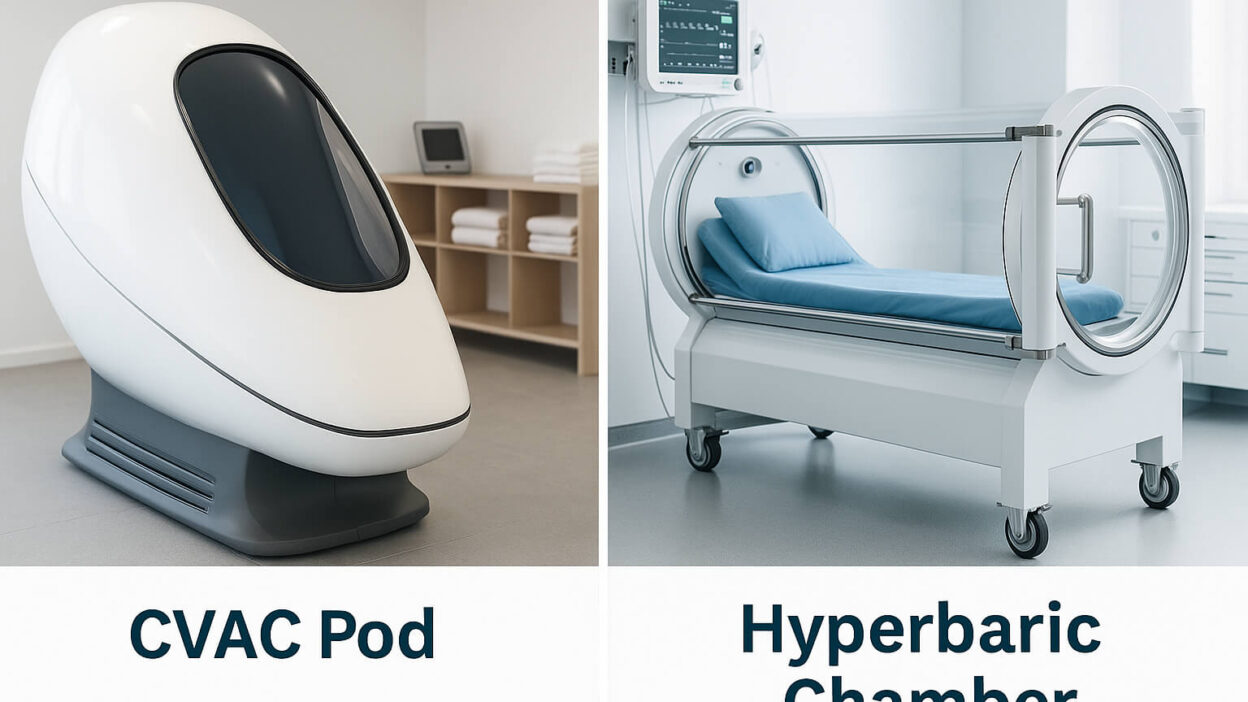
A CVAC pod and a hyperbaric chamber are fundamentally different technologies that share almost nothing beyond being enclosed capsules. CVAC (Cyclic Variations in Adaptive Conditioning) uses rapid pressure changes to simulate altitude shifts, while a hyperbaric chamber delivers pressurized oxygen to raise tissue oxygenation. The critical difference is evidence: hyperbaric oxygen therapy has over 50 years of peer-reviewed research and 14 FDA-cleared indications, while the CVAC pod has 2 published studies, roughly 30 total participants, no independent replication, and no FDA-cleared medical use.
The core confusion behind this comparison is a single word. A CVAC pod is hypobaric: it cycles pressure down to mimic altitude. A hyperbaric chamber is hyperbaric: it holds pressure up to force more oxygen into the blood. They move pressure in opposite directions and are not two versions of the same therapy.
CVAC stands for Cyclic Variations in Adaptive Conditioning. The CVAC pod is a patented device developed by CVAC Systems Inc. that creates rapid, rhythmic changes in atmospheric pressure inside an enclosed capsule. During a typical 20-minute session, the pod cycles between low and high pressure states, simulating rapid altitude changes from sea level to roughly 6,096 meters and back, repeating 200 to 400 cycles per session.
The theory behind CVAC is that these cyclic pressure changes trigger adaptive responses similar to altitude training. Proponents claim the technology supports cardiovascular conditioning, lymphatic drainage, metabolic function, and athletic recovery.
The CVAC pod does not deliver supplemental oxygen. This is a fundamental distinction from how HBOT chambers work, which specifically increase the partial pressure of oxygen breathed by the user. Instead, the CVAC pod manipulates ambient air pressure in cyclic patterns.
How does a hyperbaric chamber work?
HBOT involves breathing concentrated oxygen (up to 100%) inside a pressurized chamber at 1.3 to 3.0 ATA (atmospheres absolute). This raised pressure and oxygen concentration sharply increases dissolved oxygen in the blood plasma, letting oxygen reach tissues with reduced blood supply. If you are weighing this route, our HBOT alternatives overview is worth reading.
The physiological mechanisms of HBOT are well documented. Increased tissue oxygenation promotes angiogenesis (new blood vessel formation), reduces inflammation, enhances white blood cell function, and accelerates wound healing. These mechanisms have been studied across thousands of peer-reviewed papers spanning more than five decades.
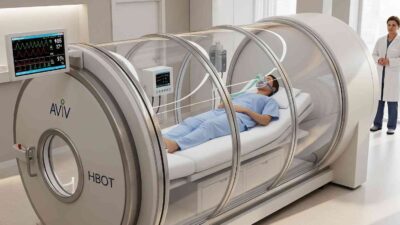
Hyperbaric chambers come in several formats: soft-shell portable units for home use (1.3 to 1.5 ATA), hard-shell monoplace chambers for clinical settings (up to 3.0 ATA), and multiplace walk-in chambers for hospital use that treat several patients at once.
CVAC Pod vs Hyperbaric Chamber: Side-by-Side Comparison
The most useful way to evaluate these two technologies is to compare them directly across the metrics that matter most: clinical evidence, mechanism, applications, and cost.
| Feature | CVAC Pod | Hyperbaric Chamber |
|---|---|---|
| Mechanism | Rapidly cycling hypobaric pressure (altitude simulation, sea level to 6,096m). Pressure goes DOWN. No supplemental oxygen. | Sustained hyperbaric pressure with up to 100% O2. Pressure goes UP. Dissolves oxygen into plasma at 10 to 15x normal levels. |
| Direction of pressure | Decreasing (altitude simulation) | Increasing (pressurization above atmospheric) |
| Supplemental oxygen | No | Yes (up to 100% O2) |
| FDA status | No FDA-cleared medical indications; sold as exercise equipment | 14 FDA-cleared indications |
| Session duration | 20 minutes | 60 to 90 minutes |
| Equipment cost | ~$100,000 (facility units) | $4,000 to $125,000+ (home to hospital grade) |
| Session cost | $75 to $150 | $75 to $300 (clinic) |
| Insurance coverage | Not covered | Covered for FDA-cleared uses |
| Published peer-reviewed studies | 2 full papers plus 2 conference abstracts; ~30 total participants; nothing published since 2013 | Thousands of peer-reviewed studies; continuous publication |
| Independent replication | None | Extensive, across dozens of institutions worldwide |
| Global availability | An estimated 75 units worldwide | Thousands of clinics in the US alone |
CVAC and HBOT work in opposite directions. CVAC reduces pressure to simulate altitude, while HBOT increases pressure to dissolve oxygen. They are fundamentally different therapies, not two versions of the same thing.
What Does the Research Actually Say?
Hyperbaric Chamber Evidence Base
Hyperbaric oxygen therapy has one of the strongest evidence bases of any physical medicine modality. The Undersea and Hyperbaric Medical Society (UHMS) recognizes 14 conditions for which HBOT has demonstrated clear therapeutic benefit, including diabetic foot ulcers, carbon monoxide poisoning, decompression sickness, radiation tissue injury, and chronic non-healing wounds.
Beyond the approved indications, research continues to explore HBOT for traumatic brain injury and PTSD, peripheral neuropathy, neurodegenerative disease, and anti-aging applications. Hachmo et al. (2020) reported that 60 HBOT sessions at 2.0 ATA increased telomere length by roughly 20% and reduced senescent cells by 11 to 37% in healthy adults aged 64 and older.4
CVAC Pod Evidence Base
The CVAC pod’s research foundation is thin. Only 2 full peer-reviewed papers have ever been published, both from the same research group, covering roughly 30 total participants. No research has been published since 2013.
The only RCT (Marquez et al., 2013): 9 participants in the CVAC group, 10 sham participants, 10 weeks, 40 minutes per day, 3 days per week, cyclic pressures simulating sea level to 6,096 meters. The result was a modest improvement in fasting glucose (96 to 91 mg/dL, p<0.05) and oral glucose tolerance response (p<0.03), with no change in fasting insulin, insulin response, or any functional fitness measure (strength, timed walk, step test).5
The only other full study (Herbst & Rutledge, 2010): 10 participants, no control group, 5 days of CVAC for pain in adiposis dolorosa. The authors reported weight loss and pain reduction, but with no control group, placebo effects cannot be ruled out.2
No randomized controlled trial with a large sample has been published, and no independent research group has replicated any CVAC finding.
Research Evidence Comparison
| Evidence Category | CVAC Pod | Hyperbaric Chamber |
|---|---|---|
| Total peer-reviewed publications | 2 full papers plus 2 conference abstracts | Thousands |
| Total participants studied | ~30 | Tens of thousands |
| Independent replication | None | Extensive |
| Last published study | 2013 | Ongoing, continuous publication |
| FDA-recognized indications | 0 | 14 |
| Medical society endorsement | None | UHMS, multiple specialty societies |
| Years of clinical use | ~15 years (limited) | 60+ years |
Is a CVAC pod or hyperbaric chamber cheaper?
Cost depends heavily on whether you are buying equipment or paying per session at a facility. On a per-session basis the two overlap; on total cost of ownership the hyperbaric chamber has a far wider range and, for FDA-cleared uses, the option of insurance coverage.
Equipment Purchase Costs
A CVAC pod costs roughly $100,000 per unit and is sold mainly to commercial facilities. There are an estimated 75 units worldwide. Maintenance contracts and proprietary software licensing add ongoing costs that are not typical of hyperbaric chamber ownership.
Hyperbaric chambers span a much wider price range. Home-use soft-shell chambers start around $4,000 to $8,000. Mid-range clinical units cost $18,000 to $45,000. Full medical-grade systems range from $85,000 to $250,000 or more. See our complete hyperbaric chamber cost guide for detailed pricing.
Per-Session Costs
CVAC pod sessions at wellness centers typically cost $75 to $150 for a 20-minute session. Protocols recommend 2 to 3 sessions per week, putting monthly costs at $600 to $1,800.
Hyperbaric chamber sessions range from $75 to $300 at clinics and hospitals, lasting 60 to 90 minutes. Protocols typically call for 20 to 40 sessions over 4 to 8 weeks, making total treatment costs $1,500 to $12,000. Purchasing a home chamber can lower long-term costs for those who plan to use HBOT regularly.
The Insurance Factor
Medicare and most private insurers cover HBOT for the 14 FDA-cleared indications. CVAC pod sessions are never covered by insurance, making every session a full cash-pay expense.
What Are the Side Effects and Risks?
Both technologies involve pressurized environments, but their safety profiles differ based on the mechanisms involved and the amount of clinical safety data available.
Hyperbaric Chamber Safety
HBOT has a well-established safety record when administered to standard protocols. The most common side effects are mild and temporary: ear pressure or barotrauma (similar to flying), temporary myopia, and sinus discomfort. Serious complications such as oxygen toxicity seizures are rare and occur almost exclusively at pressures above 2.5 ATA. Contraindications include untreated pneumothorax, certain chemotherapy medications, and some ear and sinus conditions. Patients should complete a medical screening before starting treatment.
CVAC Pod Safety
The CVAC pod’s safety profile is less documented because so few clinical studies exist. Reported side effects include ear pressure discomfort (similar to altitude changes), mild dizziness, and nausea from the rapid pressure cycling. Because the pod creates both positive and negative pressure states, it may present risks for individuals with cardiovascular conditions, respiratory disorders, or ear and sinus problems. The full range of contraindications has not been characterized.
Who Should Choose a Hyperbaric Chamber?
A hyperbaric chamber is the clear choice if you have a medical condition with established HBOT evidence (wound healing, radiation injury, carbon monoxide poisoning), want a therapy backed by decades of clinical research, need insurance coverage for treatment, are seeking athletic recovery with a strong evidence base, or want a system you can use at home for ongoing wellness. For a broader look at how HBOT stacks up against altitude and pressure-based methods, our iron lung vs hyperbaric chamber comparison covers the mechanical differences in detail.
Who Should Consider a CVAC Pod?
A CVAC pod may be worth exploring if you are an elite athlete looking for novel conditioning tools beyond established methods, have access to one of the roughly 75 facilities that owns one, are interested in altitude simulation without traveling to high elevation, and accept that the evidence base is 2 studies, about 30 participants, and no publications since 2013. Altitude-adjacent options such as exercise with oxygen therapy occupy a similar experimental tier.
The total published evidence for CVAC pods is 2 peer-reviewed studies with roughly 30 participants, last published in 2013. HBOT has thousands of studies and 14 FDA-cleared conditions. This is not a close comparison.
Can You Use Both CVAC and Hyperbaric Therapy Together?
Some performance facilities offer both CVAC pods and hyperbaric chambers as part of recovery programs. The rationale is that CVAC may support cardiovascular conditioning through intermittent altitude simulation while HBOT addresses tissue oxygenation and healing. There is no published research studying the combined use of both modalities. If you have access to both, spacing sessions (not same-day) is advisable so your body can respond to each stimulus independently. Consult a qualified healthcare provider before combining therapies.
Frequently Asked Questions
Is a CVAC pod the same as a hyperbaric chamber?
No. A CVAC pod uses cyclic pressure changes with ambient air to simulate altitude shifts. A hyperbaric chamber delivers pressurized oxygen to increase tissue oxygenation. They share no common therapeutic mechanism and work in opposite pressure directions: CVAC goes down (hypobaric), HBOT goes up (hyperbaric). Only HBOT increases dissolved oxygen in the blood.
Which is better for athletic recovery: CVAC or hyperbaric?
Hyperbaric oxygen therapy has stronger evidence for athletic recovery, with research on reduced inflammation, muscle repair, and faster return to training. CVAC has only 2 published studies with roughly 30 participants, and the only RCT (Marquez et al., 2013) found no improvement in any fitness measure at all.5
How much does a CVAC pod session cost?
CVAC pod sessions typically cost $75 to $150 per 20-minute session. Most protocols recommend 2 to 3 sessions per week, putting monthly costs at $600 to $1,800. Unlike HBOT for FDA-cleared indications, CVAC sessions are never covered by insurance.
Can a CVAC pod replace hyperbaric oxygen therapy?
No. CVAC cannot replace HBOT for any of its FDA-cleared medical indications. The two work through entirely different mechanisms, and CVAC does not deliver supplemental oxygen. For conditions that require increased tissue oxygenation, only a hyperbaric chamber provides the necessary therapeutic effect.
Are CVAC pods safe?
CVAC pods appear generally safe for healthy individuals based on the limited available data. Common side effects include ear pressure discomfort and mild dizziness. People with cardiovascular conditions, respiratory disorders, or ear and sinus problems should consult a physician before use. The full safety profile has not been characterized because so few clinical studies exist.
Sources
- Friedlander AL, et al. New Altitude Device Alters Markers of Glucose Metabolism Using Cyclic Variations in Adaptive Conditioning. Med Sci Sports Exerc, 2009. Conference abstract. DOI: 10.1249/01.MSS.0000355283.48116.67
- Herbst KL, Rutledge T. Pilot study: rapidly cycling hypobaric pressure improves pain after 5 days in adiposis dolorosa. J Pain Res, 2010. DOI: 10.2147/JPR.S12351
- Lizamore CA, Hamlin MJ. The Use of Simulated Altitude Techniques for Beneficial Cardiovascular Health. High Alt Med Biol, 2017. DOI: 10.1089/ham.2017.0050
- Hachmo Y, et al. Hyperbaric oxygen therapy increases telomere length and decreases immunosenescence in isolated blood cells. Aging (Albany NY), 2020. DOI: 10.18632/aging.202188
- Marquez J, et al. Cyclic Hypobaric Hypoxia Improves Markers of Glucose Metabolism in Middle-Aged Men. High Alt Med Biol, 2013. DOI: 10.1089/ham.2012.1057
- Undersea and Hyperbaric Medical Society. Hyperbaric Oxygen Therapy Indications, 14th Edition. UHMS, uhms.org
Medical Disclaimer
The content on BaricBoost.com is for informational purposes only and is not intended as a substitute for professional medical advice, diagnosis, or treatment. Always seek the advice of your physician or other qualified health provider with any questions you may have regarding a medical condition. Never disregard professional medical advice or delay in seeking it because of something you have read on this website.

Author
Seph Fontane Pennock is the founder of BaricBoost.com and Regenerated.com, a clinic directory for regenerative medicine serving 10,000+ providers across the United States. He previously built and sold PositivePsychology.com, which grew to 19 million users and became the largest evidence-based positive psychology resource on the web. Seph brings direct experience as an HBOT patient, having completed protocols at clinics across three continents while navigating mold illness, systemic inflammation, and autoimmune conditions. His treatment journey includes hyperbaric oxygen therapy, peptide protocols, NAD+ therapy, and consultations with specialists from Dubai to Cape Town to Mexico. This combination of entrepreneurial track record and lived patient experience shapes everything published on BaricBoost.com. Every article is grounded in peer-reviewed research, informed by real clinical encounters, and written for patients making high-stakes treatment decisions. Seph's focus is on bringing transparency, scientific rigor, and practical guidance to the hyperbaric oxygen therapy space.
Why Trust Our Evaluations
Our rankings are based on hands-on testing, published clinical data, and verified manufacturer specifications. We apply the same criteria to every product regardless of affiliate status. Editorial Process · Evaluation Methodology