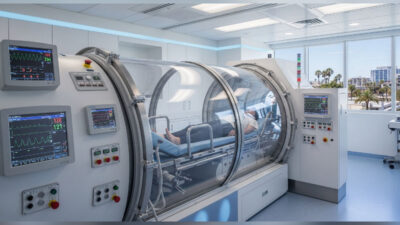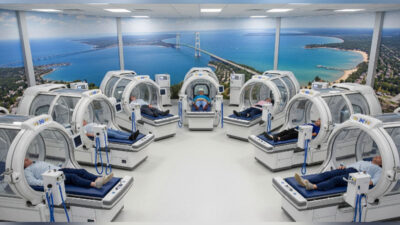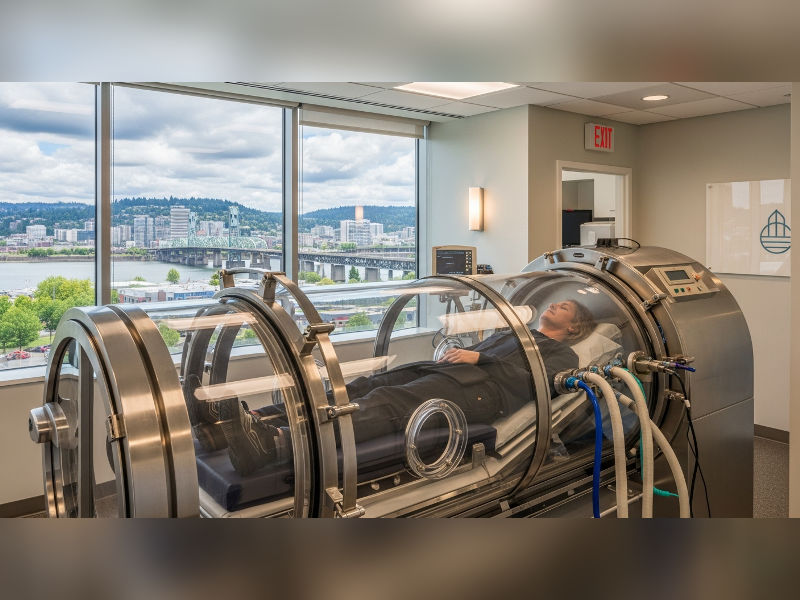
Portland has five hyperbaric oxygen therapy clinics, including hospital-based wound-care programs and private wellness centers. Options range from clinical monoplace chambers at 2.0+ ATA to mild soft-shell units at 1.3 ATA, with session prices starting around $100.
Others manage chronic conditions., and the region stands out.. Practitioners are highly trained. Protocols are well established. From monoplace to multiplace setups, Portland’s providers have invested in equipment meeting clinical standards while maintaining that Pacific Northwest approach to integrative care.
Table of Contents
Understanding Portland’s HBOT Infrastructure and Treatment Standards
According to the Undersea and Hyperbaric Medical Society, HBOT is recognized for 14 FDA-cleared medical indications, with over 1.5 million treatments administered annually in the United States.
Undersea and Hyperbaric Medical Society (UHMS)
The HBOT Portland Oregon, landscape operates under strict medical oversight. These aren’t spa-style oxygen bars. They’re legitimate medical facilities following FDA protocols. They maintain accreditation through the Undersea and Hyperbaric Medical Society.
Portland’s chambers typically pressurize to 2.0 to 2.4 atmospheres absolute. They deliver 100% oxygen in controlled environments. That’s the clinical sweet spot where your blood plasma carries significantly more oxygen, roughly 15 to 20 times the typical amount (Feldmeier & Hampson, 2002). This isn’t just breathing deeply. It’s a physiological shift affecting how tissues heal. Most sessions last 60 to 120 minutes.
Plans often include 20 to 40 sessions., and insurance coverage varies.. Medicare covers approved uses.Many private insurers do as well., and covered conditions include ulcers.. Radiation injuries are included. You might hit walls with off-label uses.
The city’s providers work closely with referring physicians. This creates a more integrated approach. They coordinate care plans, track wound measurements, and document outcomes satisfying both medical necessity and insurance requirements.
Top 5 Hyperbaric Facilities Operating in Portland’s Metro Area
Legacy Emanuel Medical Center runs one of the region’s most established programs. It’s housed within a Level I trauma center. Their hyperbaric unit handles everything from acute carbon monoxide cases to complex wound care. They operate both monoplace and multiplace chambers. The multiplace chamber accommodates up to six patients simultaneously.
Oregon Hyperbaric Medicine Center focuses exclusively on HBOT. This gives them a specialized edge. They built their practice around hard cases.These include non-healing wounds., and they include radiation tissue damage.. They include select neurological conditions.Their staff is highly trained., and they employ certified hyperbaric technicians.. Many have logged thousands of chamber hours.
Providence St. Vincent Medical Center provides hospital-based hyperbaric services. Care is delivered in medical settings. Wound care clinics are fully integrated. Their approach combines HBOT with advanced dressings and surgical debridement when needed. It’s a comprehensive setup addressing wounds from multiple angles.
Vibrant Health Hyperbaric & IV Therapy operates on the wellness side. They maintain medical oversight. They work with conditions falling outside typical insurance coverage, such as post-concussion syndrome, Lyme disease complications, and inflammatory conditions. Their chambers are newer models with entertainment systems.
Northwest Hyperbaric Center sits between hospital rigor and wellness flexibility. They handle FDA-approved conditions but also offer protocols for athletes dealing with sports injuries and recovery. Their client base ranges from medical referrals to self-pay patients.
| Facility Name | Chamber Type | Primary Focus | Insurance |
| Legacy Emanuel Medical Center | Monoplace & Multiplace | Acute conditions, wound care | Medicare, major insurers |
| Oregon Hyperbaric Medicine Center | Monoplace | Chronic wounds, radiation damage | Medicare, private insurance |
| Providence St. Vincent | Monoplace | Wound care, diabetic ulcers | Medicare, PPO plans |
| Vibrant Health Hyperbaric | Monoplace | Wellness, neurological support | Limited, self-pay |
| Northwest Hyperbaric Center | Monoplace | Clinical and performance | Varies by condition |
Clinical Applications Portland Providers Commonly Address With HBOT
Portland’s facilities see a consistent stream of diabetic foot ulcers. These ulcers can drag on for months. They threaten limbs and quality of life. HBOT increases oxygen delivery to compromised tissue. It supports new blood vessel formation. It enhances white blood cell function. Research shows it can reduce amputation rates by roughly 50% when combined with proper wound management (Kranke et al., 2015).
Radiation tissue damage represents another major treatment category. Cancer survivors who underwent radiation therapy sometimes develop tissue necrosis years later. This particularly affects the jaw, bladder, or pelvic region. The oxygen therapy helps rebuild damaged blood vessels. It promotes healing in tissue permanently altered by radiation.
Carbon monoxide poisoning cases arrive through emergency departments. Immediate HBOT can reduce the risk of delayed neurological complications. The treatment displaces carbon monoxide from hemoglobin. It reduces oxidative stress in brain tissue. Getting patients into chambers quickly makes a significant difference.
Some Portland providers work with less common conditions. These include necrotizing soft tissue infections, compromised skin grafts, and sudden hearing loss. These applications require careful patient selection. They need realistic outcome expectations.
What Differentiates Portland’s Approach From Other Regional Markets
The Pacific Northwest’s healthcare culture influences how HBOT gets practiced here. Portland facilities tend to be more open to discussing emerging research. They consider off-label applications more than you’d find in conservative markets. That doesn’t mean they’re running wild with unproven protocols. There’s more willingness to consider cases falling outside the UHMS’s 14 approved indications.
Integration with naturopathic providers creates referral patterns you won’t see everywhere. Some patients arrive after integrative care. They previously worked with integrative practitioners. These practitioners use oxygen therapy intentionally. It is part of a broader treatment plan. Similar collaborations exist in cities like San Diego’s hyperbaric community.
The region’s tech workforce has created demand for performance-focused protocols. You’ll find athletes and executives exploring HBOT for cognitive enhancement and recovery. Portland providers have adapted to serve this demographic while maintaining clinical standards. They offer self-pay options and flexible scheduling.
Cost transparency varies but tends to be better than in some markets. Hospital programs bill through insurance and follow standard medical pricing. Standalone clinics often publish cash-pay rates ranging from $150 to $300 per session. Package deals bring per-session costs down.
Safety Protocols and What You’ll Experience During Treatment Sessions
Hyperbaric chamber Safety protocols matter. The chamber is pressurized, and it is rich in oxygen. Fire risk is real. Facilities follow strict rules.Only approved items are allowed., and petroleum products are banned.. Synthetic fabrics are banned. Electronics are banned. Anything that sparks is banned.
You will change clothes., and the facility provides scrubs.. They are 100% cotton.No makeup is allowed., and no hair products are allowed.. No deodorant is allowed.No jewelry is allowed., and staff check you carefully.. This happens before every session. A single overlooked item could compromise safety.
Ear pressure causes the most discomfort. Pressure builds as the chamber seals. It feels like flying, and it is stronger than landing on a plane. You must equalize often. You can yawn.You can swallow., and you can use the Valsalva maneuver.. Some people sail through this. Others struggle and need to pressurize more slowly. If you can’t equalize, you can’t continue treatment.
Claustrophobia hits certain people harder than expected. Monoplace chambers are essentially clear acrylic tubes. You lie alone for 60 to 120 minutes. Most facilities provide music, videos, or podcasts. But you’re still enclosed in a pressurized cylinder. Multiplace chambers offer more space. They include the presence of other patients or staff.
Vision changes occur in about 20% of patients undergoing extended treatment courses. The high oxygen exposure can temporarily alter your eye’s lens shape. This causes nearsightedness that resolves weeks after treatment ends. It’s reversible but can be annoying during a 40-session protocol.
Choosing the Right Hyperbaric Chamber Portland Facility Based on Your Specific Needs
Start by identifying whether your condition falls under FDA-approved indications. If you’re dealing with a diabetic ulcer or radiation damage, prioritize facilities accepting insurance. These programs have established relationships with insurers. They have streamlined documentation processes.
For off-label applications, post-concussion symptoms, chronic fatigue, Lyme complications, you’re looking at self-pay situations. Focus on facilities with experience in your specific area. Ask about their treatment protocols.
Chamber type matters less than most people think. Monoplace chambers offer individual treatment in a controlled environment. They can feel confining. Multiplace chambers provide more space and social interaction. Neither is inherently superior.
Staff credentials deserve attention. Certified hyperbaric technicians have specialized training in chamber operation and safety protocols. Facilities with CHTs tend to run smoother operations. Other markets like Boston’s hyperbaric providers similarly emphasize technician certification.
Location and scheduling flexibility influence treatment completion rates. HBOT requires consistent, frequent sessions, often five days per week for weeks. Choosing a facility near your home or work makes sustained treatment more feasible. Ask about morning and evening availability.
| Decision Factor | Hospital Programs | Specialty Clinics | Wellness Centers |
| Insurance | Extensive for approved conditions | Moderate, varies | Limited, self-pay |
| Protocols | Strictly FDA-approved | Mix of approved and emerging | Broader wellness range |
| Staff | Wound specialists, hyperbaric MDs | Certified technicians | Integrative practitioners |
| Scheduling | Business hours are, limited | Certified technicians | Most flexible, weekends |
| Cost | Standard medical billing | Package pricing | Upfront pricing |
Cost Considerations and Insurance Navigation for Portland Residents
Insurance coverage for HBOT depends entirely on your diagnosis and policy details. Medicare covers 14 specific conditions when medical necessity is documented (Mathieu et al., 2017). Private insurers generally follow Medicare’s lead. They add their own requirements for prior authorization.
Pre-authorization matters enormously. Your referring physician needs to submit detailed records. These records must show that standard treatments failed. Portland facilities familiar with insurance navigation can guide you through documentation requirements.
Out-of-pocket costs for non-covered conditions vary widely. Hospital programs might charge $1,000+ per session. Standalone clinics offer more reasonable self-pay pricing, typically $150 to $300 per session. A 30-session protocol could run $4,500 to $9,000.
Some facilities offer financing options or payment plans. Health savings accounts and flexible spending accounts can cover HBOT expenses when a physician prescribes treatment. Ask about these options upfront.
The cost comparison becomes relevant if you’re considering purchasing your own chamber versus paying for clinical treatments. Home units create different considerations around maintenance and safety.
FAQs
- Where can I find accredited hyperbaric facilities in Portland’s metro area?
Several programs are accredited., and these include Legacy Emanuel Medical Center.. They also include Providence St. Vincent. Another option is the Oregon Hyperbaric Medicine Center. Some clinics focus on wellness. Others offer FDA-approved care. Many do both.
- How much does hyperbaric oxygen therapy typically cost in Portland?
Hospital programs bill insurance., and rates are often high.. Costs can exceed $1,000 per session.Standalone clinics offer self-pay., and prices are lower.. They range from $150 to $300 per session.
- What conditions does insurance typically cover for HBOT treatment?
Medicare covers 14 conditions., and most private insurers follow suit.. Covered uses include diabetic foot ulcers.Radiation tissue damage qualifies., and carbon monoxide poisoning qualifies.. They require thorough documentation.
- How does Portland’s approach differ from facilities in other major cities?
Portland providers favor integrative care., and they collaborate with naturopathic doctors.. They follow emerging research. Clinical standards remain high. They match top programs nationwide.
- What should I expect during my first hyperbaric chamber session?
You’ll change into cotton scrubs and receive instruction on ear pressure equalization. You sit in a pressurized chamber. You breathe 100% oxygen. Sessions last 60 to 120 minutes. Most people describe mild ear pressure.
References
- UHMS: Approved HBO Indications
- PubMed: PMID 33206062 – Hyperbaric oxygen therapy and the aging process (2020)
- PubMed: PMID 35089395 – HBOT for chronic wound healing (2022)
- PubMed: PMID 36443926 – HBOT for TBI systematic review (2022)
- Mayo Clinic: Hyperbaric Oxygen Therapy
- FDA: Hyperbaric Oxygen Therapy Consumer Update
References
- Undersea and Hyperbaric Medical Society. (2023). Indications for Hyperbaric Oxygen Therapy. UHMS. uhms.org
- Thom, S. R. (2011). Hyperbaric oxygen: Its mechanisms and efficacy. Plastic and Reconstructive Surgery, 127(Suppl 1), 131S-141S. doi.org
- Centers for Medicare and Medicaid Services. (2024). Hyperbaric Oxygen Therapy Coverage Criteria. CMS.gov. cms.gov
References
- Undersea and Hyperbaric Medical Society. “Hyperbaric Oxygen Therapy Indications.” 14th Edition, 2019. uhms.org
- Thom SR. “Hyperbaric oxygen: its mechanisms and efficacy.” Plastic and Reconstructive Surgery, 2011;127(Suppl 1):131S-141S. DOI: 10.1097/PRS.0b013e3181fbe2bf
- Centers for Medicare & Medicaid Services. “National Coverage Determination for Hyperbaric Oxygen Therapy.” NCD 20.29. cms.gov
Medical Disclaimer
The content on BaricBoost.com is for informational purposes only and is not intended as a substitute for professional medical advice, diagnosis, or treatment. Always seek the advice of your physician or other qualified health provider with any questions you may have regarding a medical condition. Never disregard professional medical advice or delay in seeking it because of something you have read on this website.

Author
Seph Fontane Pennock is the founder of BaricBoost.com and Regenerated.com, a clinic directory for regenerative medicine serving 10,000+ providers across the United States. He previously built and sold PositivePsychology.com, which grew to 19 million users and became the largest evidence-based positive psychology resource on the web. Seph brings direct experience as an HBOT patient, having completed protocols at clinics across three continents while navigating mold illness, systemic inflammation, and autoimmune conditions. His treatment journey includes hyperbaric oxygen therapy, peptide protocols, NAD+ therapy, and consultations with specialists from Dubai to Cape Town to Mexico. This combination of entrepreneurial track record and lived patient experience shapes everything published on BaricBoost.com. Every article is grounded in peer-reviewed research, informed by real clinical encounters, and written for patients making high-stakes treatment decisions. Seph's focus is on bringing transparency, scientific rigor, and practical guidance to the hyperbaric oxygen therapy space.