San Diego County has nine established hyperbaric oxygen therapy facilities, spanning hospital wound-care centers, integrative clinics, and sports recovery studios. Session prices typically range from $150 to $350, with clinical-grade chambers running at 2.0 to 2.4 ATA.
Understanding what each center provides shapes your outcome. San Diego’s medical scene has grown over the past decade. More clinics now recognize HBOT’s potential beyond diving medicine. You’ll find hospital programs. You’ll also find wellness centers. Each has distinct protocols.
Table of Contents
Why San Diego Has Become a Hub for Hyperbaric Medicine
According to the Undersea and Hyperbaric Medical Society, HBOT is recognized for 14 FDA-cleared medical indications, with over 1.5 million treatments administered annually in the United States.
Undersea and Hyperbaric Medical Society (UHMS)
Southern California adopted hyperbaric oxygen therapy early, and it moved faster than many regions. The area has a large military presence, and that presence drives the trend. Veterans often seek HBOT. They seek it for traumatic brain injuries.They also seek it for PTSD., and san Diego hosts major research institutions.. UC San Diego Health is one of them.
The city has a strong athletic culture. That culture creates additional demand. Professional athletes use HBOT centers in San Diego. Weekend warriors do as well. They use it for faster recovery. Pressurized oxygen reduces inflammation, and it does this efficiently. It also stimulates collagen production (Thom et al., 2021).
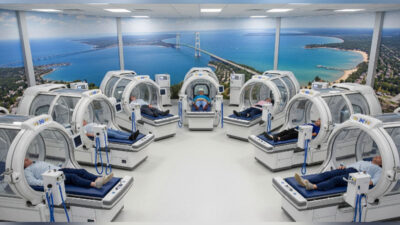
Not all chambers use the same pressure., and monoplace chambers treat one person.. They treat one person at a time. They typically reach 2.0 to 3.0 ATA.Multiplace chambers treat several patients., and they accommodate groups at once.. You sit in a room. You do not lie in a tube. Some prefer multiplace units if claustrophobia is a concern.
Top Medical Centers Offering Hyperbaric Chamber Treatments in San Diego
UC San Diego Health Hyperbaric Medicine Program
Located in Hillcrest, this hospital program handles complex cases. They treat diabetic foot ulcers, radiation injuries, and infections. The staff includes wound care specialists and hyperbaric physicians.
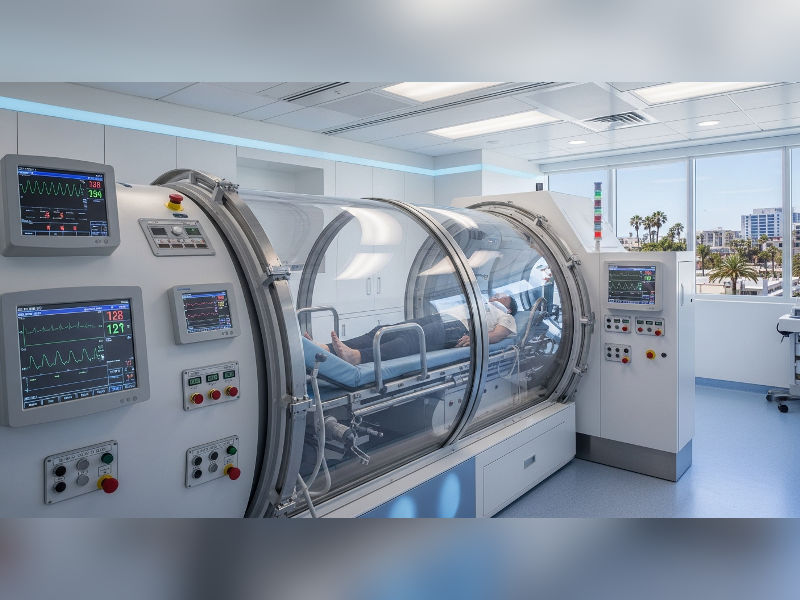
Their chambers are FDA-cleared monoplace units., and sessions run 90 to 120 minutes.. They usually run five days per week. Insurance often covers treatment. Coverage applies only if you meet diagnostic criteria.
Scripps Memorial Hospital La Jolla
Scripps uses a multiplace chamber. You sit upright. You are in a pressurized room. You sit with other patients. The program focuses on wound healing. It serves patients with compromised circulation.
Their care combines wound treatment., and it also addresses infection management.. Sessions last about two hours. This includes compression and decompression.
Sharp Memorial Hospital
Sharp’s hyperbaric center in Kearny Mesa treats crush injuries and compromised grafts. They maintain two monoplace chambers and operate six days weekly. The facility emphasizes patient education.
They work with referring physicians on off-label applications. They review post-surgical healing cases. They proceed only with scientific support.
Private Clinics and Wellness Centers With Hyperbaric Chambers
Hyperbaric Oxygen Clinics of California
This group runs several San Diego hyperbaric chamber locations. Locations include La Jolla. They also include Carlsbad. They serve medical cases and wellness clients. Soft-shell portable chambers are available alongside hard-shell FDA-approved units.
Pricing depends on chamber type., and soft chambers use lower pressure.. They usually operate at 1.3 ATA. Hard chambers reach 2.0 ATA. They support more medical uses.
OxyHealth Recovery Center
OxyHealth is near the Gaslamp Quarter. They focus on sports medicine. Their clients include mixed martial artists. Triathletes train there as well. Sessions last about 60 minutes.
They offer package pricing. This lowers the cost per session. Insurance typically doesn’t reimburse for performance enhancement. The staff includes certified chamber operators.
Restore Hyper Wellness
With a Carlsbad location, Restore takes a spa-like approach. You can pair chamber sessions with cryotherapy or IV therapy. Their chambers operate around 1.3 ATA. This pressure level has limited research backing.
Comparing Costs and Insurance Coverage Across San Diego Facilities
Hospital programs cost $250 to $450 per session if paying cash. Medicare covers HBOT for approved conditions. Many private insurers do as well. You need pre-authorization. You also need physician documentation.
Private wellness centers charge per session., and prices range from $75 to $200.. Packages bring costs down. Some offer 20-session blocks for $1,500 to $3,000. Insurance won’t cover these unless treating an approved diagnosis.
| Facility Type | Session Cost | Insurance | Pressure Range |
| Hospital Programs | $250–$450 | Often covered | 2.0–3.0 ATA |
| Private Medical | $150–$300 | Sometimes | 1.5–2.5 ATA |
| Wellness Centers | $75–$200 | Rarely | 1.3–2.0 ATA |
People often assume their condition automatically qualifies for coverage. Insurers stick to specific codes and evidence thresholds. This creates frustration with conditions like chronic fatigue.
What to Expect During Your First Hyperbaric Session in San Diego
You’ll start with paperwork and safety briefings., and most centers require a recent physical.. Some medications require adjustment. Your provider will review them.
You change clothes before treatment., and clothing must be 100% cotton.. Synthetic fabrics are not allowed. Metal jewelry is prohibited. The fire risk requires strict protocols.
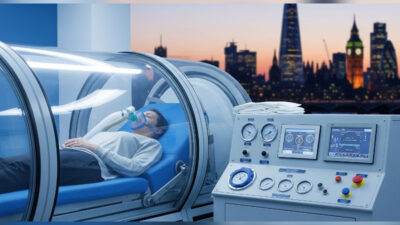
Once inside a monoplace chamber, you lie flat while pressure increases. Your ears will feel it. You’ll need to equalize by swallowing or yawning.
Sessions feel longer than they are., and most people watch movies or nap.. Staff monitor you constantly. Decompression happens slowly.
Conditions That Respond Well to HBOT in Clinical Studies
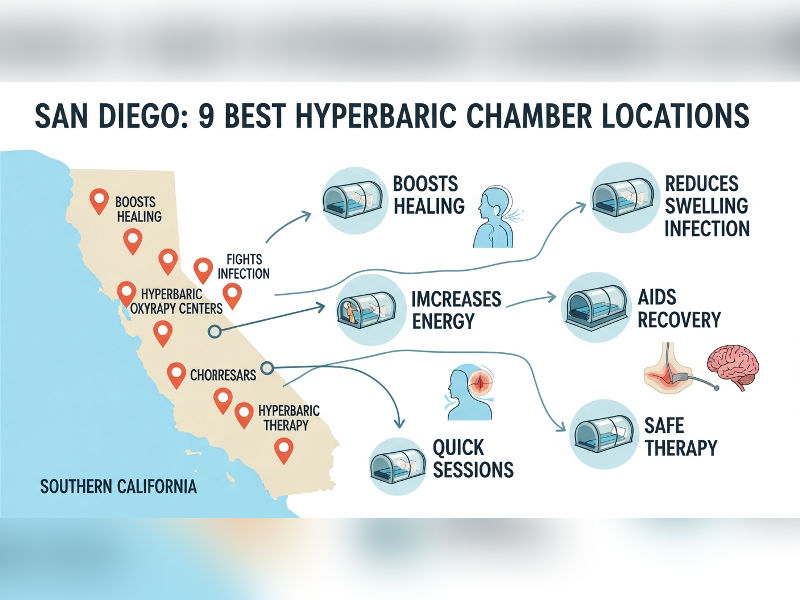
Diabetic foot ulcers show strong evidence. When circulation cannot deliver oxygen, wounds stall. Healing slows. Hyperbaric therapy saturates plasma. It fills plasma with dissolved oxygen. Research indicates higher healing rates (Kranke et al., 2015).
Radiation tissue damage benefits from HBOT’s ability to stimulate blood vessel growth. Cancer treatments can damage the blood supply. They leave tissue poorly vascularized. Studies document symptom improvement. (Bennett et al., 2016).
Sports injuries present a controversial application. Athletes use HBOT for muscle strains. Controlled trials yield mixed results. Some show faster return to play.
Brain injury research generates interest but remains preliminary. Small trials suggest potential cognitive improvements. Large validation studies are lacking.
How to Choose Between Hospital Programs and Private Wellness Centers
Your condition matters most. Serious medical issues require hospital care with physician access. These aren’t situations for wellness centers.
For performance enhancement, private centers work fine. You’ll pay less and schedule more flexibly. You’re operating outside mainstream medical evidence.
Insurance coverage often decides things. If your plan covers HBOT, hospital programs make financial sense. Paying $300 per session for 40 sessions adds up.
Consider proximity, too., and hBOT requires consistent attendance.. Missing sessions disrupts momentum. A center 15 minutes away beats a hospital 90 minutes across town.
What Are the Side Effects and Risks?
An untreated pneumothorax is an absolute contraindication. Increasing pressure traps air. Trapped air can cause tension pneumothorax. You’ll need chest X-rays before treatment.
Certain chemotherapy drugs interact poorly with high oxygen. Bleomycin and doxorubicin raise concerns. If receiving cancer treatment, teams must coordinate carefully.
Pregnancy remains a relative contraindication. We lack sufficient safety data. Most programs avoid treating pregnant women unless life-threatening.
Claustrophobia makes monoplace chambers challenging. Sedation isn’t routinely offered. Multiplace chambers provide more comfort.
Long-Term Benefits and Realistic Expectations for Ongoing Treatment
HBOT isn’t a miracle cure., and it enhances healing processes already present.. Results can plateau over time. This happens without addressing underlying health factors.
Treatment courses usually span 20 to 40 sessions., and you will not feel a dramatic change early.. One or two sessions are rarely enough. Benefits accumulate gradually. Some conditions may require longer protocols.
Maintenance therapy occasionally makes sense for chronic conditions. Insurance rarely covers maintenance sessions. It becomes a financial commitment.
Realistic outcomes depend on your starting point. Someone with a stalled wound might see improvement. An athlete hoping to cut recovery time will likely feel disappointed.
FAQs
- Does insurance typically cover hyperbaric chamber treatments in San Diego?
Coverage depends on the diagnosis., and your diagnosis must match approved indications.. Hospital programs navigate insurance better. You must provide full documentation.
- How many sessions will I need, and how long does each one last?
Most protocols require 20 to 40 sessions., and each session lasts 90 to 120 minutes.. Wellness treatments might be shorter.
- Can I use a hyperbaric chamber if I have lung problems?
An untreated pneumothorax is a strict exclusion., and some chemotherapy drugs increase the risk.. You must disclose all medical history.
- What’s the difference between hospital chambers and wellness center chambers?
Hospital programs use FDA-cleared chambers reaching higher pressures. Wellness centers often operate mild units at lower pressures.
- Are there side effects I should watch for?
The most common issue is ear barotrauma., and some patients report temporary vision changes.. This side effect is rare.
References
Bennett, M. H., Smee, R., & Milross, C. (2016). Hyperbaric oxygen therapy for late radiation tissue injury. Published Study (DOI)
Kranke, P., Schnabel, A., & Weibel, S. (2015). Hyperbaric oxygen therapy for chronic wounds. Published Study (DOI)
Thom, S. R., Thom, L. H., & Buerk, D. G. (2021). Stem cell mobilization by hyperbaric oxygen. Published Study (DOI)
References
- Undersea and Hyperbaric Medical Society. (2023). Indications for Hyperbaric Oxygen Therapy. UHMS. uhms.org
- Thom, S. R. (2011). Hyperbaric oxygen: Its mechanisms and efficacy. Plastic and Reconstructive Surgery, 127(Suppl 1), 131S-141S. doi.org
- Centers for Medicare and Medicaid Services. (2024). Hyperbaric Oxygen Therapy Coverage Criteria. CMS.gov. cms.gov
References
- Undersea and Hyperbaric Medical Society. “Hyperbaric Oxygen Therapy Indications.” 14th Edition, 2019. uhms.org
- Thom SR. “Hyperbaric oxygen: its mechanisms and efficacy.” Plastic and Reconstructive Surgery, 2011;127(Suppl 1):131S-141S. DOI: 10.1097/PRS.0b013e3181fbe2bf
- Centers for Medicare & Medicaid Services. “National Coverage Determination for Hyperbaric Oxygen Therapy.” NCD 20.29. cms.gov
Medical Disclaimer
The content on BaricBoost.com is for informational purposes only and is not intended as a substitute for professional medical advice, diagnosis, or treatment. Always seek the advice of your physician or other qualified health provider with any questions you may have regarding a medical condition. Never disregard professional medical advice or delay in seeking it because of something you have read on this website.

Author
Seph Fontane Pennock is the founder of BaricBoost.com and Regenerated.com, a clinic directory for regenerative medicine serving 10,000+ providers across the United States. He previously built and sold PositivePsychology.com, which grew to 19 million users and became the largest evidence-based positive psychology resource on the web. Seph brings direct experience as an HBOT patient, having completed protocols at clinics across three continents while navigating mold illness, systemic inflammation, and autoimmune conditions. His treatment journey includes hyperbaric oxygen therapy, peptide protocols, NAD+ therapy, and consultations with specialists from Dubai to Cape Town to Mexico. This combination of entrepreneurial track record and lived patient experience shapes everything published on BaricBoost.com. Every article is grounded in peer-reviewed research, informed by real clinical encounters, and written for patients making high-stakes treatment decisions. Seph's focus is on bringing transparency, scientific rigor, and practical guidance to the hyperbaric oxygen therapy space.