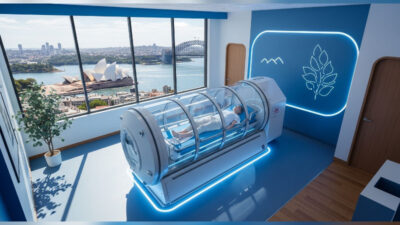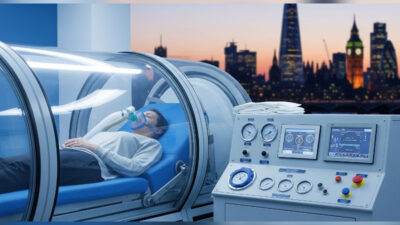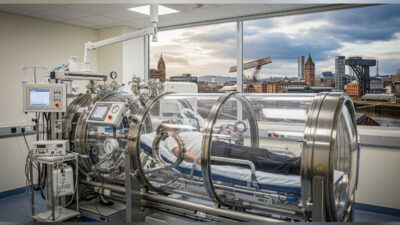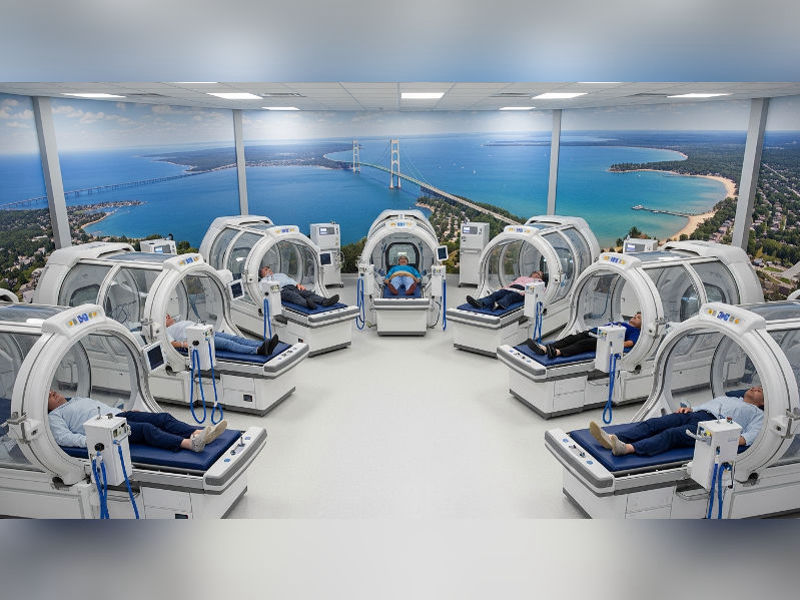
Michigan operates hyperbaric programs at major hospital systems in Detroit, Grand Rapids, and Ann Arbor, plus standalone clinics offering both clinical-grade and mild HBOT. The state’s concentration of wound-care centers and sports medicine practices makes it one of the Midwest’s strongest HBOT markets.
Clinics offer both clinical-grade chambers and soft-shell options. Michigan stands out for its care approach. Technology is only part of the difference.Oxygen therapy fits into custom care plans., and plans match personal health goals.. Some people need diving injury care.Others need post-surgical recovery., and some manage chronic conditions.. Knowing the facilities helps you choose wisely.
Table of Contents
Why Michigan Has Become a Regional Leader in Oxygen Therapy Access
According to the Undersea and Hyperbaric Medical Society, HBOT is recognized for 14 FDA-cleared medical indications, with over 1.5 million treatments administered annually in the United States.
Undersea and Hyperbaric Medical Society (UHMS)
The growth of Michigan hyperbaric chamber facilities didn’t happen randomly. Several factors built the state’s reputation. Michigan’s Great Lakes proximity created clinical demand for decompression treatment. That baseline infrastructure expanded as research revealed broader applications.
Geography isn’t the whole story. Michigan’s medical schools invested heavily in studying oxygen therapy’s effects. Academic interest became clinical availability. Hospitals reviewed evidence and added chambers.
Insurance changes mattered too. More Michigan insurers recognized FDA-approved HBOT indications. Coverage expanded. Many facilities work directly with insurance companies to streamline approvals.
Medical Conditions That Respond Well to Pressurized Oxygen Treatment
Hyperbaric oxygen chamber Michigan clinics treat a wide range of conditions. The FDA has approved HBOT for specific indications. Michigan facilities focus on evidence-backed applications.
Wound healing represents the most common use. Diabetic foot ulcers, radiation tissue damage, and surgical wounds improve under pressurized oxygen. The mechanism is straightforward. Damaged tissue needs oxygen for repair. HBOT delivers it at concentrations impossible through normal breathing.
Wound care is just the start:
- Carbon monoxide poisoning and cyanide exposure
- Decompression sickness from diving
- Gas gangrene and necrotizing infections
- Radiation injury to tissue or bone
- Severe anemia when transfusions aren’t possible
- Brain abscess or intracranial infections
Some Michigan clinics offer treatment for off-label conditions like traumatic brain injury. Research here is less definitive. Early studies show promise.The benefits are worth exploring., and some treatments are not approved yet.. Those often require out-of-pocket payment.
| Condition Category | Typical Treatment Duration | Insurance Coverage |
| Diabetic foot ulcers | 20-40 sessions | High (Medicare) |
| Radiation tissue damage | 30-60 sessions | High (FDA approved) |
| Carbon monoxide poisoning | 3-5 sessions | Very high (emergency) |
| Decompression sickness | 1-10 sessions | Very high (standard) |
| Traumatic brain injury | 40-80 sessions | Low (off-label) |
| Athletic recovery | 10-20 sessions | Very low (wellness) |
Seven Standout Facilities Across Michigan’s Lower and Upper Peninsulas
Finding the right hyperbaric chamber in Michigan requires understanding facility specializations. Not all chambers are equal. Some excel at wound care. Others cater to athletes.
Henry Ford Hospital’s Wound Care Center in Detroit operates multiple hard-shell chambers. They treat complex wound cases. Their team includes vascular surgeons and certified technicians. It’s hospital-based with higher safety protocols.
Spectrum Health in Grand Rapids runs Michigan’s most research-focused program. They’ve published studies on HBOT’s neurological effects. They participate in national trials. This facility is worth considering for advanced protocols.
UP Health System in Marquette serves the Upper Peninsula. Their chamber serves the diving community. Staff understand the unique needs of patients in harsh environments.
Mercy Health in Muskegon focuses on diabetic wounds. They use HBOT as part of care. Sessions align with diabetes management. This approach improves outcomes.
Munson Healthcare in Traverse City serves locals and seasonal residents. Usage increases during the summer when accidents spike. They’ve partnered with the hyperbaric chamber Boston and hyperbaric chamber Portland facilities.
Michigan Medicine in Ann Arbor offers clinical and research-focused HBOT. They treat more complex cases than other facilities decline. You might benefit from new protocols.
St. Joseph Mercy Oakland in Pontiac runs an efficient program. They serve post-surgical patients. Scheduling is flexible, and it works for busy professionals.
What Actually Happens During a Typical Treatment Session
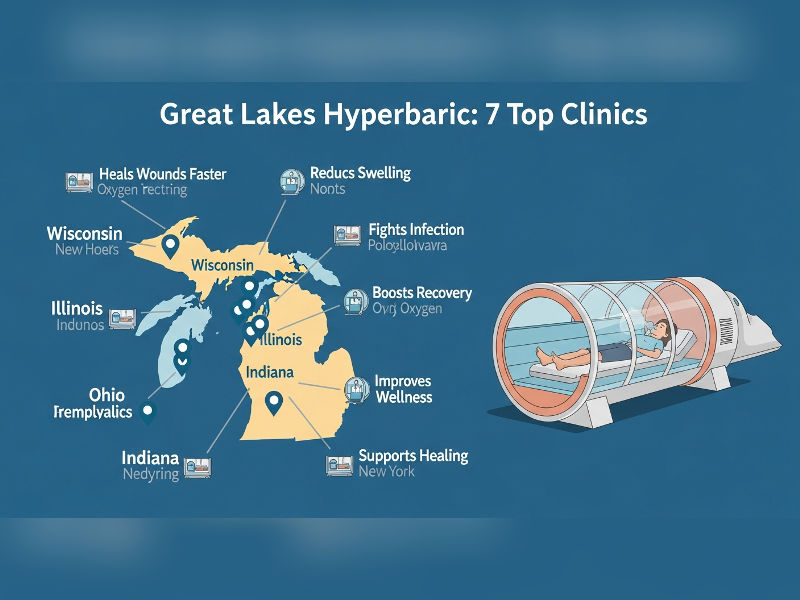
Walking into a HBOT Michigan facility can feel intimidating. Chambers look like large tubes or small rooms. Hard-shell chambers are clear acrylic tubes. Multiplace chambers are room-sized.
You’ll complete a health screening first., and certain conditions create complications.. You’ll remove petroleum-based products. Don’t bring electronics.
The process is straightforward once cleared., and you enter wearing cotton clothing.. The technician gradually increases pressure.Your ears will pop like on an airplane., and you’ll learn equalization techniques.. Most facilities pressurize to 2-2.5 atmospheres.
Sessions last 60 to 90 minutes., and you breathe 100% oxygen.. The chamber is pressurized.Most chambers allow reading materials., and some people sleep.. Others meditate.
Depressurization takes 10-15 minutes., and it must be done carefully.. Trained technicians monitor every session.
Cost Considerations and Insurance Navigation for Michigan Residents
Hyperbaric chamber Michigan treatments aren’t cheap. A single session costs $250-$500 out-of-pocket. Most plans require 20-40 sessions.
Insurance coverage depends on the diagnosis., and medicare covers HBOT for 14 conditions.. Most private insurers follow Medicare rules. Coverage chances are good for diabetic ulcers or radiation damage.
Documentation creates challenges. Insurance companies want proof you’ve tried other treatments. Michigan facilities employ coordinators who handle authorizations.
You’ll pay out-of-pocket for off-label uses., and some clinics offer payment plans.. A few accept health savings accounts.
Michigan pricing is more affordable than in other states. The cost of buying a hyperbaric chamber for home use has dropped. Some patients explore that option after initial treatment.
Safety Protocols and What Disqualifies Patients from Treatment
Safety in hyperbaric oxygen chamber Michigan facilities is serious. We’re talking about sealed environments with elevated oxygen. Fire risk is real, though chambers have safeguards.
Facilities have strict rules., and do not use petroleum products.. They are flammable.No electronics., and no synthetic fabrics.. You’ll remove watches and jewelry. Oxygen-enriched environments turn sparks into fires.
Certain conditions create complications. Active respiratory infections worsen with pressure. Uncontrolled fever affects temperature regulation. Recent ear surgery makes equalization dangerous. Some lung diseases cause pneumothorax.
Pregnancy is controversial., and some facilities won’t treat pregnant women.. We lack safety data on fetal exposure.
Claustrophobia affects 2% of patients. Mention this during screening. Multiplace chambers work better for claustrophobic patients.
Long-Term Outcomes and What Research Actually Shows
Evidence for hyperbaric chamber Michigan treatments varies by condition. Research is solid for FDA-approved indications. Outcomes are well-documented.
Wound healing studies show HBOT reduces amputation rates by up to 60% when combined with proper care (Kranke et al., 2015). The mechanism involves increased oxygen delivery. It promotes new blood vessel growth.
For traumatic brain injury, the picture is unclear. Some studies show improvements. Others find no significant benefit (Bennett et al., 2012). We need larger trials.
The athletic recovery market has exploded despite limited backing. Professional athletes swear by HBOT. Controlled studies haven’t reproduced these effects consistently.
HBOT isn’t a miracle cure, and it works best as part of comprehensive plans. Michigan facilities with the best outcomes integrate HBOT with other therapies.
| Application Area | Evidence Strength | Typical Success Rate |
| Chronic wound healing | Strong (multiple RCTs) | 70-85% improvement |
| Carbon monoxide poisoning | Strong (protocols) | 90%+ full recovery |
| Traumatic brain injury | Moderate (mixed) | 40-60% benefit |
| Athletic recovery | Weak (anecdotal) | Variable |
| Radiation tissue damage | Strong (FDA) | 65-75% reduction |
Making Your Decision About Oxygen Therapy in the Great Lakes Region
Choosing hyperbaric chamber in Michigan treatment requires weighing factors. Start with the diagnosis. Check if it is FDA-approved. If yes, coverage is more likely. If off-label, research more.
Location matters. HBOT requires consistent sessions, often daily for weeks. Look for clinics within a reasonable distance. Ask about accommodations.
Ask about the facility’s experience with your condition. A clinic treating diving accidents might not be the best for wound care. Experience matters.
Chamber type makes a difference. Monoplace chambers offer privacy but feel claustrophobic. Multiplace chambers are roomier. If comparing hyperbaric chamber San Diego or hyperbaric chamber NJ options, similar considerations apply.
Trust your gut about facilities and staff., and the environment should feel safe.. Staff should answer questions. Most facilities offer tours.
Michigan offers strong access. Facilities range from academic centers to specialized clinics. The state’s provider network means you have options.
FAQs
- Where can I find a certified hyperbaric chamber Michigan facility near me?
Certified chambers operate in major cities., and these include Detroit and Grand Rapids.. They also include Ann Arbor. Traverse City and Marquette also have centers. You can verify certification online. Use the Undersea and Hyperbaric Medical Society chamber locator.
- How many HBOT Michigan sessions will I need for wound healing?
Most diabetic foot ulcers need many sessions. Typical treatment is 20 to 40 sessions. Some complex wounds need 60 or more., and your specialist tracks progress.. Reviews happen every 10 to 15 sessions.
- Does insurance cover hyperbaric oxygen chamber Michigan treatments?
Coverage depends on the diagnosis., and fDA-approved conditions are usually covered.. Physician documentation is required.
- Can I use a hyperbaric chamber in Michigan for athletic recovery?
Several Michigan facilities offer HBOT for sports recovery. This is off-label use. If not covered, you pay yourself. Sessions often cost $200 to $400.
- What’s the difference between hard-shell and soft-shell chambers?
Hard-shell chambers reach high pressure., and they deliver 100% oxygen.. They are used for medical conditions. Soft-shell chambers use lower pressure. They max out at 1.3 ATA. They are used for wellness only.
References
Bennett, M. H., Trytko, B., & Jonker, B. (2012). Published Study (DOI)
Kranke, P., Bennett, M. H., Martyn-St James, M., Published Study (DOI)
Undersea and Hyperbaric Medical Society. (2023). UHMS: Approved HBO Indications
References
- Undersea and Hyperbaric Medical Society. (2023). Indications for Hyperbaric Oxygen Therapy. UHMS. uhms.org
- Thom, S. R. (2011). Hyperbaric oxygen: Its mechanisms and efficacy. Plastic and Reconstructive Surgery, 127(Suppl 1), 131S-141S. doi.org
- Centers for Medicare and Medicaid Services. (2024). Hyperbaric Oxygen Therapy Coverage Criteria. CMS.gov. cms.gov
References
- Undersea and Hyperbaric Medical Society. “Hyperbaric Oxygen Therapy Indications.” 14th Edition, 2019. uhms.org
- Thom SR. “Hyperbaric oxygen: its mechanisms and efficacy.” Plastic and Reconstructive Surgery, 2011;127(Suppl 1):131S-141S. DOI: 10.1097/PRS.0b013e3181fbe2bf
- Centers for Medicare & Medicaid Services. “National Coverage Determination for Hyperbaric Oxygen Therapy.” NCD 20.29. cms.gov
Medical Disclaimer
The content on BaricBoost.com is for informational purposes only and is not intended as a substitute for professional medical advice, diagnosis, or treatment. Always seek the advice of your physician or other qualified health provider with any questions you may have regarding a medical condition. Never disregard professional medical advice or delay in seeking it because of something you have read on this website.

Author
Seph Fontane Pennock is the founder of BaricBoost.com and Regenerated.com, a clinic directory for regenerative medicine serving 10,000+ providers across the United States. He previously built and sold PositivePsychology.com, which grew to 19 million users and became the largest evidence-based positive psychology resource on the web. Seph brings direct experience as an HBOT patient, having completed protocols at clinics across three continents while navigating mold illness, systemic inflammation, and autoimmune conditions. His treatment journey includes hyperbaric oxygen therapy, peptide protocols, NAD+ therapy, and consultations with specialists from Dubai to Cape Town to Mexico. This combination of entrepreneurial track record and lived patient experience shapes everything published on BaricBoost.com. Every article is grounded in peer-reviewed research, informed by real clinical encounters, and written for patients making high-stakes treatment decisions. Seph's focus is on bringing transparency, scientific rigor, and practical guidance to the hyperbaric oxygen therapy space.