Expect to pay $150 to $500 per session, and prioritize a practitioner trained through ISCO3 or the American Academy of Ozone Therapy before anything else. Ozone is not FDA-approved for any medical use, so the quality bar is set by the clinician, not a regulator. A legitimate clinic runs medical-grade generators fed by pure oxygen, states its concentration and dose in numbers, and screens you for contraindications like G6PD deficiency.
Key Takeaways
- Look for practitioners trained through ISCO3, the American Academy of Ozone Therapy (AAO), or an equivalent program with documented ozone-specific credentials.
- Legitimate clinics use medical-grade ozone generators fed by pure oxygen, not industrial units or air-fed machines, and follow published dosing protocols.
- Expect $150 to $500 per session for IV ozone (MAH) and $75 to $250 for insufflation or injection-based treatments.
- Ozone therapy is not FDA-approved for any condition (21 CFR 801.415), so practitioner competence is the main safety control.
- Red flags include guaranteed cures, refusal to discuss equipment or training, and pressure to prepay for large packages.
Why does clinic choice matter so much for ozone therapy?
Clinic choice matters more with ozone than with most treatments because no regulator sets the standard. Ozone therapy uses medical-grade ozone (O3), a molecule of three oxygen atoms, to trigger a controlled oxidative response. It is delivered several ways: intravenously as major autohemotherapy (MAH), by insufflation (rectal, vaginal, ear), by injection into joints or tissue (prolozone), or topically with ozonated oils and water.
The effect depends on dose, concentration, and route. Sagai and Bocci (2011) describe the mechanism as a mild, controlled oxidative stress that upregulates antioxidant defenses, and Smith et al (2017) review evidence that ozone can improve local perfusion and modulate immune signaling when dosed correctly. Elvis and Ekta (2011) reported measurable immune and antioxidant effects in their clinical review. Incorrect dosing or contaminated equipment pushes that same oxidative stress into tissue damage, which is why the person running the machine is the variable that matters most.
Unlike HBOT, which requires FDA-cleared chambers, ozone devices sit outside any medical clearance framework in the US. The FDA states plainly in 21 CFR 801.415 that ozone is a toxic gas “with no known useful medical application in specific, adjunctive, or preventive therapy.” Ozone is nonetheless used widely in integrative and naturopathic practice, so the quality bar falls entirely on the clinic.
What are the main ozone therapy routes and doses?
Ozone is delivered by four main routes, and the right one depends on the target. The table below sets out route, typical dose range as published in the ISCO3 Madrid Declaration, and the best-supported use for each. A clinic that cannot tell you which route it recommends and why is not matching the method to your condition.
Ozone Delivery Methods Compared
| Method | Route | Typical dose (per ISCO3) | Best-supported use |
|---|---|---|---|
| Major autohemotherapy (MAH) | IV: blood drawn, ozonated, reinfused | 100 to 200 mL blood, ozone 20 to 40 mcg/mL | Systemic and immune-focused protocols |
| 10-pass (high-dose IV) | IV: blood cycled and ozonated up to 10 times under light pressure | Higher cumulative ozone exposure than standard MAH | Chronic and complex cases (evidence limited) |
| Prolozone | Injection into joint or soft tissue | Local ozone plus procaine and nutrients, low volume | Joint and musculoskeletal pain |
| Insufflation (rectal, vaginal, ear) | Mucosal gas delivery | Rectal 100 to 300 mL gas at low concentration | Gut-related and localized applications |
For a deeper look at high-dose IV pricing, see the 10-pass ozone therapy cost breakdown, and for scheduling questions the guide on how often ozone therapy is done.
What certifications should an ozone therapy practitioner have?
The single most important factor is documented, ozone-specific training. Ozone is not part of standard medical school, so a competent practitioner has completed dedicated coursework. Here is what to look for.
| Certification / Training | What It Means | Why It Matters |
|---|---|---|
| ISCO3 (International Scientific Committee of Ozone Therapy) | Global standard-setting body for ozone protocols and safety | Publishes the Madrid Declaration on Ozone Therapy, the most widely referenced dosing and safety guideline |
| AAO (American Academy of Ozone Therapy) | US organization offering training and certification | AAO-trained practitioners have completed hands-on ozone coursework specific to clinical use |
| AAOT (American Academy of Ozonotherapy) | US organization providing ozone education | Offers continuing education and certification for physicians and naturopaths |
| Frank Shallenberger, MD training | Prolozone and ozone courses from the developer of prolozone | Shallenberger developed prolozone therapy and has trained thousands of practitioners |
| Naturopathic medical license (ND) | Licensed NDs in states with full licensure | NDs in states like Oregon, Arizona, and Washington receive ozone training in their medical education |
A practitioner should share their training background without hesitation. If they cannot name a specific ozone program or certification, treat that as a concern.
What ozone equipment does a legitimate clinic use?
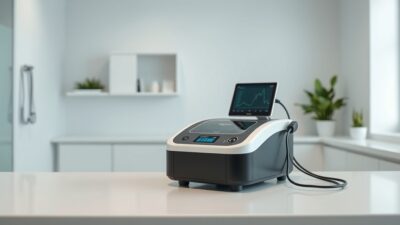
A legitimate clinic uses a medical-grade ozone generator fed by pure medical oxygen, with a photometer that displays the exact concentration in real time. Industrial ozone machines and air-fed generators do not belong in a clinical setting. Air-fed units produce nitrogen oxides, which are toxic to the lungs.
Key equipment questions to ask:
- What generator do they use? Reputable brands include Zotzmann, Herrmann, Kastner-Praxisbedarf, and Longevity Resources. These are purpose-built medical devices, not repurposed industrial units.
- Do they use medical-grade oxygen? Clinical ozone must be generated from pure oxygen. Air-fed generators produce nitrogen oxides.
- How do they measure ozone concentration? Proper generators have built-in photometers or UV absorption meters that show the exact concentration.
- Is the tubing ozone-resistant? Ozone degrades standard plastics. Clinical setups use silicone or PTFE tubing. Yellowed or cracked tubing signals a clinic cutting corners.
A clinic that can explain its dosing in plain numbers is already ahead of most. The ones to avoid treat ozone as a one-size-fits-all fix with no discussion of concentration, volume, or route.
What questions should you ask before your first appointment?
Walking in informed puts you in a stronger position. These questions separate quality clinics from questionable ones.
- What is your ozone therapy training and certification? Look for specific programs (AAO, ISCO3, Shallenberger), not “I attended a conference.”
- Which route do you recommend for my condition, and why? A good practitioner matches method to condition: MAH for systemic issues, prolozone for joints, insufflation for gut-related problems.
- What concentration and volume do you use? They should give numbers in micrograms per milliliter (gamma) and total volume. “We use a standard dose” is a warning sign.
- How many sessions do you typically recommend? Honest practitioners give a range and set expectations rather than promising results after one visit.
- What side effects should I expect? Common ones include Herxheimer reactions, mild fatigue, and injection-site discomfort. “There are no side effects” is not an honest answer.
- Can I see your equipment? Any reputable clinic will show you the setup. Reluctance is a red flag.
What are the red flags of a bad ozone clinic?
Not every clinic offering ozone operates at an acceptable standard. Watch for these signs.
- Guaranteed cures. No responsible practitioner guarantees outcomes. Guarantees are the language of scams.
- No documented training. A practitioner who cannot name their ozone program may be self-taught from videos. This happens more than you would expect.
- Pressure to prepay large packages. Some clinics push 20- or 30-session packages before a single treatment. A quality clinic lets you start small and assess your response.
- Ambient air instead of medical oxygen. Ozone from air contains nitrogen dioxide, which damages lung tissue.
- No intake assessment. A clinic that skips medical history, medication review, and contraindication screening is skipping essential safety steps.
- Unlicensed practitioners. In most US states, ozone must be administered by or under a licensed provider (MD, DO, ND, or PA).
For a fuller treatment of who should not receive ozone and how to reduce risk, see the guide on ozone therapy safety, part of our wider ozone therapy resource.
How much does ozone therapy cost per session?
Ozone therapy is typically not covered by insurance in the US. Here is what to expect out of pocket.
| Treatment Type | Typical Cost Per Session | Sessions Commonly Recommended |
|---|---|---|
| Major Autohemotherapy (MAH) | $200 to $500 | 6 to 20 sessions |
| 10-Pass Ozone (High-Dose IV) | $500 to $1,500 | 3 to 10 sessions |
| Prolozone Injections | $150 to $400 per area | 3 to 6 sessions |
| Rectal Insufflation | $75 to $200 | 10 to 30 sessions |
| Ear Insufflation | $50 to $150 | 10 to 20 sessions |
| Ozone Sauna | $75 to $250 | 10 to 20 sessions |
Prices vary by region. Clinics in New York, Los Angeles, and Miami tend to charge at the higher end. Package discounts of 10 to 20% for a prepaid series are reasonable, as long as the clinic does not pressure you before your first session.
Can you use a telemedicine consult to vet a clinic?
Yes. If you do not live near a major metro, a telemedicine consult lets a practitioner review your history and goals before you travel. A consult typically costs $100 to $250 and helps you decide whether ozone is a reasonable option, get a proposed protocol (route, dose, frequency) in advance, ask questions without in-clinic pressure, and compare recommendations from more than one practitioner.
How do you find ozone therapy clinics near you?
Start with these resources, then call each clinic and run the vetting questions above.
- AAO practitioner directory: The American Academy of Ozone Therapy lists certified practitioners.
- ISCO3 member list: Practitioners who follow ISCO3 guidelines.
- Regenerated.com: A US directory of regenerative medicine clinics that includes vetted ozone therapy providers with verification details on each listing.
How a clinic answers your questions tells you most of what you need to know about its professionalism.
Is ozone therapy FDA-approved?
No. The FDA has not authorized ozone for any medical condition. 21 CFR 801.415 describes ozone as a toxic gas “with no known useful medical application in specific, adjunctive, or preventive therapy.” Practitioners use it off-label within integrative and naturopathic practice, which is why documented training and medical-grade equipment matter so much when choosing a clinic (Smith et al, 2017).
Who should not have ozone therapy?
People with G6PD deficiency should not receive IV ozone because it can trigger hemolysis, and the ISCO3 Madrid Declaration lists it as an absolute contraindication. Ozone is also generally avoided in active hyperthyroidism, recent heart attack, pregnancy, and uncontrolled bleeding disorders. A clinic that does not take a medical history or ask about these conditions before treatment is skipping a core safety step.
Sources
- Elvis AM, Ekta JS. Ozone therapy: a clinical review. J Nat Sci Biol Med. 2011;2(1):66-70. PMID: 22470237. doi:10.4103/0976-9668.82319
- Smith NL, Wilson AL, Gandhi J, Vatsia S, Khan SA. Ozone therapy: an overview of pharmacodynamics, current research, and clinical utility. Med Gas Res. 2017;7(3):212-219. doi:10.4103/2045-9912.215752
- Sagai M, Bocci V. Mechanisms of action involved in ozone therapy: is healing induced via a mild oxidative stress? Med Gas Res. 2011;1:29. PMID: 22185664. doi:10.1186/2045-9912-1-29
- US Food and Drug Administration. 21 CFR 801.415: Maximum acceptable level of ozone. eCFR
- International Scientific Committee of Ozone Therapy (ISCO3). Madrid Declaration on Ozone Therapy. 3rd ed. 2020.
Medical Disclaimer
The content on BaricBoost.com is for informational purposes only and is not intended as a substitute for professional medical advice, diagnosis, or treatment. Always seek the advice of your physician or other qualified health provider with any questions you may have regarding a medical condition. Never disregard professional medical advice or delay in seeking it because of something you have read on this website.

Author
Seph Fontane Pennock is the founder of BaricBoost.com and Regenerated.com, a clinic directory for regenerative medicine serving 10,000+ providers across the United States. He previously built and sold PositivePsychology.com, which grew to 19 million users and became the largest evidence-based positive psychology resource on the web. Seph brings direct experience as an HBOT patient, having completed protocols at clinics across three continents while navigating mold illness, systemic inflammation, and autoimmune conditions. His treatment journey includes hyperbaric oxygen therapy, peptide protocols, NAD+ therapy, and consultations with specialists from Dubai to Cape Town to Mexico. This combination of entrepreneurial track record and lived patient experience shapes everything published on BaricBoost.com. Every article is grounded in peer-reviewed research, informed by real clinical encounters, and written for patients making high-stakes treatment decisions. Seph's focus is on bringing transparency, scientific rigor, and practical guidance to the hyperbaric oxygen therapy space.