Affiliate Disclosure
This article contains affiliate links. If you purchase through these links, we may earn a commission at no additional cost to you. This does not influence our evaluations or rankings.
Arboretum-style hyperbaric clinics integrate biophilic design — plants, natural light, and nature soundscapes — into the treatment environment. Research on biophilic healthcare design shows these elements reduce patient anxiety and cortisol levels, potentially complementing the physiological effects of HBOT. This guide covers where these clinics exist, how they differ from standard facilities, and whether the design actually matters for outcomes.
Table of Contents
What Makes Biophilic-Design Hyperbaric Centers Different
Standard hyperbaric clinics usually feel cold and institutional. You enter stark rooms that reek of cleaning products, and immediately you know you’re inside a medical building. However, arboretum hyperbaric oxygen chamber locations completely change this experience.
Arboretum hyperbaric oxygen chambers form environments where recovery occurs organically. The treatment rooms might feature massive windows facing herb gardens or quiet walking trails.
Several centers actually broadcast sounds from their outdoor areas, songbirds calling, fountain water splashing, and branches swaying in gentle winds through audio systems.
Here’s what you’ll commonly discover at these special locations:
- Temperature-regulated units with sweeping garden panoramas
- Pre-session calming zones among vertical plant installations
- After-treatment resting spaces in greenhouse-style areas
- Strolling routes for light exercise between appointments
- Quiet gardens specially created for HBOT clients
- Learning exhibits about plant science and oxygen treatments
The mental benefits are genuine. When you’re not looking at boring medical machinery, your anxiety drops before sessions start. Lower anxiety may translate to improved treatment results in many cases.
The Science Behind Combining Nature and Oxygen Therapy
Research supports why arboretum hyperbaric oxygen chamber sessions could work better than conventional arrangements. This goes beyond patient comfort, although that’s important too.
What nature can do: Lower stress hormones, pulse, and blood pressure vs. urban settings; improve mood. What HBOT does: Increases dissolved oxygen at 2.0–3.0 ATA; supports select indications via anti-infective and pro-healing mechanisms.
What’s unknown: Whether nature exposure adds measurable clinical benefit to HBOT outcomes across indications.
Studies demonstrate that people in natural spaces produce less cortisol and adrenaline (Park et al., 2010). When your system isn’t handling stress chemicals, it can concentrate completely on utilizing that compressed oxygen efficiently.
Also, numerous clients mention feeling less trapped in units surrounded by plants. This counts because nervousness can really limit HBOT effectiveness by changing breathing rhythms and blood flow.
Conditions Commonly Treated at Biophilic Centers
You may question whether arboretum hyperbaric oxygen chamber locations handle the same health problems as standard clinics. These locations treat UHMS-approved indications, including carbon monoxide poisoning, decompression sickness, radiation tissue injury, diabetic problem wounds, refractory osteomyelitis, compromised grafts/flaps, CRAO, severe anemia, and gas gangrene. Coverage depends on your insurer and the facility’s accreditation.
The most frequent issues include wound healing problems, particularly diabetic sores that refuse to heal correctly. Carbon monoxide poisoning victims often arrive here, too, although those cases are typically urgent situations requiring the nearest hospital-based HBOT service.
Radiation tissue injury from cancer therapy responds well to HBOT, and the calm surroundings help individuals manage what’s already been a tough experience.
Several locations focus on treating competitors with athletic injuries. That’s logical. Who wouldn’t prefer recovering from a damaged knee while watching hummingbirds visit garden flowers? The mix of boosted oxygen transport and lowered tension builds promising healing circumstances.
Here’s what people usually go through during sessions:
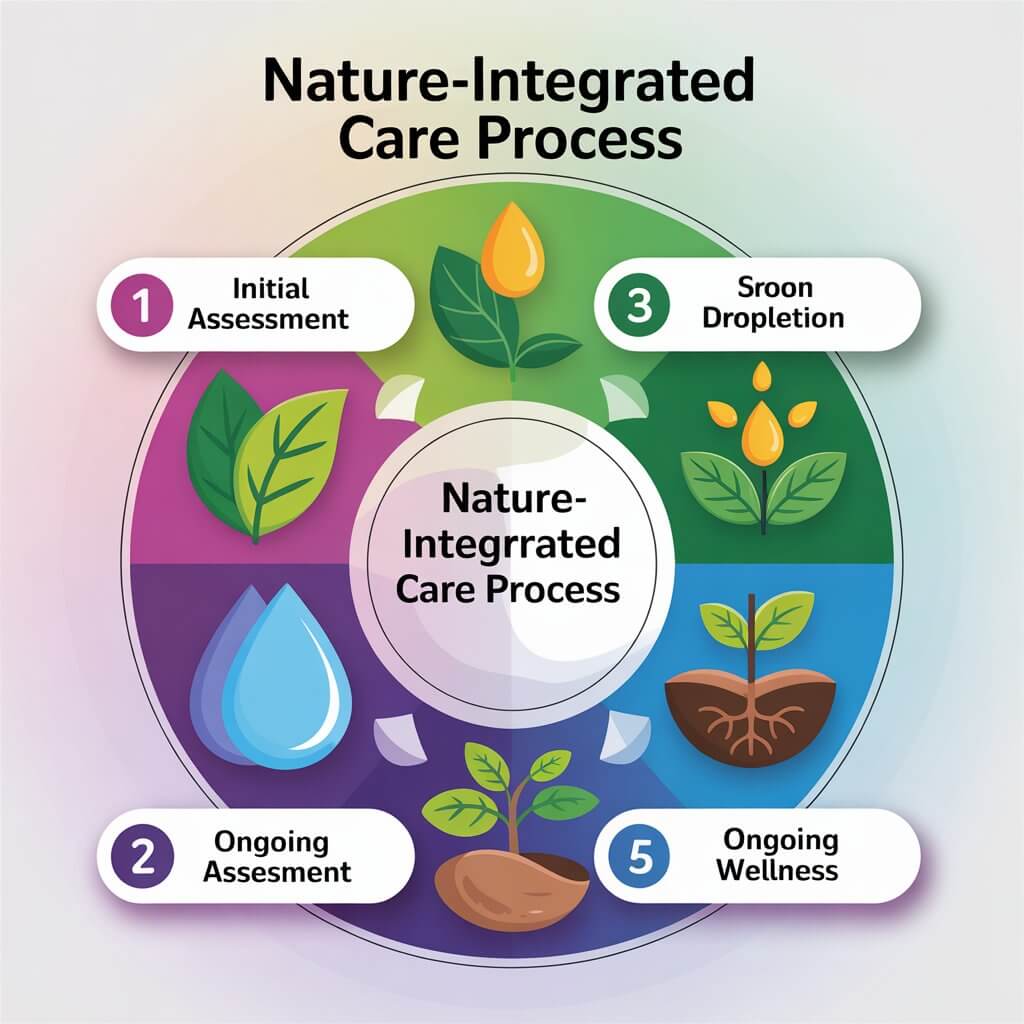
What to Expect During Your First Visit
Entering an arboretum hyperbaric oxygen chamber location resembles visiting an upscale wellness retreat more than a medical office. You’ll likely register at a front desk surrounded by green walls or positioned to see the primary garden spaces.
Your opening appointment begins with a thorough check-up, but it occurs in spaces meant to feel inviting instead of clinical. Numerous locations handle these reviews in areas with daylight and garden views outside.
Most protocols run 90–120 minutes, including compression and decompression at 2.0–3.0 ATA in a hard-sided chamber. Many clinics use nature visuals or music to reduce pre-treatment anxiety.
| Phase | Duration | Environment |
| Initial Assessment | 45-60 minutes | Garden-view consultation room |
| Pressure Adaptation | 15-20 minutes | Transitional chamber space |
| Treatment Session | 90-120 minutes | Chamber with nature views |
| Recovery Period | 15-30 minutes | Outdoor recovery garden |
The real unit experience changes by location, but most arboretum hyperbaric oxygen chamber places design their treatment rooms with big viewing windows. You could observe koi swimming in outdoor water features or wildlife visiting feeding areas before and after your appointment.
Team members usually learn both medical procedures and the healing advantages of natural spaces. They realize that recovery works on several levels, and they’re present to help both your physical care and general wellness.
Cost Considerations and Insurance Coverage
Let’s face it, arboretum hyperbaric oxygen chamber sessions aren’t cheap, and the gorgeous locations don’t make them cost less than regular clinics. Self-pay often costs $250–$600 per session in independent clinics; hospital billing can be higher. Medicare analyses show approximately $596 per session in 2022, but your out-of-pocket costs depend on the indication and setting.
Insurance payment relies completely on your condition and medical requirements. Accepted problems like diabetic injuries, radiation damage, and carbon monoxide exposure are often paid for. Experimental care for things like developmental delays or brain trauma usually isn’t, no matter how lovely the clinic looks.
Many biophilic locations provide bundled pricing or financing options, especially for conditions needing several sessions. Some work with medical travel businesses, mixing treatment with real vacation experiences in botanical locations.
you’re paying for both medical care and an improved healing space. Whether that’s valuable depends on your finances, insurance coverage, and how much the natural environment might boost your complete treatment journey.
Safety and Legitimacy Considerations
Arboretum hyperbaric oxygen chamber locations represent something larger than just attractive medical offices, but safety remains paramount. Ask about UHMS or Joint Commission accreditation. Confirm ASME PVHO-1 and NFPA 99 compliance. Screen for contraindications and discuss ear-clearing to prevent barotrauma. Avoid centers marketing HBOT for unapproved conditions without evidence.
Additional medical centers are adding natural features because research continues showing what most of us naturally understand: we recover better when we feel comfortable. These locations are demonstrating that advanced medical care doesn’t need to happen in sterile, scary spaces.
The idea is expanding past hyperbaric treatments, too. Cancer care facilities are building healing gardens. Rehabilitation clinics are adding outdoor treatment areas. Even surgical centers are creating recovery spaces with nature scenes and daylight.
What’s promising is this isn’t just about making medical care seem nicer; it’s actually making it work better. When people are less worried, less nervous, and more relaxed, their systems can focus completely on healing instead of handling mental stress.
The Future of Nature-Integrated Medical Care
If you have an emergency indication like CO poisoning, go to the nearest hospital-based HBOT service; do not delay care for a scenic setting. However, for non-emergency arboretum hyperbaric oxygen chamber treatments, the combination of evidence-based medicine and biophilic design offers promising possibilities.
These centers are proving that high-tech medical treatment doesn’t have to happen in intimidating environments. The FDA warns about unproven claims for autism, Alzheimer’s, or anti-aging often made by wellness centers, so it’s crucial that legitimate biophilic facilities stick to established medical protocols while enhancing the patient experience.
The concept is expanding beyond hyperbaric therapy. Cancer treatment centers are adding healing gardens. Physical therapy clinics are incorporating outdoor treatment spaces. Even surgery centers are designing recovery rooms with nature views and natural lighting for improved patient outcomes.
FAQ
- What conditions are treated at arboretum hyperbaric oxygen chambers?
These locations handle UHMS-approved indications, including carbon monoxide poisoning, decompression sickness, diabetic problem wounds, radiation tissue injury, refractory osteomyelitis, compromised grafts/flaps, and other established conditions. The natural environment offers extra mental advantages that may boost treatment results.
- Are treatments at arboretum facilities more expensive?
Prices vary from $250–$600 per session in independent clinics, with hospital billing potentially higher. Insurance payment depends on medical requirements and facility accreditation rather than clinic aesthetics, so approved conditions are often covered regardless of the environment.
- How does the natural environment affect treatment effectiveness?
Studies show that natural environments lower stress chemicals like cortisol, which can boost oxygen absorption and blood flow. Patients also mention less claustrophobia and nervousness, potentially creating better treatment following and results.
- Do I need a doctor’s referral for treatment?
Yes. HBOT is a prescription therapy delivered in a hard-sided chamber that meets ASME PVHO-1/NFPA 99 standards, under physician oversight, regardless of clinic type.
- How many sessions will I need?
Treatment plans depend on your particular UHMS-approved indication, not the clinic type. Most people need between 20-40 appointments, scheduled daily over several weeks. Your care team will create a personal plan based on your medical requirements and treatment response.
References
Park, B. J., Tsunetsugu, Y., Kasetani, T., Kagawa, T., & Miyazaki, Y. (2010). The physiological effects of Shinrin-yoku (taking in the forest atmosphere or forest bathing): evidence from field experiments in 24 forests across Japan. Environmental Health and Preventive Medicine. PubMed Central
Ulrich, R. (1984). View through a window may influence recovery from surgery. Science. PubMed: PMID 6143402
References
- Undersea and Hyperbaric Medical Society. “Hyperbaric Oxygen Therapy Indications.” 14th Edition, 2019. uhms.org
- Thom SR. “Hyperbaric oxygen: its mechanisms and efficacy.” Plastic and Reconstructive Surgery, 2011;127(Suppl 1):131S-141S. DOI: 10.1097/PRS.0b013e3181fbe2bf
- Centers for Medicare & Medicaid Services. “National Coverage Determination for Hyperbaric Oxygen Therapy.” NCD 20.29. cms.gov
Medical Disclaimer
The content on BaricBoost.com is for informational purposes only and is not intended as a substitute for professional medical advice, diagnosis, or treatment. Always seek the advice of your physician or other qualified health provider with any questions you may have regarding a medical condition. Never disregard professional medical advice or delay in seeking it because of something you have read on this website.

Author
Seph Fontane Pennock is the founder of BaricBoost.com and Regenerated.com, a clinic directory for regenerative medicine serving 10,000+ providers across the United States. He previously built and sold PositivePsychology.com, which grew to 19 million users and became the largest evidence-based positive psychology resource on the web. Seph brings direct experience as an HBOT patient, having completed protocols at clinics across three continents while navigating mold illness, systemic inflammation, and autoimmune conditions. His treatment journey includes hyperbaric oxygen therapy, peptide protocols, NAD+ therapy, and consultations with specialists from Dubai to Cape Town to Mexico. This combination of entrepreneurial track record and lived patient experience shapes everything published on BaricBoost.com. Every article is grounded in peer-reviewed research, informed by real clinical encounters, and written for patients making high-stakes treatment decisions. Seph's focus is on bringing transparency, scientific rigor, and practical guidance to the hyperbaric oxygen therapy space.
Why Trust Our Evaluations
Our rankings are based on hands-on testing, published clinical data, and verified manufacturer specifications. We apply the same criteria to every product regardless of affiliate status. Editorial Process · Evaluation Methodology