Affiliate Disclosure
This article contains affiliate links. If you purchase through these links, we may earn a commission at no additional cost to you. This does not influence our evaluations or rankings.
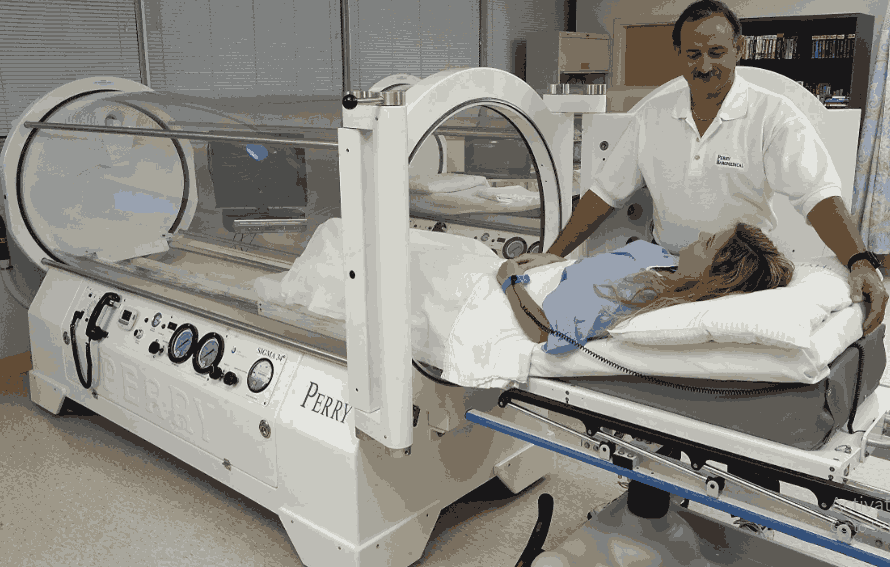
Perry Baromedical monoplace hyperbaric chambers typically sell for $80,000 to $150,000, with multiplace systems running $250,000 to $500,000+ depending on configuration. The company traces to Perry Submarine Builders (1956), formed its Baromedical division in 1979, and today is the only full-line US manufacturer building monoplace, dualplace, and multiplace systems, including the BARA-MED line acquired from ETC in 2020.[1][2][3]
How Much Does a Perry Hyperbaric Chamber Cost?
Perry does not publish list prices; systems are quoted by configuration. Based on dealer listings and market pricing for US clinical chambers, budget $80,000-$150,000 for a new monoplace unit and $250,000-$500,000+ for multiplace systems, before installation, room construction, and training (BaricBoost market estimates; request a written quote for your configuration).
Total cost of ownership includes installation, operator training, annual maintenance, and parts. Facilities evaluating Perry against lower-cost alternatives should factor these ongoing costs into the comparison. A chamber that requires less downtime and repairs over a 10-year lifespan often costs less overall than a cheaper unit that needs frequent servicing. Certified pre-owned Perry units with OEM warranty offer a lower entry point; our used hyperbaric chamber guide covers what refurbished clinical units cost.
For the broader pricing picture across chamber classes, see our hyperbaric chamber cost guide.
What Models Does Perry Baromedical Make?
Perry describes itself as the only full-line manufacturer in the industry, covering monoplace through multiplace systems.[2] The current product line:
Perry Baromedical Model Line
| Model | Type | Capacity | Typical Price (BaricBoost market estimate) |
|---|---|---|---|
| Sigma ICON 30 | Compact monoplace | 1 patient | $80,000-$110,000 |
| Sigma 34 / Sigma 36 / Sigma 40 | Monoplace, progressively larger bores | 1 patient | $90,000-$150,000 |
| Sigma Elite | Premium single-user unit | 1 patient | $120,000-$150,000 |
| Sigma 40-II | Dualplace | 2 patients | $150,000-$250,000 |
| Sigma Multiplace Series | Multiplace | 2-18 patients | $250,000-$500,000+ |
| BARA-MED line | Monoplace (ex-ETC, acquired 2020) | 1 patient | $80,000-$130,000 |
Model names, types, and capacities are from Perry’s product pages; Perry supplies pressure ratings and dimensional specs on request, so confirm the tech sheet for your model before site planning.[2] The BARA-MED brand joined the line when Perry acquired the hyperbaric division of Environmental Tectonics Corporation in February 2020 and moved BARA-MED manufacturing to its Riviera Beach, Florida facility.[3] We review that line separately in our BARA-MED hyperbaric chamber guide, and the multiplace class in our multiplace chamber overview.
How Does Perry Compare to Sechrist?
Sechrist Industries is the other major US clinical chamber manufacturer, focused on monoplace systems with a certified pre-owned program backed by a 90-day OEM warranty.[4] Perry’s differentiator is breadth: it is the only manufacturer covering monoplace, dualplace, and multiplace under one roof, which matters for hospital programs that expect to scale.
Perry vs Sechrist
| Feature | Perry | Sechrist |
|---|---|---|
| Model range | Monoplace, dualplace, multiplace (2-18 patients) | Primarily monoplace clinical chambers |
| Pre-owned program | Certified used/refurbished with OEM warranty | Certified Pre-Owned with 90-day OEM warranty |
| Heritage | Baromedical division since 1979 (Perry Submarine Builders, 1956) | Respiratory and hyperbaric equipment maker, decades in clinical HBOT |
| Typical price band | $80K-$500K+ by configuration (market estimate) | $70K-$150K monoplace (market estimate) |
| Best for | Programs that may scale to dualplace/multiplace | Monoplace-only clinics and wound care centers |
Tekna and other manufacturers also sell multiplace systems; spec-level comparisons there require direct quotes, since published pricing and independent spec sheets are scarce. Qualitative claims about build quality and support responsiveness circulate in marketing copy on all sides; we found no independent source that measures them, so we do not repeat them here.
What Certifications and Safety Standards Apply?
Perry’s hyperbaric systems are FDA-cleared medical devices.[2] Beyond FDA clearance, two standards govern any US clinical installation: ASME PVHO-1, the safety standard for pressure vessels for human occupancy,[5] and NFPA 99 Chapter 14, which sets facility requirements for hyperbaric suites including fire protection, gas handling, and room construction.[6] Ask the manufacturer for the PVHO-1 documentation for your specific vessel and budget for NFPA 99 compliance in the room housing the chamber.
On the clinical safety side, a 2024 review in Annals of African Medicine (Mago, 106 patients over two years) reported only minor complications (4 ear barotrauma cases, 1 claustrophobia episode, no oxygen toxicity, no fires) and concluded HBOT is among the safer medical treatments when pre-assessment and operating protocols are followed.[7] Operator training, which Perry provides with installation, is what converts that safety record from paper to practice.
What Clinical Applications Do Perry Chambers Serve?
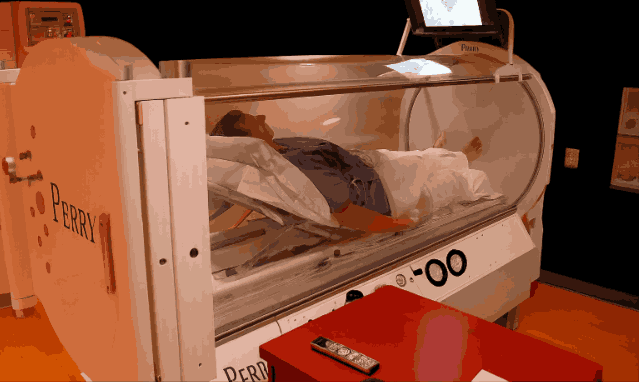
Facilities running Perry equipment treat across the UHMS-accepted indication list:[8]
- Chronic wound healing and diabetic foot ulcers
- Decompression sickness
- Delayed radiation injury to soft tissue and bone
- Necrotizing soft tissue infections
- Compromised surgical grafts and flaps
- Carbon monoxide poisoning
Most clinical protocols run 20 to 40 sessions, so patient comfort affects compliance, and compliance affects outcomes. That is an argument for evaluating chamber ergonomics in person before purchase rather than from a brochure.
What Does the Clinical Evidence Actually Support?
Any equipment investment case should start with the honest evidence picture, and for HBOT’s biggest wound care indication it is mixed. The Cochrane review by Kranke and colleagues (2015; five trials, 205 participants) found HBOT increased diabetic foot ulcer healing at six weeks (risk ratio 2.35, 95% CI 1.19-4.62), but the benefit was not evident at one-year follow-up, the reduction in major amputations was not statistically significant (RR 0.36, 95% CI 0.11-1.18), and the authors flagged design flaws that limit confidence in the results.[9]
Emerging research is expanding the clinical conversation beyond wounds. In healthy adults over 64, a 60-session HBOT protocol lengthened immune-cell telomeres by more than 20% in a 35-person prospective trial (Hachmo et al., Aging, 2020),[10] and a separate 63-person randomized controlled trial reported improved attention, processing speed, and executive function (Hadanny et al., Aging, 2020).[11] These are small single-center studies; the applications are not FDA-cleared indications, and no one should buy a chamber on their strength alone. They do suggest where clinical demand may grow over a chamber’s 10-year service life.
Buying, Installation, and Service
When ordering a Perry chamber, the general process involves an initial needs assessment with their sales team to select the appropriate model, site planning and preparation (electrical requirements, room dimensions, ventilation), delivery and installation by certified technicians, and operator training for all staff who will run the equipment. Lead times vary by model; monoplace units are typically available more quickly than custom multiplace configurations, and the installation team coordinates electrical load, oxygen supply infrastructure, and any construction needed to meet NFPA 99.[6]
Regular maintenance for a clinical chamber includes pressure seal inspection, oxygen delivery system checks, electrical safety testing, and emergency system verification. Parts availability matters enormously for facilities running daily HBOT programs: an unplanned chamber shutdown affects patient scheduling and clinic revenue, and Perry’s established US parts and service network reduces the risk of extended downtime compared with less widely distributed brands.
Is a Perry Chamber Right for Your Facility?
Perry is a strong choice for clinics with steady HBOT volume running multiple sessions per day, hospital-based wound care programs where equipment reliability is critical, and facilities that value long-term support and parts availability over the lowest upfront price. The full-line catalog also suits programs that expect to scale from monoplace into dualplace or multiplace capacity without switching vendors.
Perry may not be the best fit if your facility only plans occasional HBOT sessions; a certified pre-owned unit or a rental makes more financial sense at low volume. And if you are comparing clinical hard-shell systems against the consumer market, our home hyperbaric chamber guide explains why the two categories are not interchangeable: home soft-shell units cannot reach the pressures the UHMS indication list requires.
Sources
- Perry Baromedical. “History.” perrybaromedical.com. Link
- Perry Baromedical. “Hyperbaric Oxygen Therapy Chambers” (product line). perrybaromedical.com. Link
- PR Newswire. “Perry Baromedical Acquires Hyperbaric Division of ETC.” February 2020. Link
- Sechrist Industries. “Certified Pre-Owned Hyperbaric Chambers.” sechristusa.com. Link
- ASME. PVHO-1: Safety Standard for Pressure Vessels for Human Occupancy. American Society of Mechanical Engineers, 2023 edition. Link
- NFPA. NFPA 99: Health Care Facilities Code, Chapter 14 (Hyperbaric Facilities). National Fire Protection Association, 2024 edition. Link
- Mago V. “Safety of Hyperbaric Medicine in Clinical Scenarios.” Annals of African Medicine, 23(1):1-4, 2024. PMC10922184
- UHMS. “HBO2 Indications.” Undersea & Hyperbaric Medical Society. Link
- Kranke P, Bennett MH, Martyn-St James M, Schnabel A, Debus SE, Weibel S. “Hyperbaric oxygen therapy for chronic wounds.” Cochrane Database of Systematic Reviews, 2015. DOI: 10.1002/14651858.CD004123.pub4
- Hachmo Y, Hadanny A, et al. “Hyperbaric oxygen therapy increases telomere length and decreases immunosenescence in isolated blood cells: a prospective trial.” Aging, 12(22):22445-22456, 2020. DOI: 10.18632/aging.202188
- Hadanny A, et al. “Cognitive enhancement of healthy older adults using hyperbaric oxygen: a randomized controlled trial.” Aging, 12(13), 2020. PMID: 32589613
Medical Disclaimer
The content on BaricBoost.com is for informational purposes only and is not intended as a substitute for professional medical advice, diagnosis, or treatment. Always seek the advice of your physician or other qualified health provider with any questions you may have regarding a medical condition. Never disregard professional medical advice or delay in seeking it because of something you have read on this website.

Author
Seph Fontane Pennock is the founder of BaricBoost.com and Regenerated.com, a clinic directory for regenerative medicine serving 10,000+ providers across the United States. He previously built and sold PositivePsychology.com, which grew to 19 million users and became the largest evidence-based positive psychology resource on the web. Seph brings direct experience as an HBOT patient, having completed protocols at clinics across three continents while navigating mold illness, systemic inflammation, and autoimmune conditions. His treatment journey includes hyperbaric oxygen therapy, peptide protocols, NAD+ therapy, and consultations with specialists from Dubai to Cape Town to Mexico. This combination of entrepreneurial track record and lived patient experience shapes everything published on BaricBoost.com. Every article is grounded in peer-reviewed research, informed by real clinical encounters, and written for patients making high-stakes treatment decisions. Seph's focus is on bringing transparency, scientific rigor, and practical guidance to the hyperbaric oxygen therapy space.
Why Trust Our Evaluations
Our rankings are based on hands-on testing, published clinical data, and verified manufacturer specifications. We apply the same criteria to every product regardless of affiliate status. Editorial Process · Evaluation Methodology