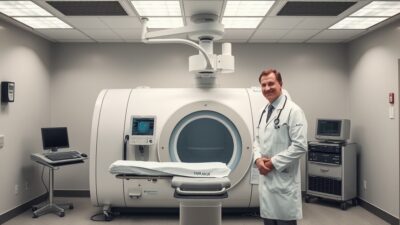
Does HBOT actually speed athletic recovery?
Across 10 randomized trials (299 subjects), hyperbaric oxygen therapy accelerated recovery of exercise-induced muscle damage markers (95% CI: -76.19 to -33.11; p<0.0001) but did not reduce muscle soreness or improve strength and endurance. The objective biology improves while athletes often report no difference in how they feel. That gap is the story the celebrity endorsements skip.
The 2025 meta-analysis: the best available summary
The most comprehensive pooled evidence comes from a 2025 systematic review and meta-analysis by Luo and colleagues in Archives of Physical Medicine and Rehabilitation, which pooled 10 RCTs with 299 subjects.1
“HBOT significantly accelerated recovery from exercise-induced muscle injury (95% CI: -76.19 to -33.11; p<0.0001) across 10 randomized trials. However, there was no significant effect on muscle soreness and no enhancement of strength or endurance performance.”
Luo et al., Archives of Physical Medicine and Rehabilitation, 2025
This is the clearest read on where the science stands. HBOT helps structural muscle recovery (lower creatine kinase, myoglobin, and transaminases) but does not reduce soreness or move athletic performance metrics.
The Cochrane review: the skeptical baseline
The 2005 Cochrane review by Bennett and colleagues analyzed 9 trials with 219 participants examining HBOT for delayed onset muscle soreness (DOMS) and closed soft tissue injuries.3 The conclusions were unfavorable: insufficient evidence to establish effectiveness, and HBOT may actually increase interim pain at 48 to 72 hours when started immediately after eccentric exercise (mean difference 0.88 on a 0 to 10 scale, p=0.03). Earlier controlled DOMS studies reached the same null verdict, including Staples and colleagues (1999) in the American Journal of Sports Medicine6 and Mekjavic and colleagues (2000) in Medicine & Science in Sports & Exercise, which found HBOT did not affect recovery from delayed onset muscle soreness.7 Two decades later that finding still holds up. HBOT does not reliably reduce muscle soreness and can temporarily worsen it.
The best positive study: real injuries versus lab-induced DOMS
The key split in the literature is between lab-induced DOMS, where HBOT mostly fails, and actual sports injuries, where results look better. A 2019 RCT by Chen and colleagues enrolled 41 athletes with real exercise-related muscular injuries.5 After 10 HBOT sessions, the treatment group showed significant reductions in:
- Creatine phosphokinase (CK), a marker of muscle damage
- Glutamic oxaloacetate transaminase (GOT)
- Myoglobin
- Pain intensity and interference
Benefits lasted at least 2 weeks post-treatment. This is one of the stronger positive studies precisely because it enrolled athletes with genuine injuries rather than artificially induced soreness.
The disconnect is consistent across the literature. HBOT lowers objective muscle-damage markers like creatine kinase and myoglobin, but that does not reliably translate into feeling less sore or performing better. Biomarkers and subjective experience do not always move together.
Which pro athletes and teams use HBOT?
Professional athletes across the NFL, NBA, Premier League, and Olympic sports are reported to use HBOT chambers for recovery, and teams in several leagues reportedly run chambers at training facilities. LeBron James is among the athletes who have publicized home HBOT use (see our breakdown of LeBron’s hyperbaric chamber setup). Published clinical data from elite sports contexts is essentially nonexistent. The adoption is driven by anecdote and accessibility, not peer-reviewed evidence from professional athletes.
What does the data show for each sports use?
Muscle recovery
Published studies on HBOT for exercise-induced muscle damage show reduced objective markers (CK, GOT, myoglobin) in studies using actual athletic injuries,5 no consistent effect on DOMS pain in lab-induced soreness models,3 and possible short-term worsening of soreness at 48 to 72 hours in some protocols.3 A 2023 review by Set and Lenasi in the Journal of Strength and Conditioning Research reached the same performance-null conclusion, finding no reliable evidence that hyperbaric oxygenation improves athletic performance.9 A 2021 review by Huang and colleagues in Frontiers in Physiology of pre-, post-, and intra-exercise HBOT likewise found recovery signals without consistent performance gains.2
Concussion recovery
Our TBI and concussion data shows cognitive improvements in post-concussion syndrome patients. Sports medicine practitioners increasingly fold HBOT into return-to-play protocols, though evidence from sports-specific concussion populations is limited.
Bone and soft tissue
Animal models show improved healing after soft tissue injury. Human data for bone fracture and ligament healing in sports contexts is limited and mostly case series. A 2025 narrative review by Johnson-Arbor in Undersea and Hyperbaric Medicine concluded there is “limited evidence to support the use of HBO2 to enhance recovery in athletes” and raised safety concerns about non-medical mild chambers.4
What HBOT protocols do athletes use?
| Application | Typical Pressure | Sessions | Evidence Level |
|---|---|---|---|
| Actual sports injuries | 1.5-2.0 ATA | 10+ | Limited positive RCT data |
| Lab-induced DOMS | 2.0-2.5 ATA | 3-7 | Mostly null or negative |
| Post-game recovery | 1.3-1.5 ATA | As needed | No controlled data |
| Concussion protocol | 1.5-2.0 ATA | 20-40 | Limited positive data, off-label |
Can you use HBOT at home?
Many athletes buy home chambers for convenience:
- Soft chambers ($4,500-$12,000): operate at 1.3 ATA for routine post-training use and are popular among amateur athletes. No evidence exists specifically for this pressure and application.
- Home hard chambers ($25,000-$43,000): deliver clinical pressures. Used by professional athletes who want sessions matching clinical protocols.
Recovery-adjacent benefits do appear in some populations. A 2024 randomized controlled trial by Hadanny and colleagues in BMC Geriatrics found a clinical HBOT protocol improved physical performance and muscle function in older adults, though that is distinct from enhancing performance in trained young athletes.8
The Johnson-Arbor 2025 review flagged safety concerns about mild HBOT chambers designed for altitude sickness, not sports recovery, that are sometimes marketed for athletic use without appropriate regulatory oversight.4 For the broader performance and longevity picture, see our overview of HBOT for longevity and performance and the recovery-specific evidence in our HBOT for recovery guide.
Is HBOT banned by WADA?
Hyperbaric oxygen therapy is not on the World Anti-Doping Agency prohibited list. Competitive athletes can use HBOT without anti-doping concerns, unlike blood-boosting agents or supplemental oxygen delivery methods that WADA restricts.
Sources
- Luo X, Yu Y, Zhang S, Qi F. Effects of hyperbaric oxygen therapy on exercise-induced muscle injury and soreness: a systematic review and meta-analysis. Arch Phys Med Rehabil. 2025. DOI: 10.1016/j.apmr.2025.07.017. PMID: 40784513.
- Huang X, Wang R, Zhang ZR, et al. Effects of pre-, post- and intra-exercise hyperbaric oxygen therapy on performance and recovery. Front Physiol. 2021;12:791872. DOI: 10.3389/fphys.2021.791872. PMID: 34887780.
- Bennett M, Best T, Babul S, et al. Hyperbaric oxygen therapy for delayed onset muscle soreness and closed soft tissue injury. Cochrane Database Syst Rev. 2005;(4):CD004713. DOI: 10.1002/14651858.CD004713.pub2. PMID: 16235376.
- Johnson-Arbor K. Hyperbaric oxygen therapy for high performance athletes: a narrative review. Undersea Hyperb Med. 2025. DOI: 10.22462/694. PMID: 41223395.
- Chen CY, Chou WC, Ko JY, et al. Early recovery of exercise-related muscular injury by HBOT. Biomed Res Int. 2019;2019:6289380. DOI: 10.1155/2019/6289380. PMID: 31275980.
- Staples J, Clement D, Taunton J, McKenzie D. Effects of hyperbaric oxygen on a human model of injury. Am J Sports Med. 1999;27(5):600-605. DOI: 10.1177/03635465990270050901. PMID: 10496576.
- Mekjavic IB, Exner JA, Tesch PA, Eiken O. Hyperbaric oxygen therapy does not affect recovery from delayed onset muscle soreness. Med Sci Sports Exerc. 2000;32(3):558-563. DOI: 10.1097/00005768-200003000-00002. PMID: 10730995.
- Hadanny A, Sasson E, Copel L, et al. Physical enhancement of older adults using hyperbaric oxygen: a randomized controlled trial. BMC Geriatr. 2024;24:537. DOI: 10.1186/s12877-024-05146-3. PMID: 38961397.
- Set V, Lenasi H. Does hyperbaric oxygenation improve athletic performance? J Strength Cond Res. 2023;37(2):482-493. DOI: 10.1519/JSC.0000000000004281. PMID: 35900773.
Medical Disclaimer
The content on BaricBoost.com is for informational purposes only and is not intended as a substitute for professional medical advice, diagnosis, or treatment. Always seek the advice of your physician or other qualified health provider with any questions you may have regarding a medical condition. Never disregard professional medical advice or delay in seeking it because of something you have read on this website.

Author
Seph Fontane Pennock is the founder of BaricBoost.com and Regenerated.com, a clinic directory for regenerative medicine serving 10,000+ providers across the United States. He previously built and sold PositivePsychology.com, which grew to 19 million users and became the largest evidence-based positive psychology resource on the web. Seph brings direct experience as an HBOT patient, having completed protocols at clinics across three continents while navigating mold illness, systemic inflammation, and autoimmune conditions. His treatment journey includes hyperbaric oxygen therapy, peptide protocols, NAD+ therapy, and consultations with specialists from Dubai to Cape Town to Mexico. This combination of entrepreneurial track record and lived patient experience shapes everything published on BaricBoost.com. Every article is grounded in peer-reviewed research, informed by real clinical encounters, and written for patients making high-stakes treatment decisions. Seph's focus is on bringing transparency, scientific rigor, and practical guidance to the hyperbaric oxygen therapy space.