Affiliate Disclosure
This article contains affiliate links. If you purchase through these links, we may earn a commission at no additional cost to you. This does not influence our evaluations or rankings.
The evidence on HBOT for autism is mixed but not zero. A 2009 double-blind RCT of 62 children found that 40 sessions at 1.3 ATA improved overall functioning, receptive language, and eye contact versus sham. A 2011 Cochrane review concluded the evidence was insufficient to recommend HBOT for autism. This guide covers every clinical trial, the biological rationale, and what parents should realistically expect. It is one of several other neurological conditions treated with HBOT currently being explored in clinical research.
Editor’s Note: HBOT for autism is an emotionally charged topic for families. The clinical evidence is mixed, with some studies showing improvements in social behavior and others showing no benefit. We present the research honestly so parents can make informed decisions with their care team.
Table of Contents
How Hyperbaric Chamber Autism Treatment Works
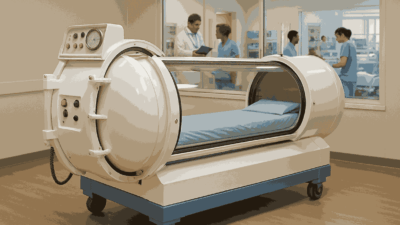
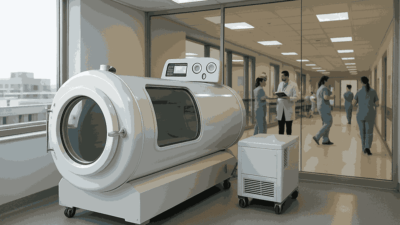
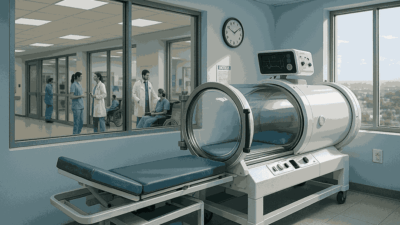
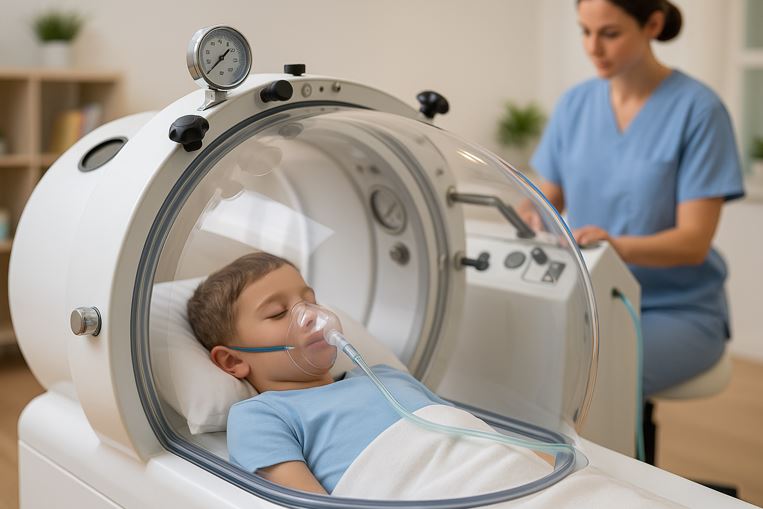
Think of a how HBOT chambers worklike a clear tube or room where your child breathes oxygen under higher pressure than normal air. It’s similar to what deep-sea divers use, but much gentler.
During treatment, the air pressure increases to about 1.3 to 1.5 ATA what we normally experience. Your child breathes either regular air or oxygen-enriched air, depending on the specific treatment plan.
The science behind hyperbaric chamber for autistic child therapy centers on oxygen delivery. Researchers believe children with autism might benefit from HBOT due to potential increases in cerebral perfusion during treatment, with above-atmospheric oxygen potentially elevating arterial oxygen levels.
The theory is straightforward: if certain brain areas in autistic children aren’t getting enough oxygen, increasing pressure helps more oxygen dissolve into the bloodstream. This extra oxygen might reach brain regions that need it most, potentially helping brain cells function better.
Your child will lie in the chamber for 60 to 90 minutes while watching movies or listening to music. A trained technician monitors everything from outside the chamber. Most treatment plans involve daily sessions Monday through Friday.
What Does the Research Say About HBOT for Autism?

The research on hyperbaric chamber therapy for autism is mixed. Some studies show promise, while others show no benefit at all.
Current evidence indicates that HBOT can markedly alleviate core symptoms of autism among children and adolescents, according to a 2025 meta-analysis of 17 studies with 890 patients.1 This same review notes that “caution is warranted due to the limited quality and quantity of existing studies.”
Case series and randomized controlled trials show no evidence to support the benefit of HBOT for children with ASD, according to research published by the National Institutes of Health.2
A major Cochrane review found that study authors reported no improvement in social interaction and communication, behavioral problems, communication and linguistic abilities, or cognitive function.3
A 2025 meta-analysis of 17 studies with 890 participants found HBOT produced moderately large, statistically significant improvements in core autism symptoms (P = 0.0006), communication, cognitive awareness, and behavior in children and adolescents.1
2025 meta-analysis: 17 studies, 890 patients. Effect size for core symptom reduction: SMD = -0.66 (P = 0.0006). Communication: SMD = -0.88. Cognitive awareness: SMD = -0.93. Behavior: SMD = -0.80. GRADE certainty: limited by poor study quality and high heterogeneity.1
Meta-analysis: 17 studies, 2025
What Some Families Report
While research results vary, many families share their experiences with hyperbaric chamber autism therapy. These reports, though not scientific proof, give us insight into what some children experience.
Communication improvements that parents notice include better eye contact, increased vocabulary, and more interest in conversations. Some children start following directions more easily or show greater awareness of people around them.
Behavioral changes often involve reduced repetitive behaviors, improved focus during activities, and better sleep patterns. Many parents report their children seem calmer during daily transitions and show less sensitivity to sounds or textures.
Social interaction improvements might include more affection toward family members, increased interest in playing with siblings, and better responses when their name is called.
Remember that these are individual family experiences, not guaranteed results. Every autistic child is unique, and what helps one child might not help another.
HBOT Treatment Plans: Sessions and Protocols
If you’re wondering how many HBOT sessions for autism your child might need, here are the typical plans used in research and treatment centers:
Standard Treatment Schedule:
- Duration: 60-90 minutes per session
- Frequency: 5 times per week (Monday-Friday)
- Total sessions: 20-40 sessions for a full course
- Time commitment: 4-8 weeks of daily treatments
Common Treatment Phases:
| Phase | Sessions | Purpose |
| Week 1-2 | 5-10 sessions | See how your child handles the chamber |
| Week 3-6 | 20-30 sessions | Main treatment period |
| After treatment | Follow-up | Check for lasting changes |
Pressure and Oxygen Levels:
- Mild pressure: 1.3-1.5 times normal air pressure
- Oxygen: 24% to 100% (varies by protocol)
- Most autism protocols use gentler settings than for other medical conditions
Some families do “maintenance” sessions after the initial treatment course, but there’s no standard approach for this.
Is Hyperbaric Chamber Therapy Safe for Autistic Children?
 side effects of HBOT” class=”wp-image-1882″ style=”width:418px;height:auto” />
Hyperbaric oxygen therapy for FDA-approved conditions is considered safe, but autism is not among the FDA-approved uses for this treatment.
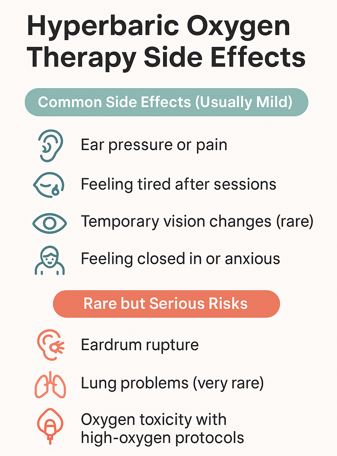
The most common side effect is ear pressure, similar to what you feel when flying in an airplane. Some children experience temporary tiredness after sessions or mild anxiety about enclosed spaces being in an enclosed space.
Serious complications are rare but can include eardrum problems, lung issues, or oxygen toxicity when high-oxygen protocols are used. For autistic children specifically, sensory sensitivities might make the chamber environment challenging, and communication difficulties could make it harder for them to report any discomfort.
Before starting treatment, most centers require a complete medical evaluation including hearing tests, chest X-rays, and a review of all medications your child takes.
Cost and Insurance for HBOT Autism Treatment
Hyperbaric chamber autism treatment requires a significant financial investment, and most insurance plans won’t cover it since autism isn’t an FDA-approved indication for HBOT.
Individual sessions typically cost between $100 and $200 at medical facilities. A complete 40-session course might run $4,000 to $8,000. Some families consider purchasing or renting home chambers, which cost $15,000 to $30,000+ to buy or $500 to $1,200 per month to rent.
Many families pay out of pocket through savings, medical loans, or community fundraising. Some flexible spending accounts might cover the cost, but you should verify this before starting treatment.
Geographic access can also be challenging since not all areas have pediatric HBOT centers. This might mean daily travel for treatment or staying near a treatment center for several weeks.
Should You Try HBOT for Your Autistic Child?
Deciding whether to try hyperbaric chamber therapy for your autistic child involves weighing several important factors specific to your situation.
Start by having honest conversations with your child’s medical team, including their pediatrician, developmental specialist, and any other doctors involved in their care. These professionals know your child’s specific needs and can help you evaluate whether HBOT makes sense as part of their overall treatment plan.
Consider your family’s financial situation carefully. Treatment costs thousands of dollars, and there’s no guarantee of results. Make sure pursuing HBOT won’t create financial stress that affects your family’s wellbeing.
Think about your child’s personality and needs. Children who struggle with enclosed spaces or have severe sensory sensitivities might find the chamber environment overwhelming. Some children enjoy the quiet, controlled environment.
Evaluate what proven therapies your child is already receiving. Evidence-based treatments like speech therapy, occupational therapy, and applied behavior analysis have strong research support and should typically be prioritized.
Set realistic expectations from the start. HBOT is not a cure for autism, and any improvements, if they occur, are usually modest and might not be permanent. Some families see small positive changes, while others notice no difference at all.
Red Flags to Watch For
When researching hyperbaric chamber autism providers, be cautious of anyone who promises dramatic results or claims they can “recover” your child from autism. Reputable providers will be honest about the mixed research results and won’t pressure you to start treatment immediately.
Avoid providers who discourage you from discussing HBOT with your child’s regular medical team or who make claims that sound too good to be true. Good providers will work collaboratively with your existing healthcare team.
While growing evidence suggests HBOT may benefit autistic children through reduced neuroinflammation and improved cerebral blood flow, study quality remains poor and the therapy is not FDA-approved for ASD.2
Conclusion
Some families find HBOT helpful as part of a broader treatment plan. Others see no changes and wish they’d spent the money elsewhere. None of the 10 literature reviews indicated that HBOT was a clearly effective form of therapy in the case of ASD, according to recent research.4
The key is making an informed choice based on your child’s specific needs, your family’s resources, and guidance from healthcare professionals who know your child well.
Remember, every autistic child is unique. What matters most is finding the combination of supports and therapies that help your child thrive, whether that includes HBOT or not.
References
- 2025 Meta-Analysis. “The effectiveness of hyperbaric oxygen therapy in children and adolescents with autism.” PMID: 39826608. PubMed
- Undersea Hyperb Med. 2015. Review of HBOT for ASD. Concluded evidence is weak. UHMS
- Xiong T, et al. “Hyperbaric oxygen therapy for people with autism spectrum disorder.” Cochrane Database Syst Rev. 2016;10:CD010922. DOI: 10.1002/14651858.CD010922.pub2
- Rossignol DA, Frye RE. Review of physiological abnormalities in ASD. Front Public Health. 2012;1:5. PMC3859980
Medical Disclaimer
The content on BaricBoost.com is for informational purposes only and is not intended as a substitute for professional medical advice, diagnosis, or treatment. Always seek the advice of your physician or other qualified health provider with any questions you may have regarding a medical condition. Never disregard professional medical advice or delay in seeking it because of something you have read on this website.

Author
Seph Fontane Pennock is the founder of BaricBoost.com and Regenerated.com, a clinic directory for regenerative medicine serving 10,000+ providers across the United States. He previously built and sold PositivePsychology.com, which grew to 19 million users and became the largest evidence-based positive psychology resource on the web. Seph brings direct experience as an HBOT patient, having completed protocols at clinics across three continents while navigating mold illness, systemic inflammation, and autoimmune conditions. His treatment journey includes hyperbaric oxygen therapy, peptide protocols, NAD+ therapy, and consultations with specialists from Dubai to Cape Town to Mexico. This combination of entrepreneurial track record and lived patient experience shapes everything published on BaricBoost.com. Every article is grounded in peer-reviewed research, informed by real clinical encounters, and written for patients making high-stakes treatment decisions. Seph's focus is on bringing transparency, scientific rigor, and practical guidance to the hyperbaric oxygen therapy space.
Why Trust Our Evaluations
Our rankings are based on hands-on testing, published clinical data, and verified manufacturer specifications. We apply the same criteria to every product regardless of affiliate status. Editorial Process · Evaluation Methodology