Hyperbaric oxygen therapy has shown measurable improvements in cognitive function across multiple controlled trials, with the strongest evidence in traumatic brain injury, stroke recovery, and age-related cognitive decline. The Tel Aviv protocol, in particular, has produced some of the most compelling brain imaging data in the field.
Key Takeaways
- A 2020 randomized controlled trial from Tel Aviv University showed HBOT improved attention, information processing speed, and executive function in healthy adults over 64.
- HBOT for post-concussion syndrome and chronic TBI has shown cognitive improvements in multiple studies, though results are debated.
- Normobaric oxygen (breathing 100% O2 at normal pressure) has limited evidence for cognitive enhancement.
- The proposed mechanism involves increased cerebral blood flow, neuroplasticity, and stem cell mobilization.
- A typical cognitive protocol involves 40-60 sessions at 1.5-2.0 ATA over 8-12 weeks.
The Tel Aviv Protocol: HBOT for Brain Aging
The most widely cited HBOT cognitive study comes from the Sagol Center for Hyperbaric Medicine at Shamir Medical Center, affiliated with Tel Aviv University. Led by Professor Shai Efrati, the team has published a series of studies examining HBOT’s effects on brain function.
In a 2020 randomized controlled trial published in the journal Aging, Efrati and colleagues studied 63 healthy adults aged 64 and older. The HBOT group (n=33) received 60 sessions of 100% oxygen at 2.0 ATA (atmospheres absolute) for 90 minutes each, five days per week for 12 weeks. The control group (n=30) received no intervention during the study period.[1]
Results showed significant improvements in the HBOT group across several cognitive domains:
- Attention: Measured improvement on computerized cognitive assessment
- Information processing speed: Faster response times on standardized tests
- Executive function: Better performance on tasks requiring planning, flexibility, and inhibition
- Global cognitive function: Overall composite score improvement
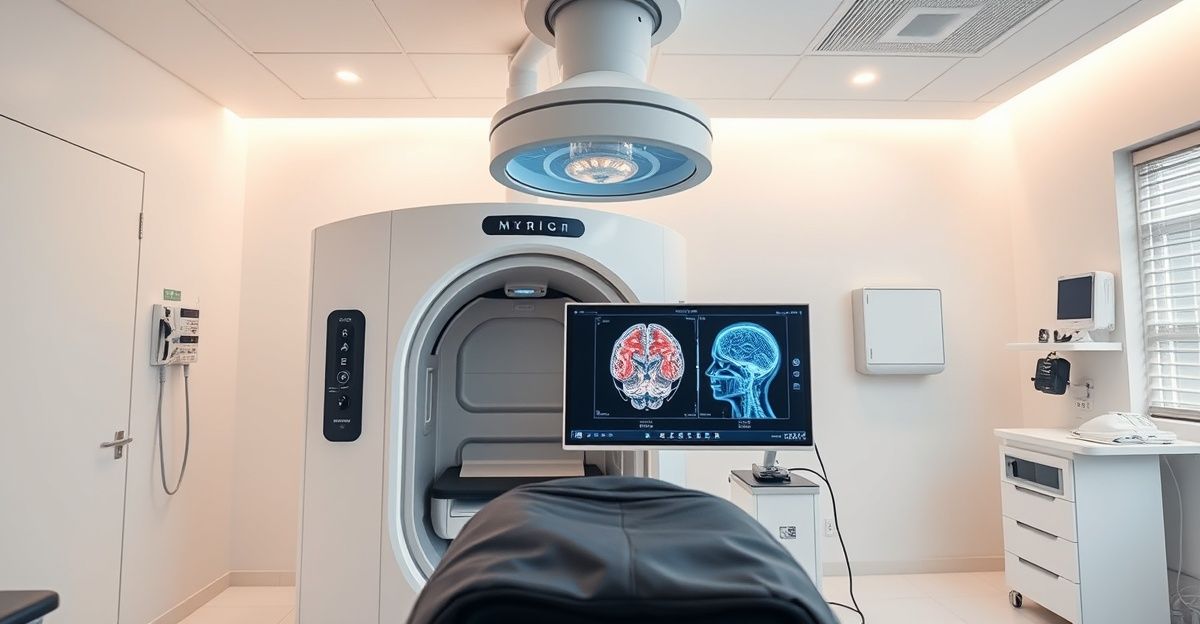
Brain imaging (perfusion MRI) showed these cognitive improvements correlated with increased cerebral blood flow in specific brain regions, particularly the prefrontal cortex and temporal lobes.
“HBOT can induce significant enhancement in the cognitive performance of healthy aging adults, with improvements in attention, information processing speed, and executive function correlating with increased cerebral blood flow.”
Hadanny et al., Aging, 2020
HBOT for Traumatic Brain Injury
TBI, ranging from mild concussions to severe brain injuries, is one of the most studied applications of HBOT for cognitive impairment. The evidence picture is complex.
Positive Findings
A 2013 study by Boussi-Gross and colleagues treated 56 patients with post-concussion syndrome (1-5 years after mild TBI) and found significant improvements in cognitive function and quality of life after 40 HBOT sessions at 1.5 ATA.[2]
Multiple case series and observational studies have reported cognitive improvements in chronic TBI patients, even years after injury. These typically show gains in memory, attention, and processing speed.[3]
Contested Results
The HOPPS trial (2015), a Department of Defense-funded RCT, compared HBOT at 2.4 ATA to a sham condition (1.3 ATA air) in military personnel with persistent post-concussion symptoms. Both groups improved equally, leading investigators to conclude HBOT was not effective. However, critics noted that the “sham” condition at 1.3 ATA may itself be a therapeutic dose, making it an active treatment rather than a true placebo.[4]
This debate around appropriate sham controls has plagued HBOT research. Any pressurized environment, even with room air, delivers slightly more oxygen to tissues than normal, potentially producing physiological effects.
HBOT for Stroke Recovery
Efrati’s group also studied HBOT in chronic stroke patients (6-36 months post-stroke). A 2013 crossover trial showed HBOT improved neurological function and quality of life in patients who had plateaued in their recovery. Brain imaging demonstrated increased metabolic activity in stroke-affected regions.[5]
The proposed explanation is that HBOT can reactivate “stunned” neurons in the ischemic penumbra, the area of brain tissue surrounding the stroke core that is damaged but not dead. These neurons may be metabolically dormant due to insufficient oxygen supply.
Normobaric Oxygen for Cognition
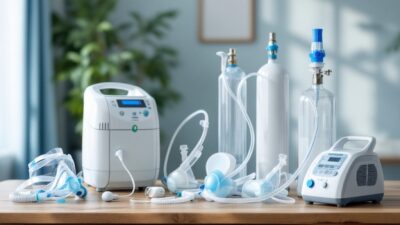
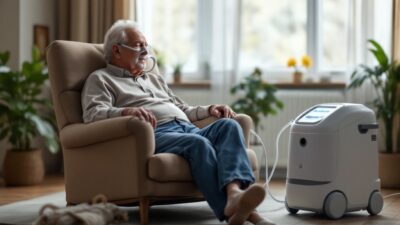
Breathing 100% oxygen at normal atmospheric pressure (normobaric hyperoxia) has also been studied for cognitive effects, but the evidence is much thinner.
A handful of laboratory studies have shown that breathing supplemental oxygen can temporarily improve memory performance and reaction times in healthy subjects. The effects appear during oxygen administration and for a short time afterward, but they are modest and transient.[6]
There is no evidence that normobaric oxygen produces lasting cognitive enhancement. The physiological rationale is weaker than for HBOT because normal atmospheric pressure cannot drive oxygen deep into hypoxic tissue the way pressurized delivery can.
How Oxygen Affects Brain Health
The brain consumes roughly 20% of the body’s oxygen despite being only 2% of body weight. It is exquisitely sensitive to oxygen supply. HBOT’s cognitive effects likely involve several mechanisms:
Increased oxygen delivery to hypoxic tissue. Under pressure, oxygen dissolves directly into plasma at much higher concentrations than hemoglobin alone can carry. This oxygen reaches tissues that are poorly perfused due to damaged blood vessels.
Angiogenesis. Repeated HBOT sessions stimulate the growth of new blood vessels. This improved vascular supply persists after treatment ends, providing lasting benefits to previously under-perfused brain regions.
Neuroplasticity. HBOT appears to upregulate brain-derived neurotrophic factor (BDNF) and other growth factors involved in neuronal repair and synaptic remodeling.
Stem cell mobilization. HBOT has been shown to increase circulating stem cell populations, which may contribute to tissue repair processes in the brain.
Anti-inflammatory effects. Chronic neuroinflammation impairs cognitive function. HBOT reduces inflammatory markers and may help resolve chronic inflammatory states in the brain.
Who Might Benefit
| Population | Evidence Strength | Notes |
|---|---|---|
| Chronic TBI / post-concussion | Moderate | Multiple studies show improvement. Sham control debate ongoing. |
| Chronic stroke (6+ months) | Low-moderate | Promising results from Efrati group. Needs replication. |
| Age-related cognitive decline | Low-moderate | One solid RCT. Mechanism is plausible. |
| Alzheimer’s / dementia | Very low | Preclinical promise. Human evidence is anecdotal. |
| Healthy cognitive enhancement | Very low | No evidence HBOT enhances cognition in healthy young adults. |
Evidence Quality: An Honest Assessment
The HBOT-cognition research is promising but imperfect. Key limitations include:
- Small sample sizes. Most studies have 30-60 participants. Larger trials are needed.
- Sham control problem. Designing a true placebo for HBOT is difficult because any pressurized environment delivers more oxygen.
- Researcher overlap. A disproportionate number of positive studies come from a small group of researchers (primarily the Efrati/Hadanny team in Tel Aviv). Independent replication is essential.
- Publication bias. Negative results are less likely to be published.
The evidence is strong enough to be taken seriously but not strong enough to make definitive claims about cognitive enhancement.
Cost and Practical Considerations
A cognitive HBOT protocol typically involves 40-60 sessions over 8-12 weeks. At $200-400 per session in the US, this represents a $8,000-24,000 commitment. Insurance generally does not cover HBOT for cognitive indications.
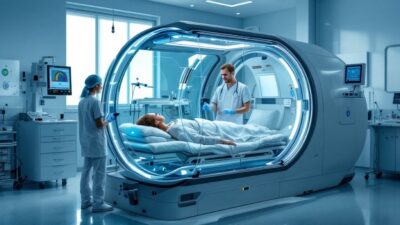
Sessions last 60-90 minutes at pressures of 1.5-2.0 ATA. Most protocols require 5 sessions per week, which means a significant time commitment.
Mild HBOT (1.3-1.5 ATA) in portable chambers is marketed as a more accessible option, but the evidence base is built on protocols using 1.5-2.0 ATA in hard-shell chambers. Results from lower-pressure protocols may differ.
The Bottom Line
HBOT shows genuine promise for cognitive improvement, particularly in people with brain injuries, stroke, or age-related decline. The Tel Aviv research provides the strongest signal, showing measurable gains in cognitive performance that correlate with brain imaging changes. But the field needs larger, independently replicated trials before HBOT can be recommended as a standard cognitive therapy. For now, it remains an experimental intervention with a plausible mechanism and encouraging early results.
- Hadanny A, Daniel-Kotovsky M, Suzin G, et al. Cognitive enhancement of healthy older adults using hyperbaric oxygen: a randomized controlled trial. Aging (Albany NY). 2020;12(13):13740-13761. doi:10.18632/aging.103571
- Boussi-Gross R, Golan H, Fishlev G, et al. Hyperbaric oxygen therapy can improve post concussion syndrome years after mild traumatic brain injury – randomized prospective trial. PLoS One. 2013;8(11):e79995. doi:10.1371/journal.pone.0079995
- Harch PG, Andrews SR, Fogarty EF, et al. A phase I study of low-pressure hyperbaric oxygen therapy for blast-induced post-concussion syndrome and post-traumatic stress disorder. J Neurotrauma. 2012;29(1):168-185. doi:10.1089/neu.2011.1895
- Wolf G, Cifu D, Baugh L, et al. The effect of hyperbaric oxygen on symptoms after mild traumatic brain injury. J Neurotrauma. 2012;29(17):2606-2612. doi:10.1089/neu.2012.2549
- Efrati S, Fishlev G, Bechor Y, et al. Hyperbaric oxygen induces late neuroplasticity in post stroke patients – randomized, prospective trial. PLoS One. 2013;8(1):e53716. doi:10.1371/journal.pone.0053716
- Scholey AB, Moss MC, Neave N, Wesnes K. Cognitive performance, hyperoxia, and heart rate following oxygen administration in healthy young adults. Physiol Behav. 1999;67(5):783-789. doi:10.1016/S0031-9384(99)00183-3
Medical Disclaimer
The content on BaricBoost.com is for informational purposes only and is not intended as a substitute for professional medical advice, diagnosis, or treatment. Always seek the advice of your physician or other qualified health provider with any questions you may have regarding a medical condition. Never disregard professional medical advice or delay in seeking it because of something you have read on this website.

Author
Seph Fontane Pennock is the founder of BaricBoost.com and Regenerated.com, a clinic directory for regenerative medicine serving 10,000+ providers across the United States. He previously built and sold PositivePsychology.com, which grew to 19 million users and became the largest evidence-based positive psychology resource on the web. Seph brings direct experience as an HBOT patient, having completed protocols at clinics across three continents while navigating mold illness, systemic inflammation, and autoimmune conditions. His treatment journey includes hyperbaric oxygen therapy, peptide protocols, NAD+ therapy, and consultations with specialists from Dubai to Cape Town to Mexico. This combination of entrepreneurial track record and lived patient experience shapes everything published on BaricBoost.com. Every article is grounded in peer-reviewed research, informed by real clinical encounters, and written for patients making high-stakes treatment decisions. Seph's focus is on bringing transparency, scientific rigor, and practical guidance to the hyperbaric oxygen therapy space.