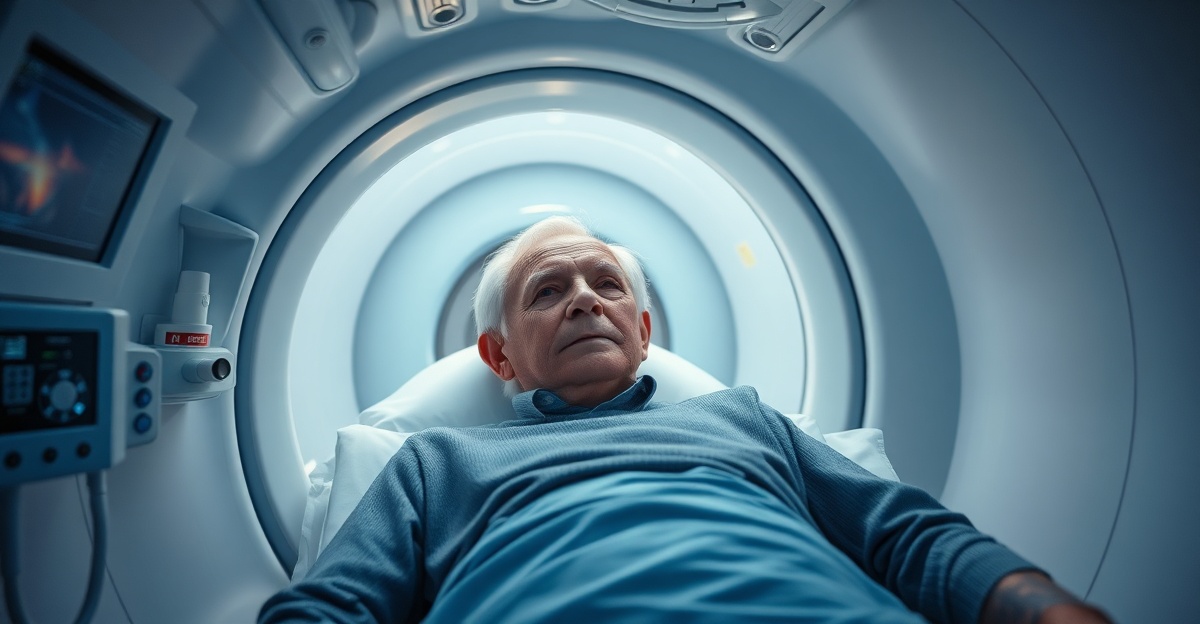
In the strongest trial to date, 63 healthy adults over 64 who completed 60 HBOT sessions at 2.0 ATA showed large gains in attention (effect size 0.745) and information processing speed (0.788), with MRI-confirmed increases in cerebral blood flow. Evidence in people with diagnosed cognitive impairment is thinner and comes mostly from one research group. It is one of several brain and cognitive conditions studied with HBOT.
Cognitive decline is among the most feared parts of aging, which makes it a magnet for overstated marketing. The science here is genuinely interesting but still developing, and the useful task is separating what a controlled trial actually showed from what a clinic brochure implies.
Does HBOT improve cognition?
In healthy older adults, one randomized controlled trial says yes, with sizable effects. It enrolled 63 adults aged over 64 and randomized them to 60 daily sessions at 2.0 ATA with 100% oxygen for 90 minutes, or a no-session control.1 The results were substantial:
- Global cognitive function: significant group-by-time interaction (p=0.0017)
- Attention: net effect size 0.745 (large)
- Information processing speed: net effect size 0.788 (large)
- Executive function: significantly improved
- MRI perfusion: significant cerebral blood flow increases in frontal and parietal regions
The honest qualifier is who this was tested in. These were healthy older adults, not people with a cognitive diagnosis, and the result has not yet been independently replicated outside the group that produced it. A large effect in a single trial in one population is a strong signal, not a settled fact.
Does HBOT help mild cognitive impairment?
For diagnosed mild cognitive impairment, the intermediate stage between normal aging and dementia, the evidence is emerging rather than established. A clinical study found HBOT improved cognitive function in patients with Alzheimer’s disease and amnestic MCI, with PET imaging showing enhanced glucose metabolism in brain tissue.2 Notably, MCI patients showed more durable benefits than Alzheimer’s patients, with improvements still above baseline at 6-month follow-up, which suggests earlier intervention may last longer.
A 2025 dose-response study in amnestic-MCI rats compared six pressures (1.6, 1.8, 2.0, 2.2, 2.5, and 2.8 ATA) daily for five days.3 All HBOT groups shortened escape latency versus MCI controls (p<0.001), and 2.0 ATA was optimal, producing the best combination of cognitive gain, increased superoxide dismutase, reduced malondialdehyde, and lower nitric oxide synthase. Higher pressures were less effective on some endpoints. This is animal data, so it guides protocol design rather than proving a human dose, but it is the first dose-response work specific to MCI. MCI is one entry point into the wider topic of HBOT for neurological conditions.
How does HBOT affect the brain?
Several mechanisms have been documented, though the strongest ones outside cerebral blood flow come from animal models and should be read as preclinical.
Cerebral blood flow (human data)
MRI perfusion imaging in the Hadanny 2020 RCT confirmed increased cerebral blood flow in multiple prefrontal and parietal regions after 60 sessions, exactly the areas that lose perfusion in age-related decline.1 More blood flow means more oxygen, glucose, and growth factors reaching neurons that have been slowly starving. A 2021 mechanistic review maps how these pressure-driven changes translate into cognitive effects.7
Autophagy activation (animal model)
A 2024 study in aged mice found HBOT upregulated PSD95, BDNF, and synaptic proteins while reducing tau hyperphosphorylation and demyelinated lesions, with electron microscopy confirming more synapses.4 The proposed mechanism was activation of the AMPK-mTOR pathway that governs autophagy, the process by which cells clear damaged components. These findings are from mice, not people.
Hippocampal protection and ERK signaling (animal models)
In aging and aging-obese animal models, HBOT restored cognitive function and improved hippocampal pathology, the brain region most critical for memory and most vulnerable to age-related damage.6 In MCI rat models, HBOT protected cognition through the ERK1/2 signaling pathway, reducing apoptosis and improving hippocampal cell morphology.5 Both lines of evidence are preclinical.
What HBOT protocol is used for cognition?
| Study context | Pressure | Sessions | Duration | Evidence quality |
|---|---|---|---|---|
| Healthy aging (Hadanny 2020) | 2.0 ATA | 60 | 90 min | RCT (strongest) |
| AD and amnestic MCI (Chen 2020) | ~2.0 ATA | 40-60 | 60-90 min | Clinical study (moderate) |
| Optimal dose for MCI (Chen 2025) | 2.0 ATA | 5 | 60 min | Animal dose-response |
Hard chambers delivering 2.0 ATA are required; soft chambers at 1.3 ATA have not been validated for cognitive enhancement in published research. Our HBOT sessions guide covers what a course involves, and for related applications see our pages on HBOT for brain health and HBOT for Alzheimer’s patients.
What are the limitations?
Several caveats apply before treating any of this as proven:
- Single research group: the strongest human data comes almost entirely from the Efrati and Hadanny team at Tel Aviv University, and the healthy-aging cognitive-enhancement findings have not been independently replicated.
- Healthy adults versus patients: the RCT studied healthy older adults, so results may not generalize to people with diagnosed cognitive impairment.
- No large MCI-specific RCT: dedicated, large, sham-controlled trials in MCI patients are still needed.
- Off-label and costly: a 60-session protocol typically costs $9,000 to $18,000 out of pocket and is not covered by insurance.
Who should not try HBOT?
HBOT is not appropriate for everyone. It should not be used with an untreated pneumothorax (collapsed lung) or alongside certain chemotherapy drugs such as bleomycin, cisplatin, doxorubicin, and disulfiram. Extra caution or postponement applies with upper respiratory infection or sinus congestion, a seizure disorder, COPD, high fever, a history of ear surgery, claustrophobia, or pregnancy. Discuss your full history with your provider, especially if you use insulin or have a pacemaker or implanted device. For the full risk list, see our guide to HBOT side effects.
Does HBOT work for cognition in healthy people or only patients?
The strongest evidence is actually in healthy older adults. The Hadanny 2020 RCT enrolled 63 healthy adults over 64 and found large gains in attention and processing speed with MRI-confirmed blood-flow increases.1 Evidence in people with diagnosed mild cognitive impairment is more limited and comes from smaller studies. So the paradox is that the clearest data is in people who were not cognitively impaired to begin with.
What pressure and how many sessions does the research use?
The human RCT used 60 sessions at 2.0 ATA, 90 minutes each, and an animal dose-response study identified 2.0 ATA as optimal, outperforming both lower and higher pressures.3 Soft chambers at 1.3 ATA have not been validated for cognition. A clinic offering a handful of low-pressure sessions is not delivering the studied protocol.
Are the brain mechanism claims proven in humans?
Partly. Increased cerebral blood flow is confirmed in humans by MRI in the Hadanny RCT.1 The deeper mechanisms, autophagy activation, hippocampal protection, and ERK signaling, come from mouse and rat studies.4 They explain how HBOT might work and guide dosing, but animal mechanisms are not the same as proven human disease modification.
Sources
- Hadanny A, Daniel-Kotovsky M, Suzin G, et al. “Cognitive enhancement of healthy older adults using hyperbaric oxygen: a randomized controlled trial.” Aging. 2020;12(13):13740-13761. DOI: 10.18632/aging.103571
- Chen J, Zhang F, Zhao L, et al. “Hyperbaric oxygen ameliorates cognitive impairment in patients with Alzheimer’s disease and amnestic mild cognitive impairment.” Alzheimer’s & Dementia: Translational Research & Clinical Interventions. 2020;6(1):e12030. DOI: 10.1002/trc2.12030
- Chen Y, Lin X, Zhou Q, Ling X. “Dose-effect Relationship of Hyperbaric Oxygen Therapy in Rats with Amnestic Mild Cognitive Impairment.” Dementia and Geriatric Cognitive Disorders. 2025. DOI: 10.1159/000545906
- Wang S, Chen B, Yuan M, et al. “Enriched oxygen improves age-related cognitive impairment through enhancing autophagy.” Frontiers in Aging Neuroscience. 2024;16:1340117. DOI: 10.3389/fnagi.2024.1340117
- Lin Y, Lin X, Zheng X, et al. “Hyperbaric oxygen therapy protects cognitive function in a rat model of mild cognitive impairment via the ERK signaling pathway.” Annals of Palliative Medicine. 2020. DOI: 10.21037/apm-20-1716
- Shwe T, Bo-Htay S, Ongnok B, et al. “Hyperbaric oxygen therapy restores cognitive function and hippocampal pathologies in both aging and aging-obese rats.” Mechanisms of Ageing and Development. 2021;195:111465. DOI: 10.1016/j.mad.2021.111465
- Gottfried I, Schottlender N, Ashery U. “Hyperbaric Oxygen Treatment: From Mechanisms to Cognitive Improvement.” Biomolecules. 2021;11(10):1520. DOI: 10.3390/biom11101520
Medical Disclaimer
The content on BaricBoost.com is for informational purposes only and is not intended as a substitute for professional medical advice, diagnosis, or treatment. Always seek the advice of your physician or other qualified health provider with any questions you may have regarding a medical condition. Never disregard professional medical advice or delay in seeking it because of something you have read on this website.

Author
Seph Fontane Pennock is the founder of BaricBoost.com and Regenerated.com, a clinic directory for regenerative medicine serving 10,000+ providers across the United States. He previously built and sold PositivePsychology.com, which grew to 19 million users and became the largest evidence-based positive psychology resource on the web. Seph brings direct experience as an HBOT patient, having completed protocols at clinics across three continents while navigating mold illness, systemic inflammation, and autoimmune conditions. His treatment journey includes hyperbaric oxygen therapy, peptide protocols, NAD+ therapy, and consultations with specialists from Dubai to Cape Town to Mexico. This combination of entrepreneurial track record and lived patient experience shapes everything published on BaricBoost.com. Every article is grounded in peer-reviewed research, informed by real clinical encounters, and written for patients making high-stakes treatment decisions. Seph's focus is on bringing transparency, scientific rigor, and practical guidance to the hyperbaric oxygen therapy space.