Affiliate Disclosure
This article contains affiliate links. If you purchase through these links, we may earn a commission at no additional cost to you. This does not influence our evaluations or rankings.
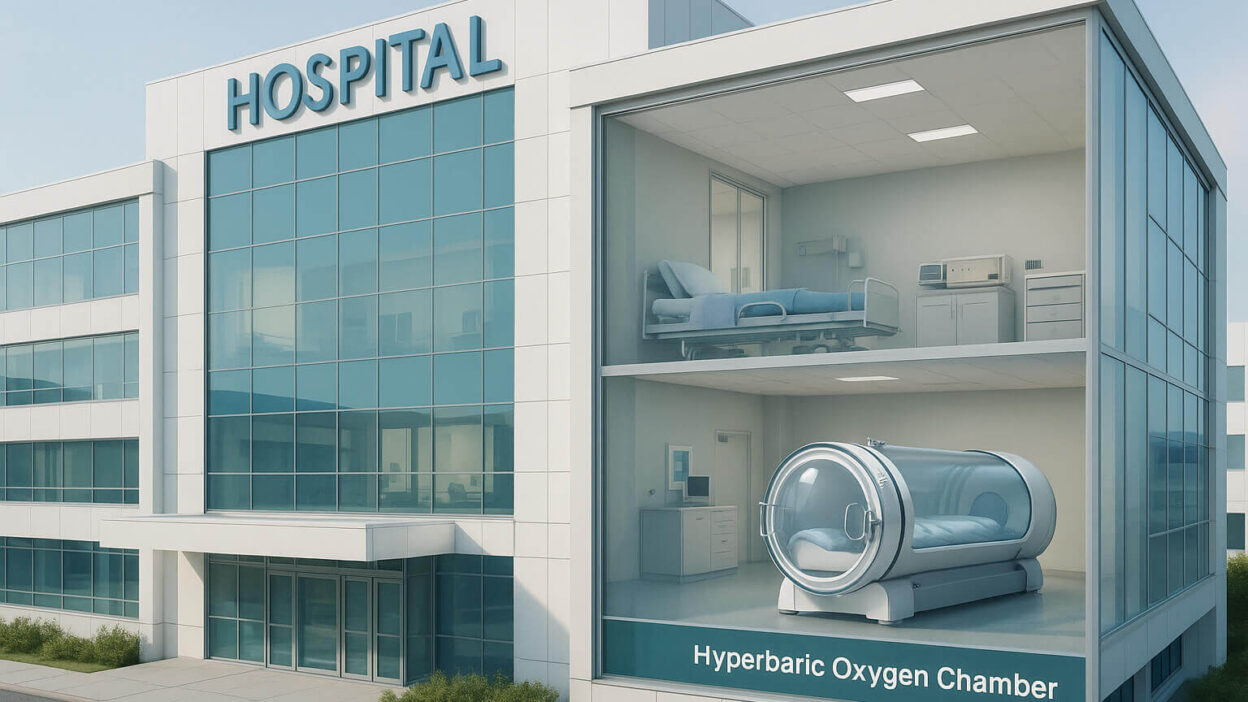
No. Most US hospitals do not have a hyperbaric chamber. The Undersea and Hyperbaric Medical Society counts well over 1,000 hyperbaric programs nationwide, and that figure includes freestanding clinics, not just hospitals. A 2016 national survey of 361 centers found only 43 (11.9%) were equipped to treat emergencies. Chambers cost roughly $100,000 to $2 million or more installed, which is why smaller community hospitals rarely have one.
How many hospitals actually have a hyperbaric chamber?
No registry counts hospital hyperbaric chambers precisely, so the honest answer is a range with a clear method behind it. The most authoritative single figure comes from the Undersea and Hyperbaric Medical Society, which states there are “well over one thousand hyperbaric programs in the United States.” That number counts programs, not chambers and not hospitals specifically, and it mixes hospital wound-care centers with freestanding clinics.
Two things follow. First, because most programs run more than one chamber, the total number of clinical chambers is higher than the program count, an implied 1,500 to 2,000 units nationwide. Second, because the count folds in standalone clinics, the number of hospitals with a chamber is smaller than the headline figure suggests. The US has roughly 6,000 hospitals, so even if every one of the 1,000-plus programs were hospital-based (they are not), fewer than one in five hospitals would have a chamber. For a fuller breakdown of the national count, see our data piece on how many hyperbaric chambers are in the US and the count of HBOT clinics in the US.
The earlier version of this page cited “1,300 to 1,500 facilities” from unnamed industry estimates. That figure is not traceable to a verifiable source, so we have replaced it with the UHMS program count and the peer-reviewed survey data below.
Hospital-based vs standalone vs emergency-capable: the definitions matter
Three different things get lumped together as “having a chamber,” and the distinction changes the answer:
- Hospital-based program: a chamber operated inside a hospital, usually attached to a wound-care center, with a full ER and inpatient support on-site.
- Standalone (freestanding) center: a dedicated HBOT clinic with no hospital attached. It handles scheduled, non-emergency treatment and transfers true emergencies out.
- Emergency-capable facility: a chamber staffed and equipped to treat acute cases (carbon monoxide poisoning, decompression sickness, arterial gas embolism) around the clock. This is the rarest category.
Why don’t most hospitals have hyperbaric chambers?
Cost and utilization. A hyperbaric chamber is expensive to buy, expensive to install, and expensive to staff, and at a typical community hospital it would sit idle for long stretches. A clinical monoplace chamber runs roughly $100,000 to $300,000 fully installed, while a hospital multiplace system reaches $500,000 to $2 million or more once oxygen supply, monitoring, fire suppression, dedicated HVAC, and construction are included.
The purchase price is only the start. A hyperbaric program needs certified hyperbaric technicians, specially trained nurses, and physicians with hyperbaric medicine credentials. In many regions those staff are scarce and expensive, and turnover is costly because of the training required. UHMS is the primary training and accreditation body for the field, but keeping a team current is an ongoing expense. For a large academic center treating burns, carbon monoxide poisoning, and complex wounds daily, the volume justifies the investment. For a smaller hospital that refers a handful of cases a year, it does not. Full breakdown in our hyperbaric chamber cost guide.
Which hospitals actually have chambers?
Hyperbaric programs cluster in predictable places: high-volume centers that see the emergencies and complex wounds hyperbaric oxygen treats. Standard on-label indications include carbon monoxide poisoning, decompression sickness, gas gangrene, crush injury, non-healing diabetic wounds, and radiation tissue damage, all covered under the CMS National Coverage Determination for HBOT (NCD 20.29).
Hospitals most likely to operate a chamber:
- Large academic medical centers with research programs
- Level I and Level II trauma centers
- Military hospitals and VA medical centers
- Specialized burn and wound-care centers
- Coastal hospitals that handle diving injuries and decompression sickness
- Major metropolitan medical centers
Emergency capability is the real bottleneck. In a 2016 survey published in Undersea and Hyperbaric Medicine, Chin and colleagues identified 361 US hyperbaric centers and found that only 43 of them (11.9%) had the equipment, infusion pumps, ventilators, and staff needed to treat high-acuity emergency patients. The rest handle scheduled, elective treatment only, which is why a carbon monoxide case may still be transported a long distance even when a chamber sits closer by.
Hospital-Based vs Standalone Hyperbaric Centers
| Feature | Hospital-Based | Standalone |
|---|---|---|
| Emergency capability | Full ER on-site (if emergency-equipped) | Transfer required |
| Scheduling flexibility | Limited | More flexible |
| Cost per session | Higher, but insurance often covers on-label | Lower cash price |
| Clinical focus | Wound care and acute indications | HBOT-specialized |
| Insurance acceptance | Common for FDA-cleared indications | Varies |
| Off-label treatments | Limited | More common |
Many areas without a hospital program have a standalone center instead. Standalone clinics win on scheduling and cash price for routine wound care; hospital programs win on emergencies because acute carbon monoxide poisoning or a serious dive injury needs treatment immediately, not at the next appointment slot.
Does hyperbaric access vary by region?
Yes, sharply. Coastal regions carry more emergency-capable chambers because of diving injuries and decompression sickness along both US coasts, the Gulf, and the Great Lakes. Urban areas usually offer several options (a hospital program, a standalone center, and integrative clinics), while rural patients often drive hours or arrange lodging near a facility for a multi-week course of 20 to 40 sessions.
The practical takeaway: do not assume your nearest hospital has a chamber, and do not assume the nearest chamber can take an emergency. Start with the UHMS accredited chamber directory to find a vetted facility, then have your physician coordinate the referral and insurance authorization. Most plans cover medically necessary, on-label HBOT even out of network, though prior authorization is typically required. Our guides to finding hyperbaric chamber treatment near you and emergency hyperbaric chamber locations walk through both the elective and emergency paths.
Sources
- Undersea & Hyperbaric Medical Society. “Hyperbaric Competencies: BEYOND the Course.” Pressure (Associates Column), 2025. (“There are well over one thousand hyperbaric programs in the United States.”) UHMS
- Chin W, Jacoby L, Simon O, et al. “Hyperbaric programs in the United States: Locations and capabilities of treating decompression sickness, arterial gas embolisms, and acute carbon monoxide poisoning: survey results.” Undersea & Hyperbaric Medicine, 2016;43(1):29-43. PubMed
- Thom SR. “Hyperbaric oxygen: its mechanisms and efficacy.” Plastic and Reconstructive Surgery, 2011;127(Suppl 1):131S-141S. PubMed
- Centers for Medicare & Medicaid Services. “National Coverage Determination for Hyperbaric Oxygen Therapy (NCD 20.29).” CMS
- Undersea & Hyperbaric Medical Society. “Chamber Directory.” UHMS
Medical Disclaimer
The content on BaricBoost.com is for informational purposes only and is not intended as a substitute for professional medical advice, diagnosis, or treatment. Always seek the advice of your physician or other qualified health provider with any questions you may have regarding a medical condition. Never disregard professional medical advice or delay in seeking it because of something you have read on this website.

Author
Seph Fontane Pennock is the founder of BaricBoost.com and Regenerated.com, a clinic directory for regenerative medicine serving 10,000+ providers across the United States. He previously built and sold PositivePsychology.com, which grew to 19 million users and became the largest evidence-based positive psychology resource on the web. Seph brings direct experience as an HBOT patient, having completed protocols at clinics across three continents while navigating mold illness, systemic inflammation, and autoimmune conditions. His treatment journey includes hyperbaric oxygen therapy, peptide protocols, NAD+ therapy, and consultations with specialists from Dubai to Cape Town to Mexico. This combination of entrepreneurial track record and lived patient experience shapes everything published on BaricBoost.com. Every article is grounded in peer-reviewed research, informed by real clinical encounters, and written for patients making high-stakes treatment decisions. Seph's focus is on bringing transparency, scientific rigor, and practical guidance to the hyperbaric oxygen therapy space.
Why Trust Our Evaluations
Our rankings are based on hands-on testing, published clinical data, and verified manufacturer specifications. We apply the same criteria to every product regardless of affiliate status. Editorial Process · Evaluation Methodology