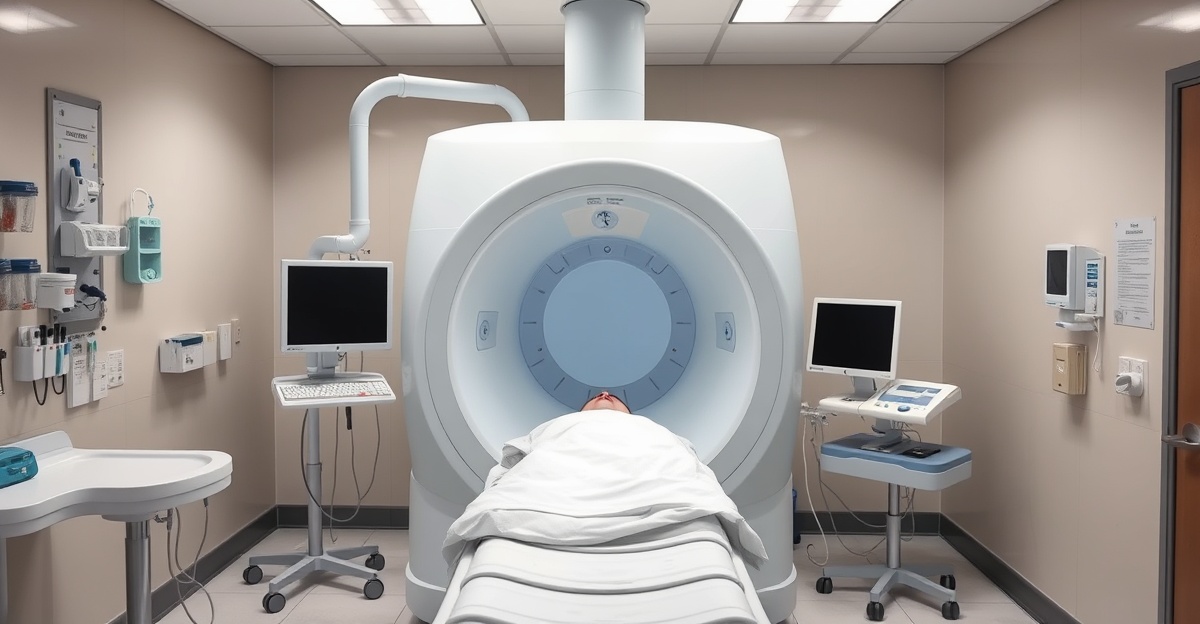
Across 14 randomized studies and 768 patients, adding hyperbaric oxygen therapy (HBOT) to standard wound care produced 2.4 times the healing rate (RR 2.39) and cut major amputations by 69% (Oley et al., 2024).2 Wound care is HBOT’s strongest and most-studied application, with the deepest evidence in diabetic foot ulcers and FDA-cleared support for radiation soft-tissue injury and compromised flaps and grafts. This page pools the numbers across every wound type.
How well does HBOT heal wounds?
Pooled across systematic reviews, HBOT roughly doubles the odds of complete healing for chronic wounds that have resisted standard care, and it lowers the risk of major amputation. The effect is largest in severe diabetic foot ulcers and in the two FDA-cleared soft-tissue indications, radiation injury and failing surgical flaps or grafts.
What do the diabetic foot ulcer numbers show?
Diabetic foot ulcers (DFU) are the most studied wound type. The sham-controlled HODFU trial of 94 patients found complete healing at one year of 52% with HBOT versus 29% with placebo (P = 0.03), rising to 61% versus 27% in patients who completed more than 35 sessions (Londahl et al., 2010).5 For the full DFU deep-dive, including Wagner-grade stratification and amputation data, see our HBOT diabetic foot ulcer data page.
| Meta-analysis | Studies / Patients | Key finding |
|---|---|---|
| Yang et al. 2025 (network meta-analysis) | 34 RCTs, 2,268 patients | HBOT ranked #1 for healing rate (SUCRA 0.814) and area reduction (SUCRA 0.730) |
| Oley et al. 2024 | 14 studies, 768 patients | Overall healing RR 2.39; major amputation RR 0.31 (69% reduction, P < 0.00001) |
| Sharma et al. 2021 | 14 studies | Higher complete-healing odds; major amputation RR 0.60 (40% reduction) |
| Cruz et al. 2021 | 11 RCTs, 668 patients | Ulcer-healing OR 4.00; wound-area reduction 23.19% more at 2 weeks (P < 0.001) |
Sources: Yang 2025,1 Oley 2024,2 Sharma 2021,3 Cruz 2021.4
Which wounds respond best to HBOT?
Response varies by wound type. Compromised flaps and grafts and radiation soft-tissue injury respond most reliably and are FDA-cleared; diabetic foot ulcers have the largest trial base; venous ulcers and post-surgical dehiscence have moderate support. A 2023 retrospective cohort of 774 treatment courses across all wound types found 61.0% healed completely and 22.9% partially, with median wound area falling from 4.4 cm2 to 0.2 cm2 (Lalieu et al., 2023).6
HBOT wound response and coverage by type
| Wound type | Response rate | Typical sessions | FDA-cleared? | Insurance |
|---|---|---|---|---|
| Diabetic foot ulcers (Wagner 3+) | 52 to 61% | 30 to 40 | Yes | Medicare covered |
| Radiation soft-tissue necrosis | 60 to 75% | 30 to 60 | Yes | Medicare covered |
| Compromised skin flaps/grafts | 70 to 85% | 20 to 30 | Yes | Medicare covered |
| Venous stasis ulcers | 45 to 60% | 30 to 40 | No | Sometimes covered |
| Post-surgical wound dehiscence | 55 to 70% | 20 to 30 | No | Case by case |
Response-rate ranges are drawn from the pooled healing data above and the all-wound-type cohort; FDA-clearance and Medicare status follow the CMS national coverage determination for HBOT.
Is HBOT cost-effective for wound care?
For severe diabetic foot ulcers, yes. A Canadian health technology assessment modeled 65-year-old diabetic patients with DFU over a 12-year horizon (Chuck et al., 2008).7
- HBOT: CND$40,695 per patient; 3.64 quality-adjusted life years (QALYs)
- Standard care alone: CND$49,786 per patient; 3.01 QALYs
- Result: in the model, HBOT cost roughly $9,000 less per patient and produced more QALYs, making it the more cost-effective option
The economics turn on amputations avoided. A below-knee amputation costs $40,000 to $80,000 for surgery alone, plus large downstream costs for prosthetics, rehabilitation, and lost productivity. For the cost-per-QALY picture across other indications, see our HBOT cost-effectiveness data.
What does the HBOT wound protocol look like?
- Pressure: 2.0 to 2.4 ATA in a hard chamber with 100% medical-grade oxygen
- Session duration: 90 to 120 minutes at treatment pressure
- Frequency: once daily, 5 days per week (session scheduling details)
- Course length: 30 to 40 sessions for most wound types, with reassessment at session 20
- Continuation criteria: treatment continues only if measurable healing is documented
Medicare requires documented healing progress to authorize continuation beyond 30 sessions. Soft chambers (which reach only 1.3 ATA) are not effective for wound healing and are not covered by Medicare for this indication.
Why do chronic wounds respond to HBOT?
HBOT addresses the core problem of chronic wounds, which is tissue hypoxia:
- Oxygen delivery: chronic wounds are hypoxic; HBOT raises plasma oxygen roughly 10 to 15 fold, reaching wound tissue directly (Hajhosseini et al., 2020)8
- Angiogenesis: repeated sessions stimulate new blood vessel formation through VEGF upregulation (Huang et al., 2020)9
- Collagen synthesis: fibroblasts need adequate oxygen to produce the collagen wound closure depends on (Goldstein, 2013)10
- Antimicrobial effect: high oxygen concentrations kill anaerobic bacteria and enhance white blood cell killing
- Stem cell mobilization: HBOT releases endothelial progenitor cells from bone marrow through nitric oxide pathways (Goldstein, 2013)10
Sources
- Yang J et al. Comparative efficacy of gas therapy for diabetic foot ulcers using network meta-analysis. PeerJ. 2025;13:e19571. DOI: 10.7717/peerj.19571
- Oley MH et al. Hyperbaric oxygen therapy for diabetic foot ulcers based on Wagner grading. Plast Reconstr Surg Glob Open. 2024;12(3):e5692. DOI: 10.1097/GOX.0000000000005692
- Sharma R et al. Efficacy of hyperbaric oxygen therapy for diabetic foot ulcer, a systematic review and meta-analysis. Sci Rep. 2021;11:2189. DOI: 10.1038/s41598-021-81886-1
- Cruz D et al. The role of hyperbaric oxygen therapy in the treatment of diabetic foot ulcers. Int Angiol. 2021;40(4):327-340. DOI: 10.23736/S0392-9590.21.04722-2
- Londahl M et al. Hyperbaric oxygen therapy facilitates healing of chronic foot ulcers in patients with diabetes. Diabetes Care. 2010;33(5):998-1003. DOI: 10.2337/dc09-1754
- Lalieu R et al. Hyperbaric oxygen therapy for nonhealing wounds: a long-term retrospective cohort study. Adv Skin Wound Care. 2023;36(6):1-8. DOI: 10.1097/01.ASW.0000922696.61546.31
- Chuck A et al. Cost-effectiveness and budget impact of adjunctive hyperbaric oxygen therapy for diabetic foot ulcers. Int J Technol Assess Health Care. 2008;24(2):178-183. DOI: 10.1017/S0266462308080252
- Hajhosseini B et al. Hyperbaric oxygen therapy: descriptive review of the technology and current indications. Plast Reconstr Surg Glob Open. 2020;8(6):e3136. DOI: 10.1097/GOX.0000000000003136
- Huang X et al. Hyperbaric oxygen potentiates diabetic wound healing by promoting fibroblast function. Life Sci. 2020;259:118246. DOI: 10.1016/j.lfs.2020.118246
- Goldstein L. Hyperbaric oxygen for chronic wounds. Dermatol Ther. 2013;26(5):375-378. DOI: 10.1111/dth.12053
Medical Disclaimer
The content on BaricBoost.com is for informational purposes only and is not intended as a substitute for professional medical advice, diagnosis, or treatment. Always seek the advice of your physician or other qualified health provider with any questions you may have regarding a medical condition. Never disregard professional medical advice or delay in seeking it because of something you have read on this website.

Author
Seph Fontane Pennock is the founder of BaricBoost.com and Regenerated.com, a clinic directory for regenerative medicine serving 10,000+ providers across the United States. He previously built and sold PositivePsychology.com, which grew to 19 million users and became the largest evidence-based positive psychology resource on the web. Seph brings direct experience as an HBOT patient, having completed protocols at clinics across three continents while navigating mold illness, systemic inflammation, and autoimmune conditions. His treatment journey includes hyperbaric oxygen therapy, peptide protocols, NAD+ therapy, and consultations with specialists from Dubai to Cape Town to Mexico. This combination of entrepreneurial track record and lived patient experience shapes everything published on BaricBoost.com. Every article is grounded in peer-reviewed research, informed by real clinical encounters, and written for patients making high-stakes treatment decisions. Seph's focus is on bringing transparency, scientific rigor, and practical guidance to the hyperbaric oxygen therapy space.