Affiliate Disclosure
This article contains affiliate links. If you purchase through these links, we may earn a commission at no additional cost to you. This does not influence our evaluations or rankings.
Hyperbaric oxygen therapy for dogs delivers 100% oxygen at increased pressure to speed healing in wounds, neurologic injuries, and severe infections. The largest veterinary safety analysis, a retrospective study of 2,792 treatment sessions (Montalbano et al., 2021), found the therapy well tolerated, with central nervous system oxygen toxicity in just 0.7% of sessions. It is used as an adjunct to standard veterinary care, not a replacement.
How Does HBOT Work for Dogs?
Inside a veterinary hyperbaric chamber, air pressure rises above normal and your dog breathes near-100% oxygen. That pressure dissolves extra oxygen directly into blood plasma, so it reaches tissues that damaged or swollen blood vessels no longer supply well. The mechanisms are the same ones documented in human hyperbaric medicine: reduced swelling, improved oxygen delivery to poorly perfused tissue, suppression of anaerobic bacteria, and stimulation of new blood vessel growth (Braswell and Crowe, 2012).
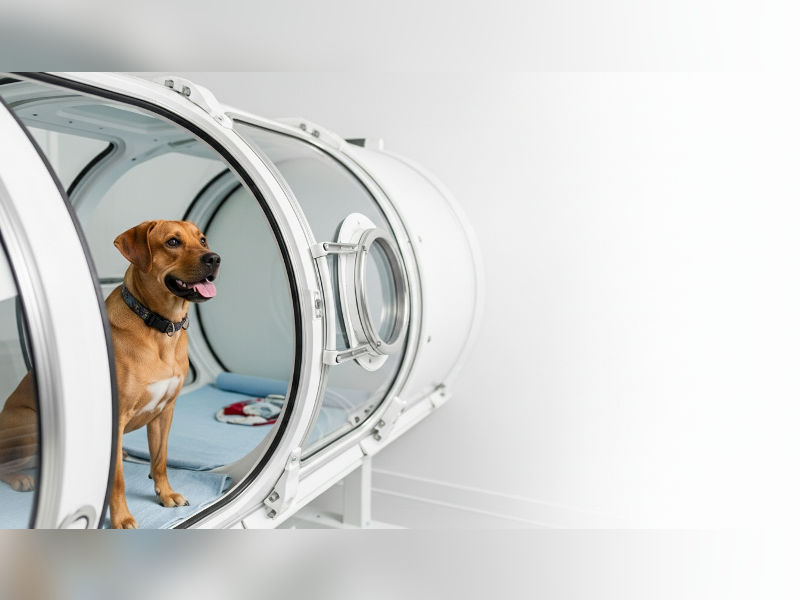
A session is short. Most run 45 to 90 minutes depending on the condition. The dog rests in a clear-walled chamber where staff can watch throughout, and many dogs relax or sleep. The number of sessions depends on the diagnosis, from a few for an acute problem to a longer course for chronic tissue healing. For a general primer on how the equipment works, see our guide to what a hyperbaric chamber is, and our guide to HBOT sessions for what a course involves.
Which Conditions in Dogs Respond to HBOT?
Veterinary HBOT is used most for wound healing, neurologic and spinal injury, and life-threatening gas or infection emergencies. The strength of evidence varies by condition, and much of it is retrospective or mechanistic rather than from controlled trials.
HBOT Uses in Dogs by Evidence Level
| Condition | Evidence level | Typical session count |
|---|---|---|
| Wound healing and surgical recovery | Moderate (retrospective, mechanistic) | 5 to 10 |
| Neurologic and spinal injury (IVDD) | Emerging (adjunctive) | 3 to 10 |
| Carbon monoxide poisoning | Strong mechanistic rationale | 1 to 3 |
| Anaerobic infection and abscess | Emerging (mechanistic) | Varies with infection |
| Post-surgical swelling | Emerging | 3 to 6 |
Wound Healing and Surgical Recovery
This is the best-supported use. Raising tissue oxygen supports collagen production, white blood cell function, and new blood vessel growth, which is why HBOT is applied to non-healing wounds, compromised surgical sites, and burns. A veterinary review of traumatic injury and wound care sets out the rationale and the case for HBOT as an adjunct in these cases (Levitan and Rock, 2021). The therapy supports healing alongside surgery, antibiotics, and standard wound management rather than replacing them.
Neurologic Injury and Spinal Trauma
Brain and spinal cord injuries cause swelling that cuts oxygen to nerve tissue, and HBOT is used to reduce that swelling and support still-viable tissue in the early window after injury. In acute canine intervertebral disc herniation, HBOT is discussed as an emerging adjunctive therapy, though the authors are clear that high-quality controlled evidence is still limited (Lewis, 2020). HBOT cannot reverse permanent nerve damage; its plausible role is protecting tissue that remains salvageable.
Carbon Monoxide Poisoning and Smoke Inhalation
Carbon monoxide binds hemoglobin far more tightly than oxygen does, and high-pressure oxygen displaces it faster than breathing room air. This is the mechanistic basis for HBOT in carbon monoxide poisoning, an emergency use where the physiology is well established. Smoke inhalation can add chemical airway injury, and pressurized oxygen helps restore normal oxygen carriage while supportive care addresses the rest.
Infections, Abscesses, and Post-Surgical Swelling
Anaerobic bacteria cannot survive in high-oxygen tissue, so HBOT is used against deep infections and abscesses, and high oxygen can also support white blood cell killing and the action of some antibiotics. After major surgery, HBOT is sometimes added to reduce inflammation and swelling around incisions. Evidence for these uses is largely mechanistic, so they belong as adjuncts under veterinary direction.
What Happens During a Dog’s Hyperbaric Session?
| Phase | What happens | Duration | Your dog’s experience |
| Pre-treatment check | Vet examines dog, checks vitals | 10 to 15 minutes | Basic exam, low stress |
| Chamber entry | Dog enters, door seals | 2 to 3 minutes | Curious or slightly anxious |
| Pressurization | Pressure increases gradually | 5 to 10 minutes | Ears pop, as on a plane |
| Treatment | Dog rests, breathes oxygen | 45 to 90 minutes | Most relax, some sleep |
| Depressurization | Pressure returns to normal | 10 to 15 minutes | Comfortable, no discomfort |
Staff monitor the dog through viewing windows for the whole session, and treatment stops if a dog shows distress. Most facilities ask you to withhold your dog’s meal beforehand, because a full stomach can cause nausea during pressurization. Some clinics let you stay in view to help an anxious dog settle.
What Are the Side Effects and Risks?
Veterinary HBOT is safe when protocols are followed, but it carries real risks. The most common is barotrauma, pressure injury to the ears or sinuses, and dogs with ear infections are at higher risk. The more serious concern is central nervous system oxygen toxicity, which can cause seizures. In the 2,792-session cohort, oxygen toxicity occurred in 0.7% of sessions, with only minor events otherwise, such as agitation or vomiting in a small number of dogs (Montalbano et al., 2021). A separate monoplace-chamber study documented the rectal temperature rise and oxygen-toxicity risk that drive standard session limits (Shmalberg et al., 2015).
Fire risk requires strict protocols because a 100% oxygen environment is highly flammable, so metal collar hardware, battery devices, and certain fabrics stay out of the chamber. Contraindications include untreated pneumothorax (a collapsed lung), some chemotherapy drugs, and seizure disorders, which need close monitoring. Your veterinarian screens for these before the first session.
How Much Does HBOT for Dogs Cost?
Single sessions typically run $100 to $300, depending on location and facility, and a course of 5 to 20 sessions adds up quickly. Some pet insurance policies include hyperbaric oxygen under alternative-therapy benefits and others exclude it, so check the policy details before starting. Our overview of HBOT insurance coverage explains how these policies usually work.
Access is the other constraint. Not every clinic has a chamber. University teaching hospitals and specialty referral practices are the most likely to offer it, so owners in rural areas may face a long drive per session. If your dog has a wound or oxygen-related emergency, HBOT sits alongside other options, and our pages on oxygen therapy for dogs and veterinary oxygen therapy cover the alternatives.
Is Hyperbaric Therapy Right for Your Dog?
HBOT is not a cure-all, and not every sick dog needs it. For wounds that will not close, some neurologic injuries, and gas emergencies, it offers benefits that standard care alone may not. Start with a direct conversation with your veterinarian: what is the diagnosis, what do standard treatments usually achieve, and would HBOT be a primary treatment or an add-on? Temperament matters too, since calm dogs handle the chamber more easily and anxious dogs may need gradual desensitization. If your dog has a condition that responds, a qualified facility is reachable, and the cost is manageable, HBOT is worth discussing as part of the plan. Related tissue-repair uses are covered in our page on HBOT for wound healing.
How long is each session and how many treatments are needed?
Sessions usually last 45 to 90 minutes, with the duration set by the condition being treated. The number of treatments varies by case: acute injuries may need 5 to 10 sessions, while chronic tissue-healing problems may need 15 to 20, and some dogs continue with periodic maintenance sessions. Your veterinarian sets the schedule based on the diagnosis and how your dog responds (Montalbano et al., 2021).
Are there size or breed restrictions?
Chamber size determines fit, and most facilities can treat small and large breeds. Flat-faced (brachycephalic) breeds need extra monitoring because of their airway anatomy, but they can still be treated safely under supervision. Your veterinarian confirms suitability during the pre-treatment check.
What conditions should prevent my dog from receiving HBOT?
An untreated pneumothorax (collapsed lung) is a strict contraindication, because pressure changes can worsen it. Some chemotherapy drugs make treatment unsafe, and dogs with seizure disorders need special monitoring given the small risk of oxygen-related seizures. Your veterinarian screens for these before starting (Braswell and Crowe, 2012).
Is the therapy painful or stressful for dogs?
The treatment itself is not painful, and most dogs rest or sleep through it. The main sensation is brief ear pressure during pressurization, similar to an airplane takeoff, which passes quickly. Dogs that are anxious about enclosed spaces may need a calm introduction, and staff stop the session if a dog is distressed.
Sources
- Montalbano C, Kiorpes A, Elam L, et al. “Common Uses and Adverse Effects of Hyperbaric Oxygen Therapy in a Cohort of Small Animal Patients: A Retrospective Analysis of 2,792 Treatment Sessions.” Frontiers in Veterinary Science, 2021;8:764002. doi:10.3389/fvets.2021.764002
- Levitan DM, Rock K. “Rationale for hyperbaric oxygen therapy in traumatic injury and wound care in small animal veterinary practice.” Journal of Small Animal Practice, 2021;62(9):719-729. doi:10.1111/jsap.13356
- Lewis MJ, Jeffery ND, Olby NJ. “Emerging and Adjunctive Therapies for Spinal Cord Injury Following Acute Canine Intervertebral Disc Herniation.” Frontiers in Veterinary Science, 2020;7:579933. doi:10.3389/fvets.2020.579933
- Shmalberg J, Davies W, Lopez S, et al. “Rectal temperature changes and oxygen toxicity in dogs treated in a monoplace chamber.” Undersea and Hyperbaric Medicine, 2015;42(1):95-102. PMID 26094309
- Braswell C, Crowe DT. “Hyperbaric oxygen therapy.” Compendium on Continuing Education for the Practicing Veterinarian, 2012;34(3):E1-5. PMID 22487778
Medical Disclaimer
The content on BaricBoost.com is for informational purposes only and is not intended as a substitute for professional medical advice, diagnosis, or treatment. Always seek the advice of your physician or other qualified health provider with any questions you may have regarding a medical condition. Never disregard professional medical advice or delay in seeking it because of something you have read on this website.

Author
Seph Fontane Pennock is the founder of BaricBoost.com and Regenerated.com, a clinic directory for regenerative medicine serving 10,000+ providers across the United States. He previously built and sold PositivePsychology.com, which grew to 19 million users and became the largest evidence-based positive psychology resource on the web. Seph brings direct experience as an HBOT patient, having completed protocols at clinics across three continents while navigating mold illness, systemic inflammation, and autoimmune conditions. His treatment journey includes hyperbaric oxygen therapy, peptide protocols, NAD+ therapy, and consultations with specialists from Dubai to Cape Town to Mexico. This combination of entrepreneurial track record and lived patient experience shapes everything published on BaricBoost.com. Every article is grounded in peer-reviewed research, informed by real clinical encounters, and written for patients making high-stakes treatment decisions. Seph's focus is on bringing transparency, scientific rigor, and practical guidance to the hyperbaric oxygen therapy space.
Why Trust Our Evaluations
Our rankings are based on hands-on testing, published clinical data, and verified manufacturer specifications. We apply the same criteria to every product regardless of affiliate status. Editorial Process · Evaluation Methodology