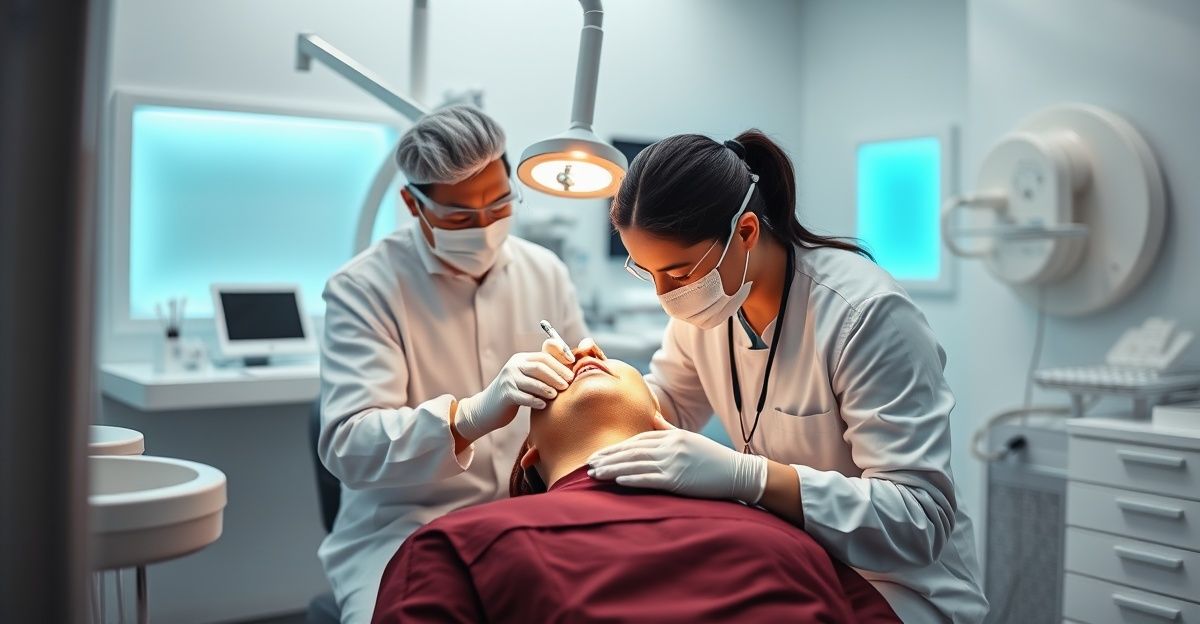
Ozone can arrest early tooth decay, but only before a physical cavity forms. In a double-blind trial of non-cavitated root lesions (Holmes, 2003), 92% of ozone-treated lesions hardened within six months while untreated lesions kept softening. Ozone kills the acid-producing bacteria driving decay by more than 99% in seconds (Baysan and Lynch, 2004), which lets saliva and fluoride remineralize the surface. Once the enamel has collapsed into a hole, ozone cannot rebuild it and a filling is needed.
- ICDAS (International Caries Detection and Assessment System): a 0-6 scale that grades a carious lesion from first visible change to a deep cavity.
- Remineralization: the natural repair of softened enamel or dentin as calcium, phosphate, and fluoride redeposit into the tooth surface.
- Non-cavitated lesion: early decay where the surface is softened or discolored but has not yet broken into an open hole.
How Tooth Decay Works (And Where Ozone Fits In)
Dental caries is an infectious disease. Bacteria in dental plaque (primarily Streptococcus mutans and Lactobacillus species) metabolize sugars and produce organic acids. These acids dissolve the hydroxyapatite crystals that make up tooth enamel, creating a demineralized zone. If the process continues unchecked, the decay front advances through the enamel into the softer dentin beneath, eventually reaching the pulp.
The critical window for ozone therapy is during the early demineralization phase, before the enamel surface collapses into a frank cavity. At this stage, the lesion is essentially a softened zone within otherwise intact enamel. If the bacteria can be eliminated and the acidic environment neutralized, the body can repair the damage through remineralization with calcium, phosphate, and fluoride from saliva.
This is exactly what ozone does: it kills the bacteria driving the acid attack, creating conditions for natural repair.
How Does the HealOzone Device Treat Cavities?
The HealOzone device (developed by KaVo, Germany) delivers a controlled dose of ozone gas directly to the tooth surface through a sealed silicone cup. The cup creates an airtight seal around the treatment area, preventing ozone from escaping into the oral cavity.
The treatment protocol is straightforward:
- A silicone cup is placed over the affected tooth surface
- Ozone gas at a concentration of 2,100 ppm (4.2 mcg/mL) is delivered for 10 to 40 seconds
- The ozone sterilizes the lesion, killing more than 99% of bacteria within the demineralized zone
- A remineralizing solution (containing fluoride, calcium, phosphate, and xylitol) is applied to the treated surface
- The patient returns in 3 to 6 months for reassessment
The entire procedure takes less than 60 seconds per tooth. There is no drilling, no anesthesia, and no discomfort.
What Does the Research Say?
The research on ozone for dental caries is anchored by the work of Edward Lynch, Julian Holmes, and colleagues, who ran the largest clinical trials using the HealOzone system. For related reading on ozone in oral care, see our guide to ozone therapy for tooth decay and the overview of ozone therapy safety.
What the Clinical Trials Found
| Study | Lesion Type | Result |
|---|---|---|
| Holmes, 2003 (double-blind RCT) | Non-cavitated root caries (age 60-82) | 92% of ozone-treated lesions hardened at 6 months; 100% arrested at 18 months vs continued softening in controls |
| Baysan & Lynch, 2004 | Primary root caries | Ozone reduced cariogenic bacteria and improved clinical severity versus air controls |
| Azarpazhooh & Limeback, 2008 (systematic review) | All caries types | Concluded evidence for ozone in caries was limited and of low quality; called for larger independent trials |
| Cochrane Review (Rickard et al., 2004) | All caries types | Insufficient evidence to recommend ozone as a replacement for conventional treatment |
The honest reading: the strongest results come from a small number of trials led by the same research group, on early and non-cavitated lesions. Two independent evidence reviews (Cochrane 2004 and Azarpazhooh 2008) rated the overall certainty as low and asked for larger studies. Ozone looks genuinely useful for the narrow indication it was tested on, and unproven beyond it.
To put the scope plainly: ozone is not a replacement for the drill. It is an alternative to the drill for one specific situation, early non-cavitated decay where the enamel surface is still intact. In those cases the arrest rates are strong. The mistake is stretching it beyond that indication.
When Ozone Works vs. When It Does Not
Ozone Effectiveness by Lesion Stage
| Lesion Stage | Description | Ozone Effective? | Recommended Treatment |
|---|---|---|---|
| ICDAS 1 | White spot, first visible demineralization | Yes, high success | Ozone + remineralization |
| ICDAS 2 | Distinct brown/white change, no cavitation | Yes, moderate success | Ozone + remineralization |
| ICDAS 3 | Enamel breakdown, no dentin visible | Marginal | Minimal intervention or sealant + ozone |
| ICDAS 4 | Underlying dentin shadow | No | Conventional restoration |
| ICDAS 5-6 | Frank cavity with dentin exposure | No | Conventional restoration |
The key principle: ozone can reverse decay when the enamel structure is still largely intact and the surface has not collapsed. Once there is a physical cavity (a hole in the tooth), the structural damage cannot be reversed by antimicrobial action alone. The tooth needs to be restored.
How Much Does Ozone Cavity Treatment Cost?
Ozone treatment for dental caries typically costs $50 to $150 per tooth, depending on the dental practice and geographic location. This compares to:
- Composite filling: $150 to $400 per tooth
- Porcelain inlay/onlay: $500 to $1,500 per tooth
- Crown (if decay is advanced): $800 to $2,000 per tooth
The cost advantage is clear for early lesions, but the comparison only holds if the lesion is caught early enough for ozone to work. A failed ozone treatment that later requires a filling is more expensive than simply filling the tooth initially.
Dental insurance generally does not cover ozone therapy for caries, as it is considered an alternative treatment. Patients typically pay out of pocket. The broader pricing picture is covered in our ozone therapy cost guide.
Where Can You Get Ozone Cavity Treatment?
Finding a dentist who offers ozone therapy for cavities can be challenging. The HealOzone device was withdrawn from some markets for commercial rather than safety reasons (KaVo discontinued production). Other ozone generators designed for dental use (such as the Prozone by W&H and the OzonyTron) are available but less widely adopted.
Ozone dentistry is more common in Europe, particularly Germany, Italy, and the UK, than in the United States. In the US, a growing number of biological or holistic dental practices offer ozone as part of their treatment options. Delivery is governed by the same clinical parameters covered in our ozone therapy protocols guide.
The Bottom Line
Ozone therapy for dental cavities has real but low-certainty clinical evidence supporting its use for early-stage decay. For enamel-only lesions (ICDAS 1-2) and non-cavitated root caries, the combination of ozone sterilization plus remineralization can arrest the disease process without drilling. For anything beyond that, conventional dentistry remains necessary. The treatment is safe, painless, and cost-effective for the right indication. The limitations are the narrowness of the evidence base and the availability of trained practitioners and equipment. See also our related guide to ozone therapy for dental implants and the ozone therapy overview.
Sources
- Holmes J. Clinical reversal of root caries using ozone, double-blind, randomised, controlled 18-month trial. Gerodontology. 2003;20(2):106-114. doi:10.1111/j.1741-2358.2003.00106.x
- Baysan A, Lynch E. Effect of ozone on the oral microbiota and clinical severity of primary root caries. American Journal of Dentistry. 2004;17(1):56-60. PubMed: PMID 15241911
- Azarpazhooh A, Limeback H. The application of ozone in dentistry: a systematic review of literature. Journal of Dentistry. 2008;36(2):104-116. doi:10.1016/j.jdent.2007.11.008
- Rickard GD, Richardson R, Johnson T, McColl D, Hooper L. Ozone therapy for the treatment of dental caries. Cochrane Database of Systematic Reviews. 2004;(3):CD004153. doi:10.1002/14651858.CD004153.pub2
- Lynch E. Ozone: The Revolution in Dentistry. Quintessence Publishing; 2004. (Secondary source: textbook, not primary research.)
Medical Disclaimer
The content on BaricBoost.com is for informational purposes only and is not intended as a substitute for professional medical advice, diagnosis, or treatment. Always seek the advice of your physician or other qualified health provider with any questions you may have regarding a medical condition. Never disregard professional medical advice or delay in seeking it because of something you have read on this website.

Author
Seph Fontane Pennock is the founder of BaricBoost.com and Regenerated.com, a clinic directory for regenerative medicine serving 10,000+ providers across the United States. He previously built and sold PositivePsychology.com, which grew to 19 million users and became the largest evidence-based positive psychology resource on the web. Seph brings direct experience as an HBOT patient, having completed protocols at clinics across three continents while navigating mold illness, systemic inflammation, and autoimmune conditions. His treatment journey includes hyperbaric oxygen therapy, peptide protocols, NAD+ therapy, and consultations with specialists from Dubai to Cape Town to Mexico. This combination of entrepreneurial track record and lived patient experience shapes everything published on BaricBoost.com. Every article is grounded in peer-reviewed research, informed by real clinical encounters, and written for patients making high-stakes treatment decisions. Seph's focus is on bringing transparency, scientific rigor, and practical guidance to the hyperbaric oxygen therapy space.