Ozone therapy is one of the most sought-after alternative treatments for Lyme disease, particularly for patients with persistent symptoms after antibiotic treatment. The proposed mechanisms are compelling: ozone may disrupt Borrelia biofilms, generate oxidative stress against spirochetes, and modulate immune function. But the clinical evidence remains limited to case reports and clinical observations. No randomized controlled trials have been published. Here’s what the science actually shows and what patients should realistically expect.
Key Takeaways
- Ozone therapy is widely used by integrative practitioners for Lyme disease, but no randomized controlled trials exist
- 10-pass ozone and major autohemotherapy (MAH) are the most common modalities for Lyme patients
- Proposed mechanisms include biofilm disruption, direct antimicrobial action, and immune modulation
- Typical Lyme ozone protocols run 20-40 sessions over 3-6 months
- Total cost for a full protocol ranges from $5,000 to $15,000
- Ozone is used alongside, not instead of, standard antibiotic treatment for acute Lyme disease
Why Lyme Patients Seek Ozone Therapy
Standard Lyme disease treatment with 2-4 weeks of doxycycline resolves infection in most patients. But 10-20% of patients continue to experience symptoms like fatigue, joint pain, cognitive difficulties, and neurological issues for months or years after treatment. This is referred to as post-treatment Lyme disease syndrome (PTLDS) or, in patient communities, chronic Lyme disease.
For these patients, conventional medicine often has limited answers. The CDC and IDSA maintain that extended antibiotic therapy is not supported by evidence for PTLDS. This creates a treatment gap that drives patients toward alternative and integrative approaches.
Ozone therapy has become one of the most popular options in this space. Integrative Lyme practitioners report clinical improvements in many patients, but these observations have not been validated in controlled studies.1
How Ozone Might Work Against Lyme Disease
Biofilm Disruption
One of the most compelling theoretical mechanisms involves Borrelia biofilms. Borrelia burgdorferi, the spirochete that causes Lyme disease, can form protective biofilm communities that shield bacteria from both the immune system and antibiotics. These biofilms are one proposed explanation for why some patients remain symptomatic after standard treatment.
Ozone generates reactive oxygen species (ROS) that can penetrate and disrupt biofilm structures. Laboratory research has demonstrated ozone’s ability to break down biofilms formed by various bacterial species. The theory is that ozone disrupts the Borrelia biofilm matrix, exposing the bacteria to immune attack and making them more susceptible to antimicrobial agents.2
This mechanism is plausible based on ozone’s known chemistry, but it has not been directly demonstrated with Borrelia biofilms in published research.
Direct Antimicrobial Action
Borrelia burgdorferi is a microaerophilic organism with limited defenses against oxidative stress. Research has identified that the spirochete possesses only a small number of genes encoding oxidative stress response proteins (SodA, NapA, BosR, CoADR, Trx, and TrxR), far fewer than most bacterial pathogens.3
Laboratory studies have shown that B. burgdorferi membranes are primary targets of reactive oxygen species. The spirochete incorporates polyunsaturated fatty acids from its environment into its cell membrane, making it particularly vulnerable to lipid peroxidation caused by oxidative agents.4
When bacteria are exposed to ozone, the integrity of the bacterial envelope becomes compromised, exposing internal structures to immune surveillance. This is the theoretical basis for ozone’s anti-Borrelia activity. Whether systemic ozone therapy in a living patient generates sufficient local concentrations to damage spirochetes in tissues remains unproven.
“Borrelia burgdorferi possesses only a small number of oxidative stress defense genes, far fewer than most bacterial pathogens, making it theoretically vulnerable to oxidative therapies.”
Boylan et al., Infection and Immunity, 2008
Immune Modulation
Ozone therapy modulates the immune system through several pathways. It activates Nuclear Factor erythroid 2-related factor 2 (Nrf2), the master regulator of antioxidant response. It modulates cytokine production, potentially shifting the immune response from a dysfunctional chronic inflammatory state toward a more effective antimicrobial response.5
For Lyme patients whose symptoms may be driven partly by immune dysregulation rather than active infection, this immunomodulatory effect could be as important as any direct antimicrobial action.
Ozone Modalities Used for Lyme Disease
10-Pass Ozone Therapy
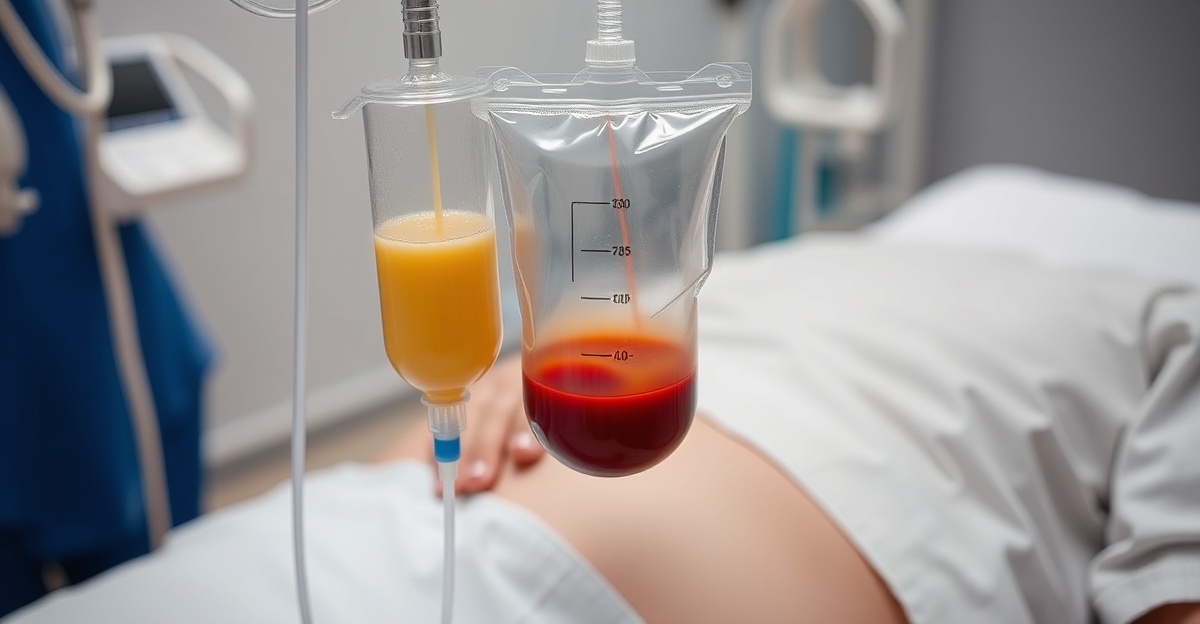
10-pass (also called hyperbaric ozone therapy or OHT) is the most intensive form of ozone treatment and the modality most commonly used for Lyme disease. The procedure draws approximately 200 mL of blood, exposes it to a high concentration of medical ozone under slight pressure, and reinfuses it. This cycle is repeated 10 times in a single session.
The total ozone dose delivered in a single 10-pass session is roughly 10 times what a standard MAH treatment provides. Sessions take 60-90 minutes. The higher dose is the main reason Lyme practitioners favor this approach over standard MAH.
Major Autohemotherapy (MAH)
MAH is the standard form of ozone blood therapy. A smaller volume of blood (typically 100-250 mL) is drawn, mixed with ozone at concentrations of 20-70 mcg/mL, and reinfused. The procedure takes 30-45 minutes.
MAH delivers a lower ozone dose per session than 10-pass, which means more sessions are typically needed to achieve the same cumulative exposure. Some practitioners start with MAH and escalate to 10-pass if the response is insufficient.
Rectal Insufflation
Rectal ozone insufflation delivers ozone gas directly into the colon, where it’s absorbed into the bloodstream through the intestinal lining. It’s less intensive than blood-based methods but more accessible and less expensive. Some practitioners use it as a maintenance therapy between MAH or 10-pass sessions.
Other Methods
Some Lyme protocols incorporate limb bagging (ozone gas applied topically to extremities), ozone sauna (full-body transdermal ozone exposure), or ozonated water (drinking water infused with ozone). These are considered adjunctive to the primary blood-based treatments.
| Modality | Dose Level | Duration | Cost per Session |
|---|---|---|---|
| 10-Pass | High | 60-90 min | $400-800 |
| MAH | Moderate | 30-45 min | $150-350 |
| Rectal insufflation | Low-Moderate | 15-30 min | $75-150 |
| Ozone sauna | Low | 30-45 min | $50-125 |
The Evidence Base: What We Actually Know
This is where expectations need to be calibrated carefully. The evidence for ozone therapy in Lyme disease consists of:
Case reports: A 2018 case report published in Medical Gas Research described a patient who received ozone therapy for an acute bacterial infection and fully recovered. The authors noted the patient had previously been treated with ozone for Lyme disease three years prior and had recovered without antibiotics.6
Clinical observations: Integrative Lyme practitioners report improvements in many patients, but these are uncontrolled observations without comparison groups, blinding, or standardized outcome measures.
In vitro and mechanistic studies: Laboratory research demonstrates that Borrelia is vulnerable to oxidative stress and that ozone can disrupt biofilms. But in vitro findings do not reliably predict clinical outcomes.
What’s missing: There are no randomized controlled trials evaluating ozone therapy for Lyme disease. No prospective cohort studies with standardized protocols and validated outcome measures. No head-to-head comparisons with other treatments. This is a significant gap.
A review by Lantos et al. (2015) in Clinical Infectious Diseases examined unorthodox therapies marketed for Lyme disease, including ozone therapy, and noted the absence of controlled clinical evidence supporting their use.7
Hyperbaric oxygen therapy for Lyme disease faces a similar evidence landscape. One in vitro study showed that hyperbaric oxygen inhibited growth of certain B. burgdorferi strains, but no human clinical trials have demonstrated efficacy.
Typical Lyme Ozone Protocols
While there are no standardized, evidence-based protocols, most integrative Lyme practitioners follow patterns like these:
Intensive phase (weeks 1-8): 2-3 sessions per week of MAH or 10-pass. This is the loading phase designed to deliver high cumulative ozone doses. Some practitioners start with MAH and transition to 10-pass after a few sessions to allow the body to adapt.
Consolidation phase (weeks 9-16): 1-2 sessions per week. The frequency tapers as symptoms improve. The modality may shift to MAH or rectal insufflation if 10-pass was used in the intensive phase.
Maintenance phase (ongoing): Some patients continue with monthly sessions for 6-12 months. Others discontinue entirely once symptoms resolve. There’s no evidence-based guidance on optimal maintenance duration.
Total sessions typically range from 20 to 40 over 3-6 months. Some patients with severe or longstanding symptoms undergo longer protocols.
Cost of a Lyme Ozone Protocol
| Protocol Type | Sessions | Cost Range |
|---|---|---|
| MAH-based protocol (20-30 sessions) | 20-30 | $3,000 – $8,000 |
| 10-Pass protocol (15-25 sessions) | 15-25 | $6,000 – $15,000 |
| Mixed protocol (MAH + 10-Pass + insufflation) | 20-40 | $5,000 – $12,000 |
Insurance does not cover ozone therapy for Lyme disease. This is entirely out-of-pocket. Some clinics offer package pricing that reduces per-session costs by 15-25%. Factor in travel costs if the nearest qualified provider isn’t local.
Realistic Expectations
Based on clinical reports (not controlled studies), here’s what Lyme patients typically experience:
- Herxheimer-like reactions are common in the first few sessions. Symptoms may temporarily worsen as bacteria die off and release inflammatory debris. This is expected and usually managed by adjusting ozone dose and frequency.
- Gradual improvement typically begins after 8-12 sessions. Energy, cognitive function, and joint pain are often the first symptoms to improve.
- Not everyone responds. Some patients see significant improvement. Others experience modest benefits. Some see no change. Without controlled trials, we don’t know the actual response rate.
- Relapse is possible. Some patients experience symptom return after discontinuing treatment, particularly those who stop during the consolidation phase.
Combining Ozone with Other Lyme Treatments
Most integrative Lyme practitioners use ozone as one component of a multi-modal treatment plan. Common combinations include:
- Antibiotics + ozone: Some practitioners use ozone alongside antibiotic therapy, theorizing that ozone disrupts biofilms and makes bacteria more accessible to antibiotics
- Herbal antimicrobials + ozone: Protocols combining ozone with herbs like Japanese knotweed, cat’s claw, and andrographis
- IV nutrients + ozone: High-dose vitamin C, glutathione, and NAD+ are commonly paired with ozone sessions
- Detoxification support: Binders, sauna therapy, and liver support to manage die-off reactions
The evidence for these combinations is even more limited than for ozone alone. They represent clinical practice patterns, not validated protocols.
Ozone therapy for Lyme disease occupies a space where biological plausibility and clinical observations run ahead of rigorous evidence. The mechanisms are sound on paper. Patient testimonials are often positive. But the absence of controlled trials means we cannot make definitive claims about efficacy. Patients considering ozone for Lyme should understand this evidence gap, budget accordingly, and ideally work with a practitioner who combines ozone with established treatments rather than using it as a standalone approach.
What Lyme-Literate Doctors Report
Clinicians who treat Lyme disease with ozone therapy report several observed benefits. Dr. Todd Maderis, a naturopathic physician specializing in Lyme, reports that ozone therapy can serve as both a standalone treatment and a complement to antibiotics (Maderis, 2023). He notes that ozone may help by reducing the bacterial load and modulating the immune response.
A case report published in the journal Medical Gas Research documented the successful treatment of a bacterial joint infection using ozone therapy as the primary treatment. The patient had failed conventional antibiotic therapy but responded to ozone injections combined with oral antibiotics (Tiwari et al., 2018. DOI: 10.4103/2045-9912.241075).
“Ozone therapy is not a silver bullet for Lyme disease. But for patients who have failed antibiotics or cannot tolerate them, it offers a legitimate treatment option that addresses multiple aspects of the infection.”
A 2021 review published in the International Journal of Molecular Sciences examined ozone’s role in managing infectious diseases. The authors noted that ozone demonstrates antimicrobial effects against a broad range of pathogens, including Borrelia burgdorferi, the spirochete that causes Lyme disease (Tezcan et al., 2021. DOI: 10.3390/ijms22010242).
Safety and Side Effects
When administered by trained practitioners using proper equipment, ozone therapy has a good safety profile. Common side effects include:
- Herxheimer reactions (flu-like symptoms, fatigue, headache)
- Temporary fatigue after sessions
- Light-headedness during treatment
- Vein irritation at the IV site
Serious complications are rare but can include air embolism (if equipment malfunctions) and hemolysis (if ozone concentrations are too high). Patients should only receive treatment from practitioners with proper training and medical-grade ozone generators.
The Preclinical Evidence: Borrelia and Oxidative Stress
Boylan et al. 2008: The Key Paper
The most cited laboratory finding supporting ozone for Lyme comes from Boylan et al., published in Free Radical Biology & Medicine. The study examined Borrelia burgdorferi’s antioxidant defense systems and found something significant: compared to other bacteria, Borrelia has remarkably limited oxidative stress defenses.1
Key findings:
- Borrelia lacks many of the antioxidant enzymes common in other bacteria (no catalase, no glutathione system)
- Its primary defense against oxidative stress relies on a single enzyme: superoxide dismutase (SodA)
- When SodA was knocked out, Borrelia became hypersensitive to oxidative killing
- Even with intact SodA, Borrelia was more vulnerable to reactive oxygen species than most pathogenic bacteria
This matters for ozone therapy because ozone’s primary mechanism is generating reactive oxygen species (ROS). If Borrelia is inherently vulnerable to oxidative stress, then ozone therapy has a rational target. The bacteria’s limited antioxidant defenses mean it cannot neutralize ROS as effectively as, say, Staphylococcus or E. coli.
The Boylan study was in vitro (laboratory conditions). Demonstrating bacterial vulnerability in a test tube does not prove that ozone therapy reaches sufficient concentrations in vivo (in the body) to kill Borrelia in infected tissues.
Biofilm Penetration Theory
One of the most persistent arguments for ozone in Lyme disease centers on biofilms. Borrelia burgdorferi has been shown to form biofilm-like structures in vitro, and Sapi et al. (2012) demonstrated biofilm formation in Lyme disease tissue samples.4
The biofilm theory goes like this:
- Borrelia forms protective biofilms in the body, particularly in joints, nervous system tissue, and extracellular matrix
- Antibiotics cannot penetrate these biofilms effectively, which is why some patients remain symptomatic after standard antibiotic courses
- Ozone’s reactive oxygen species can degrade biofilm matrices, exposing the bacteria inside to both the ozone itself and any concurrent antibiotics
This theory is mechanistically plausible. Ozone has been shown to disrupt biofilms formed by other bacteria (Pseudomonas, Staphylococcus).2 But no published study has specifically tested ozone’s ability to penetrate Borrelia biofilms, either in vitro or in vivo. The theory is extrapolated from other bacterial species.
“Borrelia burgdorferi possesses a remarkably limited antioxidant defense system, relying primarily on a single superoxide dismutase. This makes it theoretically one of the most vulnerable pathogenic bacteria to oxidative therapies like ozone.”
Adapted from Boylan et al., Free Radical Biology & Medicine, 2008
Why There Are No RCTs
The lack of RCTs is not because researchers tried and got negative results. It is because no one has conducted them. The barriers are structural:
| Barrier | Impact |
|---|---|
| No patent = no commercial sponsor | Clinical trials cost $1M+ to run. Without a patentable product, there is no ROI for a pharmaceutical company |
| FDA classification | Ozone’s status as a “toxic gas” creates regulatory friction for US-based trials |
| Lyme disease controversy | NIH and NIAID have limited funding for chronic Lyme research in general, let alone for alternative therapies |
| Blinding difficulty | Creating a convincing sham for IV ozone therapy is challenging (though oxygen infusion could serve) |
| Patient population complexity | Chronic Lyme patients are often on multiple concurrent treatments, making it hard to isolate ozone’s effects |
This creates a frustrating evidence vacuum. Practitioners see clinical benefit, patients report improvement, the mechanisms are plausible, and Borrelia’s oxidative vulnerability is documented. But without RCTs, the treatment cannot move from “promising” to “proven.”
Sources
- Elvis AM, Ekta JS. Ozone therapy: A clinical review. J Nat Sci Biol Med. 2011;2(1):66-70. doi:10.4103/0976-9668.82319
- Rowen RJ, Robins H. Ozone and oxidation therapies as a solution to the emerging crisis in infectious disease management: a review of current knowledge and experience. Med Gas Res. 2020;10(4):163-175. doi:10.4103/2045-9912.273962
- Boylan JA, et al. Borrelia burgdorferi membranes are the primary targets of reactive oxygen species. Mol Microbiol. 2008;68(3):786-799. doi:10.1111/j.1365-2958.2008.06204.x
- Boylan JA, et al. Borrelia burgdorferi membranes are the primary targets of reactive oxygen species. Mol Microbiol. 2008;68(3):786-799. doi:10.1111/j.1365-2958.2008.06204.x
- Sagai M, Bocci V. Mechanisms of Action Involved in Ozone Therapy: Is healing induced via a mild oxidative stress? Med Gas Res. 2011;1:29. doi:10.1186/2045-9912-1-29
- Rowen RJ. Ozone therapy as a primary and sole treatment for acute bacterial infection: case report. Med Gas Res. 2018;8(3):121-124. doi:10.4103/2045-9912.241078
- Lantos PM, et al. Unorthodox Alternative Therapies Marketed to Treat Lyme Disease. Clin Infect Dis. 2015;60(12):1776-1782. doi:10.1093/cid/civ186
Medical Disclaimer
The content on BaricBoost.com is for informational purposes only and is not intended as a substitute for professional medical advice, diagnosis, or treatment. Always seek the advice of your physician or other qualified health provider with any questions you may have regarding a medical condition. Never disregard professional medical advice or delay in seeking it because of something you have read on this website.

Author
Seph Fontane Pennock is the founder of BaricBoost.com and Regenerated.com, a clinic directory for regenerative medicine serving 10,000+ providers across the United States. He previously built and sold PositivePsychology.com, which grew to 19 million users and became the largest evidence-based positive psychology resource on the web. Seph brings direct experience as an HBOT patient, having completed protocols at clinics across three continents while navigating mold illness, systemic inflammation, and autoimmune conditions. His treatment journey includes hyperbaric oxygen therapy, peptide protocols, NAD+ therapy, and consultations with specialists from Dubai to Cape Town to Mexico. This combination of entrepreneurial track record and lived patient experience shapes everything published on BaricBoost.com. Every article is grounded in peer-reviewed research, informed by real clinical encounters, and written for patients making high-stakes treatment decisions. Seph's focus is on bringing transparency, scientific rigor, and practical guidance to the hyperbaric oxygen therapy space.