How often does HBOT cause side effects?
In a retrospective analysis of 1.5 million hyperbaric treatments, only 0.68% were associated with any adverse event. Medically severe events occurred in fewer than 1 in 10,000 sessions. Hyperbaric oxygen therapy has one of the lowest serious adverse event rates of any medical intervention in widespread clinical use. Most side effects are mild ear pressure or sinus discomfort that resolves on its own.
These figures come from the Jokinen-Gordon 2017 analysis of 1,529,859 treatments delivered at Healogics wound care centers between 2012 and 2015, the largest HBOT safety dataset published to date.1 The Undersea and Hyperbaric Medical Society, which sets the field’s clinical standards, characterizes HBOT delivered under accredited protocols as a low-risk therapy when patients are properly screened and contraindications are respected.8
What side effects does HBOT cause, and how often?
| Side Effect | Incidence | Severity | Resolution |
|---|---|---|---|
| Middle ear barotrauma | 3.8-15% of patients24 | Mild-moderate | Self-resolving; PE tubes if recurrent |
| Ear pain/discomfort (transient) | Up to 17% of patients5 | Mild | Equalization training; resolves spontaneously |
| Sinus barotrauma | Less common than ear barotrauma6 | Mild | Decongestants; resolves with treatment |
| Claustrophobia/anxiety | 0.5-2% of patients2 | Mild-moderate | Sedation, acclimation, or switch to multiplace |
| Oxygen toxicity (CNS seizure) | <0.05 per 1,000 treatments1 | Serious (self-limiting) | Remove mask; seizure stops within minutes |
| Pulmonary barotrauma (pneumothorax) | 1 case in 1,529,859 treatments1 | Serious | Requires immediate medical management |
The pattern is consistent across datasets: the common events are minor and reversible, and the serious events are vanishingly rare. Jokinen-Gordon documented a single pneumothorax across more than 1.5 million treatments, and oxygen toxicity seizures occurred in fewer than 0.05 per 1,000 treatments.1
What is the most common HBOT side effect?
Ear-related barotrauma is the most common side effect. It occurs when pressure changes during compression or decompression injure air-filled spaces. The middle ear is affected most often because the Eustachian tube must actively equalize pressure between the middle ear and the chamber.
A 2025 systematic review of 54 studies involving 18,284 patients found that 15% of HBOT patients experienced otologic (ear-related) complications, and 42.8% of those cases were mild.4 Sinus barotrauma is documented but reported far less often than ear barotrauma.6 Whether ear pressure changes ever cause lasting harm is a common concern; the evidence on whether a hyperbaric chamber can cause hearing loss shows permanent damage is rare when equalization is managed properly.
Middle ear barotrauma severity
| Severity | Percentage of Cases |
|---|---|
| Mild | 42.8%4 |
| Moderate | ~50.8%4 |
| Severe | 6.4%4 |
What raises the risk of barotrauma?
A 2023 meta-analysis of 24 RCTs found that adverse events were significantly more common when chamber pressure exceeded 2.0 ATA or when treatment courses ran beyond 10 sessions.3 Female sex, age under 16, increasing age, head and neck pathology, and sensory neuropathy also raise barotrauma risk.24 The main prevention is technique: slow compression, active equalization (swallowing, yawning, or the Valsalva maneuver), and rescheduling sessions when a patient has significant nasal congestion. Patients who cannot equalize despite these measures are sometimes fitted with pressure-equalization tubes before continuing a course. Anxiety and claustrophobia in the chamber are managed with acclimation, and occasionally by switching a patient from a monoplace to a multiplace chamber.
How rare are oxygen toxicity seizures?
Central nervous system oxygen toxicity seizures are the most feared serious event, and they are rare. Key facts:12
- Incidence: fewer than 0.05 per 1,000 treatments at 2.0 to 2.4 ATA.
- Self-limiting: removing the oxygen mask stops the seizure within minutes.
- No lasting damage: HBOT oxygen toxicity seizures do not cause lasting neurological injury.
- Prevention: air breaks (5 minutes of room air every 20 to 30 minutes) significantly reduce risk.
Because the seizure resolves once oxygen delivery stops and leaves no lasting deficit, the practical risk to a supervised patient is far lower than the raw word “seizure” suggests.
How does HBOT safety compare to other procedures?
| Procedure | Serious Adverse Event Rate | Source |
|---|---|---|
| HBOT (any adverse event) | 0.68% per session | Jokinen-Gordon 2017 |
| HBOT (oxygen toxicity seizure) | 0.005% per session | Jokinen-Gordon 2017 |
| Colonoscopy (perforation) | 0.01-0.3% | ASGE guidelines |
| LASIK (serious sight-threatening complications) | <1% | FDA LASIK safety information |
| General anesthesia (mortality) | 0.01-0.02% | ASA data |
Put beside routine elective procedures, HBOT’s serious-event profile is comparable to or lower than familiar interventions most patients accept without hesitation.
Is home HBOT as safe as clinical HBOT?
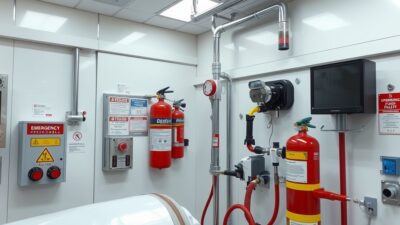
Clinical hard chambers at hospitals and accredited facilities have the strongest safety record, with trained technicians, emergency protocols, and fire suppression systems. The oxygen-enriched environment requires strict prohibition of flammable items inside the chamber.
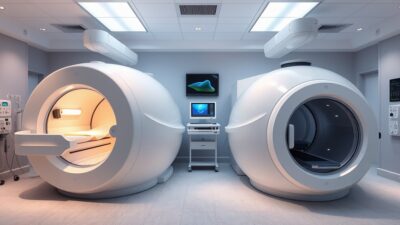
Home soft chambers operating at 1.3 ATA have lower barotrauma and oxygen toxicity risk because of the lower pressure, but unsupervised use removes the clinical safety net. The main risks are improper equalization technique and fire hazard from oxygen concentrators. The FDA’s consumer communication warns that HBOT marketed for unproven, off-label uses in non-accredited settings can carry avoidable risks, and urges patients to confirm a facility follows manufacturer instructions and fire-safety measures.7
Who should not have HBOT?
A small number of conditions are absolute or strong relative contraindications:
- Untreated pneumothorax (collapsed lung), the one true absolute contraindication.
- Certain chemotherapy agents (doxorubicin, bleomycin, cisplatin).
- Uncontrolled high fever.
- Active seizure disorder (a relative contraindication at higher pressures).
Proper screening for these before a course is the single biggest driver of HBOT’s strong safety record. When contraindications are respected and equalization is managed, the therapy’s serious-event rate stays in the range documented across more than a million treatments.1
Sources
- Jokinen-Gordon H, Barry R, Watson B, Covington DS. A retrospective analysis of adverse events in HBO therapy (2012-2015): lessons learned from 1.5 million treatments. Advances in Skin & Wound Care. 2017. DOI: 10.1097/01.ASW.0000508712.86959.c9. PMID: 28198743.
- Hadanny A, Meir O, Bechor Y, et al. The safety of hyperbaric oxygen treatment: retrospective analysis in 2,334 patients. Undersea & Hyperbaric Medicine. 2016. PMID: 27265988.
- Zhang Y, Zhou Y, Jia Y, et al. Adverse effects of hyperbaric oxygen therapy: a systematic review and meta-analysis of 24 RCTs. Frontiers in Medicine. 2023. DOI: 10.3389/fmed.2023.1160774.
- Voigt A, Laspro M, Thys E, et al. Systematic review of otologic adverse events in hyperbaric oxygen therapy (54 studies, 18,284 patients). Undersea & Hyperbaric Medicine. 2025. DOI: 10.22462/736.
- Plafki C, Peters P, Almeling M, et al. Complications and side effects of hyperbaric oxygen therapy. Aviation, Space & Environmental Medicine. 2000. PMID: 10685584.
- Mirasoglu B, Cakkalkurt A, Cimsit M. Complication of hyperbaric oxygen therapy: symptomatic middle ear and cranial sinus barotrauma. Journal of Istanbul Faculty of Medicine. 2017. DOI: 10.18017/IUITFD.308489.
- U.S. Food and Drug Administration. Hyperbaric oxygen therapy: don’t be misled. Consumer safety communication. fda.gov
- Undersea and Hyperbaric Medical Society. Indications for hyperbaric oxygen therapy and safety guidance. uhms.org
Medical Disclaimer
The content on BaricBoost.com is for informational purposes only and is not intended as a substitute for professional medical advice, diagnosis, or treatment. Always seek the advice of your physician or other qualified health provider with any questions you may have regarding a medical condition. Never disregard professional medical advice or delay in seeking it because of something you have read on this website.

Author
Seph Fontane Pennock is the founder of BaricBoost.com and Regenerated.com, a clinic directory for regenerative medicine serving 10,000+ providers across the United States. He previously built and sold PositivePsychology.com, which grew to 19 million users and became the largest evidence-based positive psychology resource on the web. Seph brings direct experience as an HBOT patient, having completed protocols at clinics across three continents while navigating mold illness, systemic inflammation, and autoimmune conditions. His treatment journey includes hyperbaric oxygen therapy, peptide protocols, NAD+ therapy, and consultations with specialists from Dubai to Cape Town to Mexico. This combination of entrepreneurial track record and lived patient experience shapes everything published on BaricBoost.com. Every article is grounded in peer-reviewed research, informed by real clinical encounters, and written for patients making high-stakes treatment decisions. Seph's focus is on bringing transparency, scientific rigor, and practical guidance to the hyperbaric oxygen therapy space.