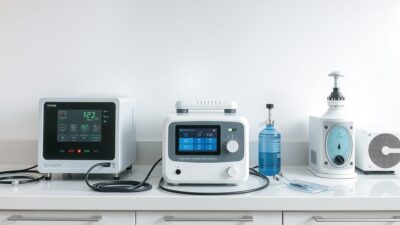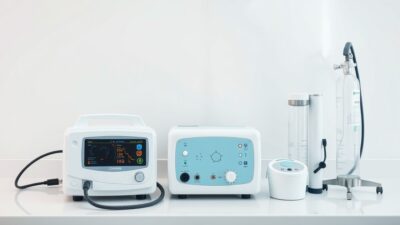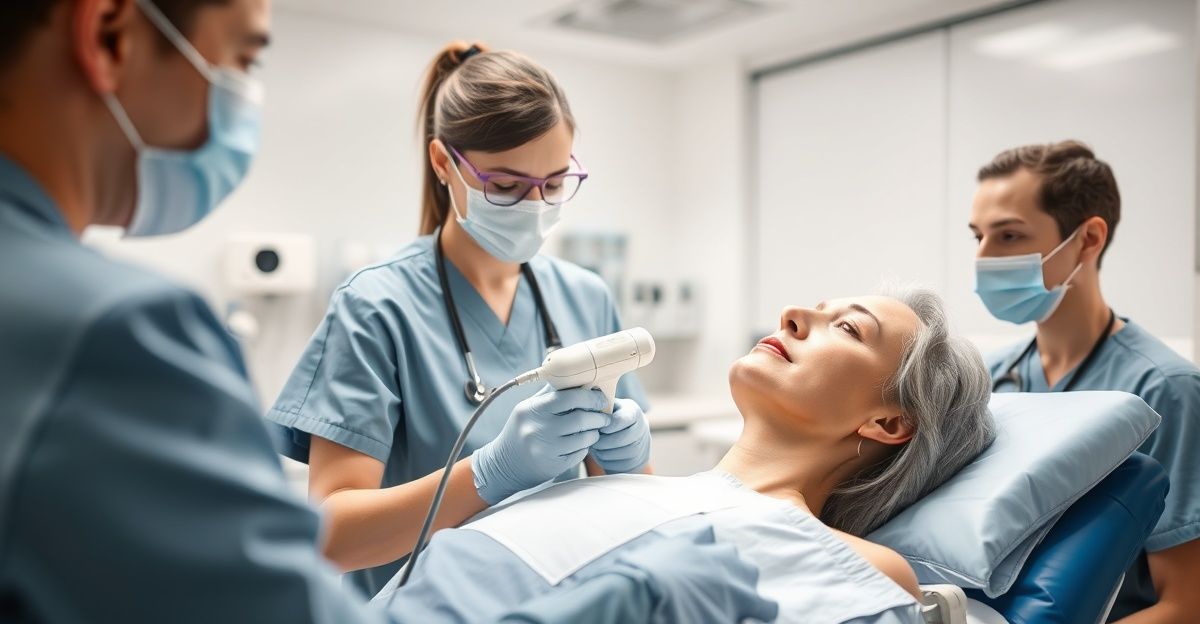
Oxygen is not just something wounds need to survive. It is the raw material for nearly every step of wound healing, from killing bacteria to building new blood vessels to laying down collagen. When a wound does not get enough oxygen, healing stalls. Oxygen therapy delivers concentrated oxygen to the wound bed to restart and accelerate the repair process.
This is not alternative medicine. Hyperbaric oxygen therapy for wound healing is one of only 14 FDA-cleared indications for HBOT. Insurance covers it for qualifying wounds. It is used in major hospital wound care centers across the country.
But oxygen therapy for wounds goes beyond hyperbaric chambers. Topical oxygen devices, normobaric oxygen, and newer portable systems are expanding who can benefit and where treatment can happen. Here is how each works, what the evidence shows, and when oxygen therapy makes sense for wound care.
Key Takeaways
- Collagen synthesis, angiogenesis, and bacterial killing are all oxygen-dependent processes
- HBOT is FDA-cleared for 14 wound-related conditions, with strongest evidence for diabetic foot ulcers
- The TWO2 trial showed topical oxygen healed 41.7% of diabetic foot ulcers vs 13.5% with sham at 12 weeks
- Insurance typically covers HBOT for qualifying chronic wounds after 30 days of failed standard care
- Topical oxygen devices now allow home treatment for some wound types
Why Oxygen Matters for Wound Healing
Wound healing is an oxygen-hungry process. Every major phase depends on adequate oxygen supply.
Bacterial Killing
White blood cells (neutrophils) use a process called the “oxidative burst” to destroy bacteria at the wound site. This process requires molecular oxygen. In hypoxic wounds, neutrophils cannot generate the reactive oxygen species needed to kill bacteria, leading to chronic infection.1
Collagen Synthesis
Collagen is the structural protein that forms the scaffold for new tissue. Building collagen requires oxygen at two critical steps: the hydroxylation of proline and lysine residues, and the cross-linking that gives collagen its strength. Without adequate oxygen, collagen production slows or stops, and the collagen that does form is structurally weak.1
Angiogenesis
New blood vessel formation (angiogenesis) is essential for wound repair. The process is paradoxical: hypoxia at the wound center triggers the signal for new blood vessel growth (through VEGF and other growth factors), but the actual construction of new vessels requires adequate oxygen in the surrounding tissue. HBOT stimulates this process by elevating Hypoxia Inducible Factor-1 (HIF-1) through an oxygen-independent pathway, which then drives VEGF production and new vessel formation.2
Cell Proliferation
Fibroblasts (the cells that produce collagen and extracellular matrix) and epithelial cells both require oxygen to proliferate. Hyperoxia stimulates fibroblast replication, promotes extracellular matrix deposition, and accelerates the transition from the inflammatory phase to the proliferative phase of healing.2
“Oxygen availability directly influences fibroblast proliferation and collagen synthesis, both of which are essential for structural wound repair.”
Heyboer et al., International Wound Journal, 2017
Types of Oxygen Therapy for Wounds
Three main approaches deliver oxygen to wounds, each through a different mechanism.
Hyperbaric Oxygen Therapy (HBOT)
HBOT places the entire patient in a pressurized chamber breathing 100% oxygen at 1.5-3.0 atmospheres absolute (ATA). This dissolves oxygen directly into the blood plasma at levels 10-15 times higher than normal, delivering it systemically to all tissues, including the wound bed.
Sessions last 60-90 minutes. A typical wound care protocol involves 20-40 sessions, five days per week. HBOT is the most studied form of oxygen therapy for wounds and carries the strongest evidence base.
For a detailed look at how hyperbaric chambers support wound repair, see our guide to hyperbaric chamber for wound healing.
Topical Oxygen Therapy (TOT)
Topical oxygen therapy delivers oxygen directly to the wound surface through a sealed dressing or chamber placed over the wound. The oxygen is delivered at or near normal atmospheric pressure, targeting the wound locally rather than systemically.
There are two main types of topical oxygen:
- Continuous diffusion of oxygen (CDO) – Small, portable devices that deliver a steady low flow of oxygen to the wound 24/7
- Cyclical pressurized topical oxygen (TWO2) – Delivers oxygen at slightly elevated pressure in cycles, typically during at-home treatment sessions
For more on this approach, read our overview of topical oxygen therapy.
Normobaric Oxygen Therapy
Normobaric oxygen therapy involves breathing high-concentration oxygen at normal atmospheric pressure (1 ATA) through a mask. While this increases blood oxygen levels, the effect is far less dramatic than HBOT because the lack of pressure limits how much oxygen dissolves into plasma.
Normobaric oxygen is sometimes used as a more accessible alternative when HBOT is not available, but the evidence for wound healing specifically at normal pressure is weaker.
Evidence by Wound Type
The strength of evidence for oxygen therapy varies significantly by wound type.
Diabetic Foot Ulcers (Strongest Evidence)
Diabetic foot ulcers have the most robust evidence for oxygen therapy, both HBOT and topical.
HBOT: A systematic review and meta-analysis of controlled clinical trials found that HBOT was significantly effective in achieving complete healing of diabetic foot ulcers and reducing major amputation rates.3 A separate meta-analysis found that adjuvant HBOT improves major amputation rates in patients with diabetic foot ulcers with peripheral arterial disease, though the effect on wound healing itself was less clear in this subgroup.4
Topical oxygen: The landmark TWO2 study was a multinational, multicenter, randomized, double-blinded, placebo-controlled trial. At 12 weeks, 41.7% of ulcers in the active topical oxygen arm achieved complete closure compared with 13.5% in the sham arm (odds ratio 4.57, P = 0.010). At 12 months, 56% of active arm ulcers were closed compared with 27% in the sham arm.5
A meta-analysis of topical oxygen therapy found it increased the likelihood of healing by 59% within 12 weeks in diabetic foot ulcers.6
Venous Leg Ulcers
Evidence for HBOT in venous leg ulcers is more limited than for diabetic wounds. Some studies show benefit, but the data is not as strong. Topical oxygen may play a role in venous ulcers that have failed compression therapy, though large trials are needed.
Pressure Injuries
Pressure injuries (bedsores) in patients with limited mobility represent a significant clinical challenge. Some case series report benefit from HBOT, particularly in Stage III and IV pressure injuries, but high-quality randomized data is limited.
Surgical and Traumatic Wounds
HBOT is FDA-cleared for several surgical and traumatic wound categories, including compromised skin grafts and flaps, crush injuries, and acute traumatic ischemias. The evidence here comes from decades of clinical use and multiple studies.
Radiation-Damaged Tissue
Radiation-induced tissue damage (soft tissue radionecrosis and osteoradionecrosis) is one of the strongest HBOT indications. HBOT stimulates angiogenesis in radiation-damaged tissue, partially reversing the chronic hypoxia that radiation creates.
HBOT vs Topical Oxygen for Wound Healing
| Factor | HBOT | Topical Oxygen |
|---|---|---|
| Delivery | Systemic (whole body) | Local (wound surface only) |
| Pressure | 1.5-3.0 ATA | ~1.0-1.04 ATA |
| Setting | Hospital or clinic only | Clinic or home |
| Session length | 60-90 minutes | Continuous or 90 min/day |
| Total sessions | 20-40 | Daily for 8-12 weeks |
| Evidence quality | Multiple meta-analyses | 1 major RCT (TWO2) + meta-analyses |
| Insurance coverage | Yes (for approved indications) | Varies by device and payer |
| Patient convenience | Low (daily clinic visits) | High (home use possible) |
These approaches are not mutually exclusive. Some wound care centers use both HBOT for systemic oxygenation and topical oxygen for continuous local delivery between HBOT sessions.
When to Consider Oxygen Therapy for Wounds
Oxygen therapy is typically considered when:
- A wound has not healed after 30 days of appropriate standard care
- The wound shows signs of hypoxia (measured by transcutaneous oxygen monitoring, or TCOM)
- The patient has compromised circulation (diabetes, peripheral vascular disease)
- The wound is in radiation-damaged tissue
- There is a threatened skin graft or flap
- Osteomyelitis (bone infection) complicates the wound
TCOM testing is often used to determine whether a patient will respond to HBOT. A wound-adjacent reading below 40 mmHg suggests tissue hypoxia. If the reading rises above 200 mmHg during a test with 100% oxygen, HBOT is likely to help.
Cost and Insurance Coverage
HBOT for wound healing is one of the few oxygen therapies that insurance consistently covers.
| Treatment | Cost per Session | Insurance Coverage |
|---|---|---|
| HBOT (hospital-based) | – | Yes, for approved indications |
| HBOT (independent center) | – | Yes, for approved indications |
| Topical oxygen (home device) | Varies by device | Some payers cover TWO2 |
Medicare and most major insurers cover HBOT for chronic non-healing diabetic wounds of the lower extremity after 30 days of standard care. Coverage for other wound types varies by insurer.
The 2023 update of the International Working Group on the Diabetic Foot guidelines now includes a conditional recommendation supporting topical oxygen therapy use in selected non-healing wounds, which may expand insurance coverage for topical devices.7
FDA-Cleared HBOT Indications for Wound Care
Several of the 14 FDA-cleared indications for HBOT relate directly to wound healing:
- Chronic refractory osteomyelitis
- Compromised skin grafts and flaps
- Crush injuries and acute traumatic ischemias
- Delayed radiation injury (soft tissue and bony necrosis)
- Diabetic wounds of the lower extremity (Wagner grade III or higher)
- Necrotizing soft tissue infections
- Thermal burns
Safety Considerations
HBOT for wound care has a well-established safety profile based on decades of clinical use. Common side effects include:
- Ear pressure/barotrauma – The most common issue, usually managed with equalization techniques
- Temporary myopia – Reversible nearsightedness that resolves after treatment ends
- Claustrophobia – In monoplace chambers
- Oxygen toxicity seizures – Very rare (approximately 1 in 10,000 treatments)
Topical oxygen therapy has an even milder side effect profile since it does not involve pressure changes or systemic oxygen loading.
The Bottom Line
Oxygen therapy for wounds is one of the best-supported applications of medical oxygen. The biological rationale is clear: wound healing is fundamentally an oxygen-dependent process. When wounds are hypoxic, healing fails.
HBOT has the strongest evidence, particularly for diabetic foot ulcers, radiation damage, and compromised grafts. The TWO2 trial has added strong evidence for topical oxygen as a more accessible alternative, especially for home-based wound care.
If you have a chronic wound that has not responded to standard care after 30 days, ask your wound care specialist about oxygen therapy. For diabetic foot ulcers specifically, both HBOT and topical oxygen have data supporting their use. Insurance coverage for HBOT wound care is generally good for qualifying conditions, making it one of the most accessible clinical applications of oxygen therapy.
Sources
- Schreml S et al. Oxygen in acute and chronic wound healing. Br J Dermatol. 2010;163(2):257-268. doi: 10.1111/j.1365-2133.2010.09804.x
- Thom SR. Hyperbaric oxygen: its mechanisms and efficacy. Plast Reconstr Surg. 2011;127(Suppl 1):131S-141S. doi: 10.1097/PRS.0b013e3181fbe2bf
- Shenoy A et al. Efficacy of hyperbaric oxygen therapy for diabetic foot ulcer, a systematic review and meta-analysis of controlled clinical trials. Sci Rep. 2021;11:2189. doi: 10.1038/s41598-021-81886-1
- Defined systematic review on HBOT for diabetic foot ulcers with arterial insufficiency. J Vasc Surg. 2020;71(2):682-692.e1. doi: 10.1016/j.jvs.2019.07.082
- Frykberg RG et al. A multinational, multicenter, randomized, double-blinded, placebo-controlled trial to evaluate the efficacy of cyclical topical wound oxygen (TWO2) therapy in the treatment of chronic diabetic foot ulcers: The TWO2 study. Diabetes Care. 2020;43(3):616-624. doi: 10.2337/dc19-0476
- Thanigaimani S et al. Topical oxygen therapy for healing diabetic foot ulcers: A systematic review and meta-analysis of randomised control trials. J Foot Ankle Res. 2022;15:44. doi: 10.1016/j.jtv.2022.100455
- Bus SA et al. International Working Group on the Diabetic Foot guidelines on interventions to enhance healing of foot ulcers in persons with diabetes (IWGDF 2023 update). Diabetes Metab Res Rev. 2024;40(3):e3644. doi: 10.1002/dmrr.3644
Medical Disclaimer
The content on BaricBoost.com is for informational purposes only and is not intended as a substitute for professional medical advice, diagnosis, or treatment. Always seek the advice of your physician or other qualified health provider with any questions you may have regarding a medical condition. Never disregard professional medical advice or delay in seeking it because of something you have read on this website.

Author
Seph Fontane Pennock is the founder of BaricBoost.com and Regenerated.com, a clinic directory for regenerative medicine serving 10,000+ providers across the United States. He previously built and sold PositivePsychology.com, which grew to 19 million users and became the largest evidence-based positive psychology resource on the web. Seph brings direct experience as an HBOT patient, having completed protocols at clinics across three continents while navigating mold illness, systemic inflammation, and autoimmune conditions. His treatment journey includes hyperbaric oxygen therapy, peptide protocols, NAD+ therapy, and consultations with specialists from Dubai to Cape Town to Mexico. This combination of entrepreneurial track record and lived patient experience shapes everything published on BaricBoost.com. Every article is grounded in peer-reviewed research, informed by real clinical encounters, and written for patients making high-stakes treatment decisions. Seph's focus is on bringing transparency, scientific rigor, and practical guidance to the hyperbaric oxygen therapy space.