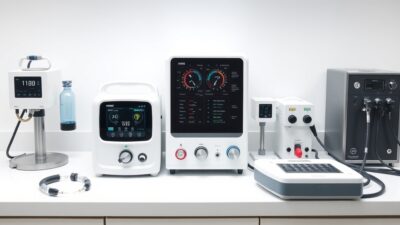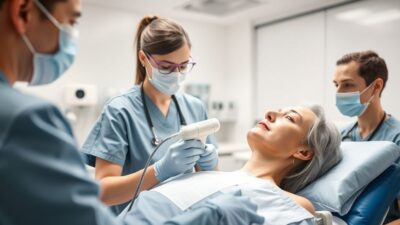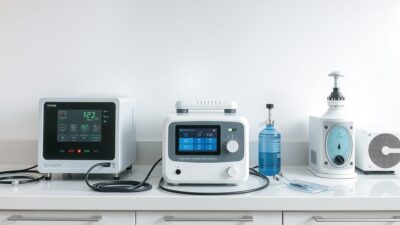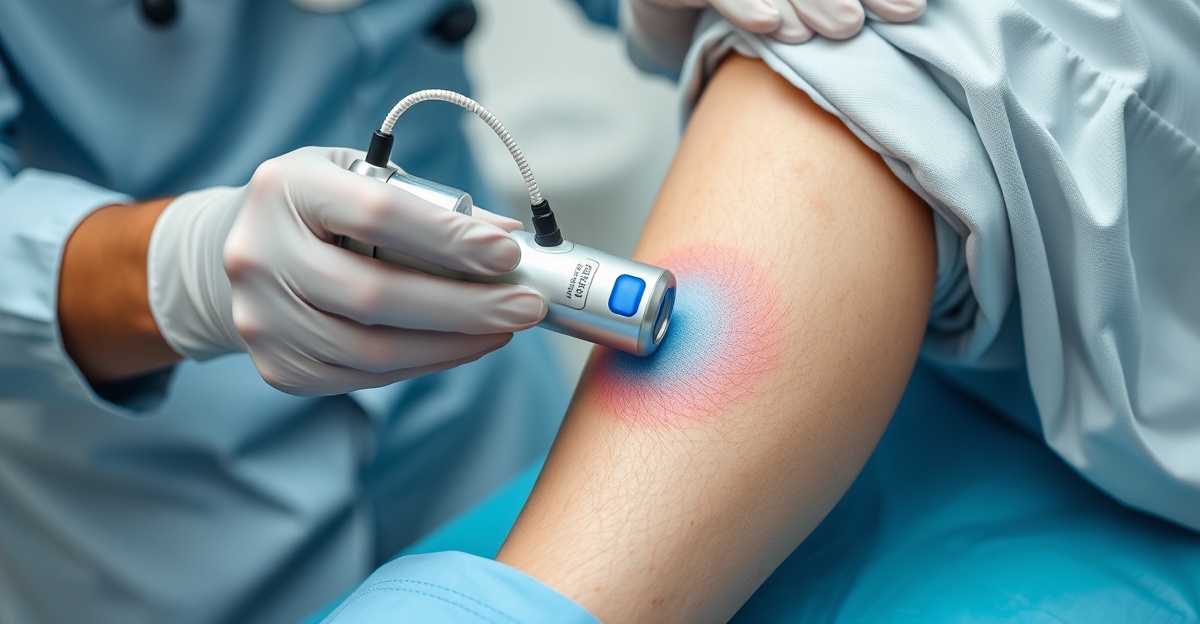
Topical oxygen therapy (TOT) delivers pure oxygen directly to a wound’s surface through portable devices, promoting healing in chronic wounds that have stalled with standard care. Unlike hyperbaric oxygen therapy (HBOT), which requires a pressurized chamber and treats the entire body, topical oxygen targets the wound bed specifically. Clinical trials show it can nearly double healing rates in diabetic foot ulcers.
Key Takeaways
- Topical oxygen therapy delivers concentrated oxygen directly to the wound surface, not through a pressurized chamber
- The TWO2 randomized controlled trial showed a 41.7% closure rate vs 13.5% for sham in chronic diabetic foot ulcers
- Leading devices include TWO2, NATROX, and TransCu O2, each using different delivery mechanisms
- Cost ranges from $50-200 per session or $200-600/month for continuous-use home devices
- TOT works best for chronic wounds that have not responded to 4+ weeks of standard wound care
- It is not a replacement for HBOT in conditions requiring systemic oxygenation
How Topical Oxygen Therapy Differs from HBOT
The distinction matters because these are fundamentally different treatments. Hyperbaric oxygen therapy places the entire patient inside a pressurized chamber breathing 100% oxygen at 1.5 to 3.0 ATA. Oxygen dissolves into the blood plasma and reaches tissues systemically. Sessions last 60-90 minutes and require visiting a clinic.
Topical oxygen therapy takes the opposite approach. A small, portable device delivers concentrated oxygen directly to the wound surface at or near atmospheric pressure. The oxygen diffuses into the wound bed through the moist wound environment. No chamber, no pressurization, no full-body treatment. Some devices are worn continuously for days at a time.
| Feature | Topical Oxygen Therapy | Hyperbaric Oxygen Therapy |
|---|---|---|
| Delivery method | Direct to wound surface | Systemic via pressurized chamber |
| Pressure | Near atmospheric (1.0-1.03 ATA) | 1.5-3.0 ATA |
| Treatment duration | Continuous or 90-min cycles | 60-90 min per session |
| Location | Home or clinic | Clinic or hospital |
| Best for | Chronic surface wounds | Deep tissue injuries, radiation damage, systemic conditions |
| Cost per session | $50-200 | $200-500 |
How Topical Oxygen Heals Wounds
Chronic wounds stall for many reasons, but oxygen deprivation is one of the most common. Wound healing is an oxygen-hungry process. Fibroblasts need oxygen to produce collagen. White blood cells need it to generate the reactive oxygen species that kill bacteria. Endothelial cells need it to build new blood vessels.
When a wound doesn’t have enough oxygen, this entire cascade slows down or stops. Topical oxygen therapy addresses this directly by flooding the wound surface with concentrated O2.
The oxygen diffuses through the moist wound bed into the underlying tissue. Research shows that topically applied oxygen penetrates approximately 700 micrometers into tissue, enough to reach the critical zone where new blood vessels and collagen scaffolding are being built.1
This mechanism is different from HBOT, which raises systemic blood oxygen levels. TOT works locally. It’s a targeted approach for wounds where the local oxygen supply is the bottleneck.
Topical Oxygen Therapy Devices
TWO2 (Topical Wound Oxygen)
The TWO2 system is the most clinically studied topical oxygen device. It uses cyclical pressurization to deliver oxygen to the wound through a disposable, sealed dressing. The device cycles between slight positive pressure and ambient pressure, which helps push oxygen into the wound bed while preventing fluid buildup.
The TWO2 device was the subject of the landmark randomized controlled trial by Frykberg et al. (2020) that demonstrated its superiority over sham treatment in diabetic foot ulcers.2
NATROX
NATROX takes a different approach. It uses a small, battery-powered electrochemical generator that splits water vapor in ambient air to produce pure, humidified oxygen. This oxygen flows continuously through a thin delivery system to an “oxygen distribution element” (ODE) placed directly over the wound.
The OTONAL trial evaluated NATROX in 20 patients with chronic diabetic foot ulcers of more than 3 months’ duration. After 12 weeks, wound closure of greater than 75% was observed in 14 of 20 patients (70%).3
NATROX is designed for continuous wear. Patients keep the device on 24/7, changing the ODE during regular dressing changes. The generator is about the size of a smartphone and clips to clothing or a belt.
TransCu O2
TransCu O2 is a transdermal continuous oxygen therapy system. It generates oxygen electrochemically and delivers it through a thin, flexible membrane that sits directly on the wound. Like NATROX, it’s designed for continuous use between dressing changes.
“The active TWO2 arm showed a closure rate of 41.7% compared with 13.5% for sham, producing an odds ratio of 4.57.”
Frykberg et al., Diabetes Care, 2020
Clinical Evidence for Topical Oxygen Therapy
The TWO2 Trial (Frykberg et al., 2020)
This is the strongest piece of evidence for topical oxygen therapy. It was a multinational, multicenter, randomized, double-blinded, placebo-controlled trial, the gold standard study design. Patients with chronic diabetic foot ulcers were randomized to either active TWO2 therapy or sham control, both in addition to optimal standard of care.2
At the first analysis point, the active TWO2 arm showed a closure rate of 41.7% compared with 13.5% for sham, producing an odds ratio of 4.57 (97.8% CI: 1.19-17.57, P = 0.010). At 12 months, 56% of ulcers in the TWO2 group were closed compared with 27% in the sham group (P = 0.013).
These are significant numbers. The trial was stopped early at its first pre-planned analysis because the results were so clearly positive that continuing the sham arm would have been ethically questionable.
Meta-Analyses
Carter et al. (2023) conducted a systematic review and meta-analysis pooling data from six RCTs involving 530 patients with diabetic foot ulcers. The pooled results showed a risk ratio of 1.59 (95% CI: 1.07-2.37, P = 0.021) favoring topical oxygen therapy.4
Putri et al. (2024) published an updated meta-analysis including both RCTs and observational studies. The use of topical oxygen significantly increased the number of healed wounds (RR = 1.77; 95% CI: 1.18-2.64; P = 0.005).5
Sun et al. (2022) found similar results in their meta-analysis, with the TOT group showing a higher healing rate compared to controls (RR = 1.63, 95% CI: 1.33-2.00).6
When to Use Topical Oxygen vs. HBOT
These therapies serve different patient populations, and choosing the right one matters.
Topical oxygen is better suited for:
- Chronic surface wounds (diabetic foot ulcers, venous leg ulcers, pressure injuries)
- Patients who cannot tolerate HBOT (claustrophobia, ear/sinus issues, inability to travel daily)
- Wounds that need continuous oxygen delivery between clinic visits
- Outpatient or home-based wound management
HBOT is better suited for:
- Deep tissue injuries requiring systemic oxygenation
- Radiation tissue damage (osteoradionecrosis, radiation cystitis)
- Crush injuries and compromised surgical grafts
- Conditions where the entire body benefits from supraphysiologic oxygen levels
Some wound care specialists use both: HBOT for systemic oxygenation and TOT for continuous local delivery between chamber sessions. This combined approach is not yet well-studied in clinical trials but is used in clinical practice.
Cost of Topical Oxygen Therapy
| Option | Typical Cost | Notes |
|---|---|---|
| In-clinic TOT session | $50-200 per session | Typically 2-3 sessions per week |
| NATROX rental | $200-400/month | Continuous home use, ODE changes at dressing change |
| TWO2 treatment course | $3,000-6,000 total | 12-week protocol, device + disposables |
| TransCu O2 | $200-600/month | Continuous home use |
Insurance coverage varies. Medicare has specific coverage criteria for certain topical oxygen devices when used for diabetic foot ulcers that meet defined chronicity and severity thresholds. Private insurance coverage is inconsistent. Many wound care clinics handle insurance authorization as part of their service.
When Topical Oxygen Is Appropriate
Topical oxygen therapy is typically considered when a chronic wound has not responded to at least 4 weeks of standard wound care including offloading, moisture management, infection control, and nutritional optimization. It is not a first-line treatment. It’s an escalation option for wounds that are stalling.
The strongest evidence supports its use for diabetic foot ulcers. Evidence for venous leg ulcers, pressure injuries, and surgical wound dehiscence exists but is less robust, consisting mainly of case series and observational studies rather than randomized trials.
If you’re managing a chronic wound that isn’t responding to standard care, ask your wound care specialist whether topical oxygen therapy is appropriate for your specific situation. The clinical evidence is strong enough to justify a conversation, particularly for diabetic foot ulcers.
Sources
- Sýkorová A, et al. Topical oxygen therapy and singlet oxygen in wound healing: A scoping review. Int Wound J. 2024;21(5):e14846. doi:10.1111/iwj.14846
- Frykberg RG, et al. A Multinational, Multicenter, Randomized, Double-Blinded, Placebo-Controlled Trial to Evaluate the Efficacy of Cyclical Topical Wound Oxygen (TWO2) Therapy in the Treatment of Chronic Diabetic Foot Ulcers: The TWO2 Study. Diabetes Care. 2020;43(3):616-624. doi:10.2337/dc19-0476
- Tang TY, et al. An Observational Clinical Trial Examining the Effect of Topical Oxygen Therapy (Natrox) on the Rates of Healing of Chronic Diabetic Foot Ulcers (OTONAL Trial). Int J Low Extrem Wounds. 2024;23(2):256-265. doi:10.1177/15347346211053694
- Carter MJ, Frykberg RG, Oropallo A, Sen CK, Armstrong DG, Nair HKR, Serena TE. Efficacy of Topical Wound Oxygen Therapy in Healing Chronic Diabetic Foot Ulcers: Systematic Review and Meta-Analysis. Adv Wound Care. 2023;12(4):177-186. doi:10.1089/wound.2022.0041
- Putri NR, et al. The efficacy of topical oxygen therapy for wound healing: A meta-analysis of randomized controlled trials and observational studies. Int Wound J. 2024;21(7):e14960. doi:10.1111/iwj.14960
- Sun X, et al. Efficacy and safety of topical oxygen therapy for diabetic foot ulcers: An updated systematic review and meta-analysis. Int Wound J. 2022;19(8):2200-2209. doi:10.1111/iwj.13830
Medical Disclaimer
The content on BaricBoost.com is for informational purposes only and is not intended as a substitute for professional medical advice, diagnosis, or treatment. Always seek the advice of your physician or other qualified health provider with any questions you may have regarding a medical condition. Never disregard professional medical advice or delay in seeking it because of something you have read on this website.

Author
Seph Fontane Pennock is the founder of BaricBoost.com and Regenerated.com, a clinic directory for regenerative medicine serving 10,000+ providers across the United States. He previously built and sold PositivePsychology.com, which grew to 19 million users and became the largest evidence-based positive psychology resource on the web. Seph brings direct experience as an HBOT patient, having completed protocols at clinics across three continents while navigating mold illness, systemic inflammation, and autoimmune conditions. His treatment journey includes hyperbaric oxygen therapy, peptide protocols, NAD+ therapy, and consultations with specialists from Dubai to Cape Town to Mexico. This combination of entrepreneurial track record and lived patient experience shapes everything published on BaricBoost.com. Every article is grounded in peer-reviewed research, informed by real clinical encounters, and written for patients making high-stakes treatment decisions. Seph's focus is on bringing transparency, scientific rigor, and practical guidance to the hyperbaric oxygen therapy space.