Affiliate Disclosure
This article contains affiliate links. If you purchase through these links, we may earn a commission at no additional cost to you. This does not influence our evaluations or rankings.
A 2.0 ATA hyperbaric chamber is the standard clinical starting pressure for most UHMS-approved indications. It is also the most commonly used pressure in hyperbaric medicine. A 2024 UHMS survey found that 27.1% of members use 2.0 ATA exclusively, and for radiation cystitis, diabetic foot ulcers, and chronic osteomyelitis, 68 to 75% of clinicians selected 2.0 ATA as their preferred pressure (Laspro et al., 2024).
At 2.0 ATA breathing 100% oxygen, arterial oxygen partial pressure reaches roughly 1,400 mmHg, compared with about 100 mmHg breathing room air. That sits above the pressure where tissue oxygen supports wound healing and antimicrobial activity, far above soft chamber levels (1.3 ATA with air), and at the lower end of the clinical range where the evidence base is deepest.
Hyperbaric pressure tiers, defined
Hyperbaric pressure falls into four practical bands. Knowing which band a study or a chamber sits in is the single most useful thing when comparing options.
The four pressure tiers
| Tier | Pressure | Typical use |
|---|---|---|
| Soft | 1.3 ATA | Altitude sickness, home wellness (air) |
| Mild | 1.5 ATA | Off-label neuro and recovery protocols (100% O2 by mask) |
| Standard clinical | 2.0 to 2.4 ATA | Most UHMS-approved indications (100% O2) |
| Emergency | 2.8 to 3.0 ATA | Decompression illness, carbon monoxide poisoning |
What does 2.0 ATA deliver clinically?
2.0 ATA matters clinically because it is the minimum pressure for most UHMS-approved indications, it produces measurably higher tissue oxygen than lower pressures, and it generates fewer adverse events than the higher clinical range of 2.4 to 3.0 ATA. The tissue oxygen data is the clearest evidence.
A study measured transcutaneous oxygen directly in chronic ulcer patients at 1.4 ATA versus 2.0 ATA. Mean TcPO2 was 161 mmHg at 1.4 ATA and 333 mmHg at 2.0 ATA, which is more than double the lower-pressure value (p<0.001). The authors found no evidence that 1.4 ATA benefits chronic ulcer patients (Sack et al., 2024).
Is 2.0 ATA better than 1.5 or 2.4 ATA?
For most standard indications, 2.0 ATA matches higher clinical pressures on outcomes while causing fewer adverse events, which is why it is the default choice. The exceptions run in both directions: emergency conditions call for higher pressures, and mild traumatic brain injury has its strongest evidence at 1.5 ATA.
2.0 ATA versus adjacent pressures
| Comparison | Finding | Source |
|---|---|---|
| 2.0 vs 1.4 ATA, chronic wounds | 2.0 ATA reached 333 mmHg TcPO2 vs 161 mmHg. No benefit demonstrated at 1.4 ATA. | Sack et al. 2024 |
| 2.0 vs 2.4 ATA, radiation cystitis | Similar response rates (72.7% vs 78.3%, p=0.74). 2.0 ATA required more sessions (45 vs 40). | Ajayi et al. 2020 |
| 2.0 vs 2.5 ATA, hemorrhagic radiation cystitis | 2.5 ATA had fewer 1-year hematuria recurrences but more adverse events. Other outcomes comparable. | Soriano et al. 2026 |
| 2.0 ATA vs 1.5 ATA, mTBI | Strongest evidence sits at 1.5 ATA (40 sessions). A higher-pressure 2.4 ATA oxygen trial was negative. | Harch 2022 |
What conditions is 2.0 ATA used for?
The 2024 UHMS member survey shows which conditions clinicians treat at 2.0 ATA versus higher pressures. The pattern favors 2.0 ATA for wound and bone indications and reserves higher pressures for emergencies.
- Diabetic foot ulcers: 68% of clinicians select 2.0 ATA. The standard protocol is 90-minute sessions, 5 days per week, for 30 to 40 sessions. Multiple randomized trials support wound healing at this pressure.
- Chronic refractory osteomyelitis: 75% of clinicians prefer 2.0 ATA. Courses run longer, typically 40 to 60 sessions, reflecting the time bone tissue needs to respond.
- Radiation cystitis: A direct comparison of 2.0 ATA versus 2.4 ATA found similar good-response rates (72.7% vs 78.3%, p=0.74), with the 2.0 ATA group requiring slightly more sessions (Ajayi et al., 2020).
- Delayed soft tissue radiation injury: Most clinicians use 2.0 to 2.4 ATA. A 2026 study comparing 2.0 and 2.5 ATA for hemorrhagic radiation cystitis found fewer hematuria recurrences at 2.5 ATA but more adverse events, with comparable results on other outcomes (Soriano et al., 2026).
- Carbon monoxide poisoning: This is an exception. Most protocols use 2.4 to 3.0 ATA, based on evidence that higher pressures displace carbon monoxide from hemoglobin faster. 2.0 ATA is generally not used here.
Which chambers operate at 2.0 ATA?
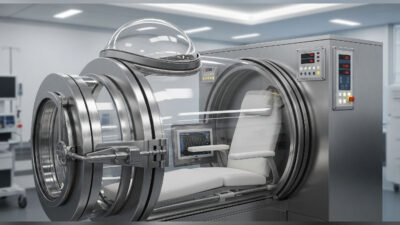
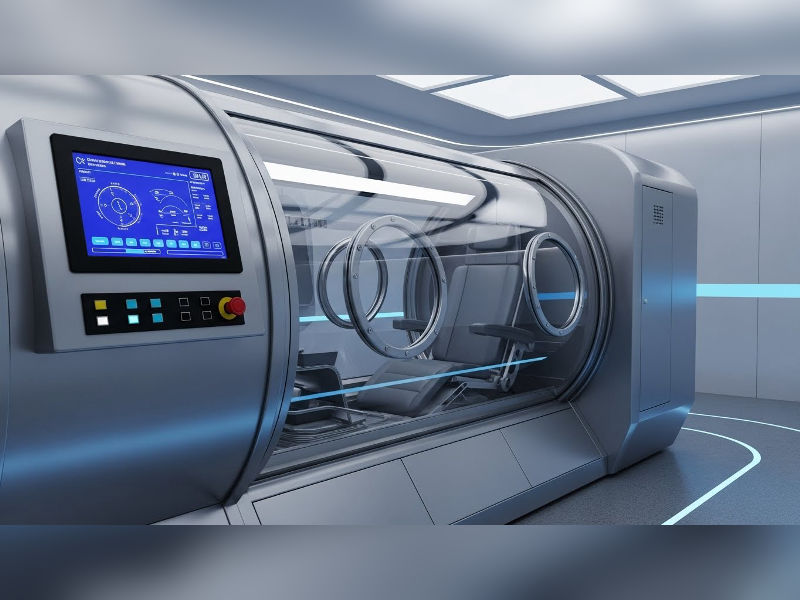
Standard clinical chambers from Perry Baromedical and Sechrist Industries operate across the 2.0 to 3.0 ATA range and remain the reference point for hospital care. For clinics and large home installations seeking 2.0 ATA without full hospital infrastructure, several manufacturers offer chambers rated to that pressure. Prices vary widely by configuration and reseller, so treat these as ranges.
Chambers rated to 2.0 ATA
| Model | Brand | Pressure | Type | Approx. price | Certification |
|---|---|---|---|---|---|
| Space60 | OxyRevo | 1.5 to 2.0 ATA | Hard shell (sitting) | ~$42,999 | CE |
| HP2202 line (incl. Diamond) | Macy-Pan | 2.0 ATA | Hard shell | ~$40,000 to $52,000 | CE |
| Rejuven S200 | Dr Hugo / LANNX | 2.0 ATA (claimed) | Soft shell | ~$8,000 to $12,000 | CE, ISO 13485 |
| Zeugma Monoplace | HPO Tech | Up to 2.4 to 3.0 ATA options | Hard shell aluminum | ~$100,000+ | CE (Medical CE optional) |
| BARA-MED | Perry Baromedical | Up to 3.0 ATA | Clinical monoplace | $100,000+ | FDA, ISO 13485 |
A key distinction is FDA clearance versus CE marking. FDA-cleared chambers have completed the US regulatory process. CE-marked chambers meet European standards but have not been evaluated by the FDA, and a soft shell chamber claiming a continuous 2.0 ATA rating should be checked carefully against its actual achievable pressure and certification before purchase. For personal use in the US both are legally purchasable, but hospital-grade chambers from Perry Baromedical and Sechrist remain the clinical standard. For home options across pressures, see the best hyperbaric chamber for home use guide.
What are the side effects at 2.0 ATA?
A 2024 UHMS survey found the most common adverse events across clinical pressures were temporary myopia (24.4%), ear barotrauma (14.9%), and confinement anxiety (11.5%) (Laspro et al., 2024). These are dose-dependent, meaning they rise with pressure and treatment time, so their rates at 2.0 ATA are lower than at 2.4 ATA and above.
Oxygen toxicity seizures are rare at clinical pressures and cluster at the higher end. Across the literature the reported incidence runs on the order of 1 to 3 per 10,000 treatments, and it is lower at 2.0 ATA than at 2.4 to 3.0 ATA (Hampson and Atik, 2003). For patients weighing 1.5 ATA against 2.0 ATA, the tissue oxygen difference is large (333 mmHg vs 161 mmHg at the closest studied lower pressure), and most clinicians judge the modest increase in adverse event risk to be justified for conditions that respond to HBOT. See the 1.5 ATA and soft chamber guides for the lower-pressure options, and the hard shell vs soft shell comparison for chamber selection.
Is 2.0 ATA the standard for clinical HBOT?
2.0 ATA is the most commonly used single pressure. In the 2024 UHMS survey, 27.1% of members used 2.0 ATA exclusively (Laspro et al., 2024). Some protocols use 2.4 ATA, particularly for decompression illness and carbon monoxide poisoning. Pressure selection depends on the condition being treated rather than a one-size setting.
Is 2.0 ATA better than 2.4 ATA?
For most wound care and radiation injury indications, direct comparisons show comparable outcomes. In radiation cystitis, 2.0 ATA and 2.4 ATA produced similar response rates (72.7% vs 78.3%, p=0.74), with 2.0 ATA needing slightly more sessions (Ajayi et al., 2020). A separate 2026 study found more adverse events at 2.5 ATA than 2.0 ATA. Higher pressures are reserved for emergencies.
Can I get a 2.0 ATA chamber for home use?
Yes. The OxyRevo Space60, Dr Hugo Rejuven S200, and Macy-Pan HP2202 line all reach or claim 2.0 ATA. None are FDA-cleared, and CE certification applies to EU markets rather than the US. A soft shell unit advertising a continuous 2.0 ATA rating deserves extra scrutiny, since soft chambers at that pressure are uncommon. Confirm the achievable pressure and certification before buying.
Sources
- Laspro M, Wei LW, Brydges HT, Gorenstein SA, Huang ET, Chiu ES. Hyperbaric oxygen therapy regimens, treated conditions, and adverse effect profile: an Undersea and Hyperbaric Medical Society survey study. Undersea Hyperb Med. 2024;51(4):369-376. PMID 39821765
- Sack RA, Pikkel YY, Shemy OL, Ramon Y, Ullmann Y, Zeltzer AA. Transcutaneous oximetry values in chronic ulcer patients during hyperbaric treatment at 1.4 ATA compared to 2 ATA. Undersea Hyperb Med. 2024;51(1):1-5. PMID 38615347
- Ajayi OD, Gaskill Z, Kelly M, Logue CJ, Hendricksen SM. Comparison of two hyperbaric oxygen regimens (2.0 vs 2.4 ATA) in radiation cystitis. Undersea Hyperb Med. 2020;47(4):581-589. PMID 33227834
- Soriano VH, Laspro M, Lee WY, et al. Outcomes of hyperbaric oxygen therapy at 2.0 versus 2.5 ATA for hemorrhagic radiation cystitis. Neurourol Urodyn. 2026;45(3):446-452. PMID 41603214
- Harch PG. Systematic review and dosage analysis: hyperbaric oxygen therapy efficacy in mild traumatic brain injury persistent postconcussion syndrome. Front Neurol. 2022;13:815056. doi:10.3389/fneur.2022.815056. PMID 35370898
- Hampson NB, Atik D. Central nervous system oxygen toxicity during routine hyperbaric oxygen therapy. Undersea Hyperb Med. 2003;30(2):147-153. PMID 12964858
Medical Disclaimer
The content on BaricBoost.com is for informational purposes only and is not intended as a substitute for professional medical advice, diagnosis, or treatment. Always seek the advice of your physician or other qualified health provider with any questions you may have regarding a medical condition. Never disregard professional medical advice or delay in seeking it because of something you have read on this website.

Author
Seph Fontane Pennock is the founder of BaricBoost.com and Regenerated.com, a clinic directory for regenerative medicine serving 10,000+ providers across the United States. He previously built and sold PositivePsychology.com, which grew to 19 million users and became the largest evidence-based positive psychology resource on the web. Seph brings direct experience as an HBOT patient, having completed protocols at clinics across three continents while navigating mold illness, systemic inflammation, and autoimmune conditions. His treatment journey includes hyperbaric oxygen therapy, peptide protocols, NAD+ therapy, and consultations with specialists from Dubai to Cape Town to Mexico. This combination of entrepreneurial track record and lived patient experience shapes everything published on BaricBoost.com. Every article is grounded in peer-reviewed research, informed by real clinical encounters, and written for patients making high-stakes treatment decisions. Seph's focus is on bringing transparency, scientific rigor, and practical guidance to the hyperbaric oxygen therapy space.
Why Trust Our Evaluations
Our rankings are based on hands-on testing, published clinical data, and verified manufacturer specifications. We apply the same criteria to every product regardless of affiliate status. Editorial Process · Evaluation Methodology