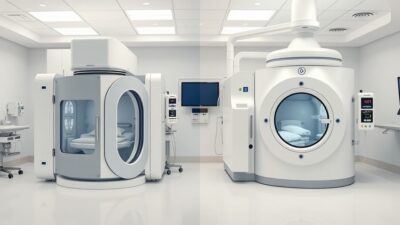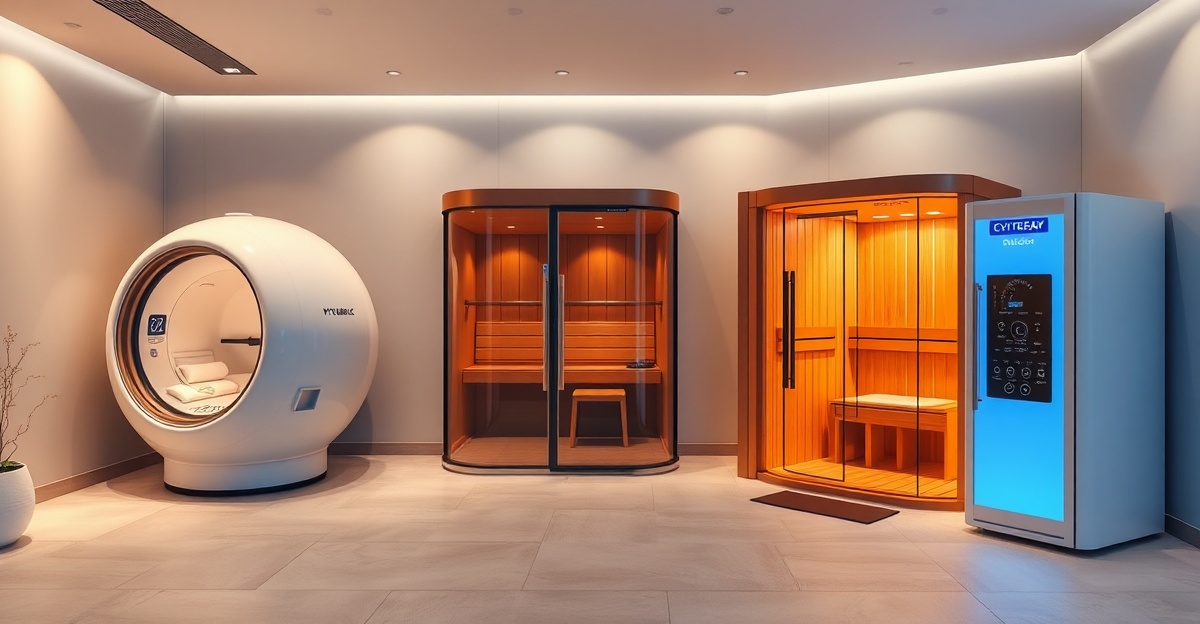
If you are exploring alternatives to hyperbaric oxygen therapy (HBOT), several options are worth considering, including exercise with oxygen therapy (EWOT), red light therapy, ozone therapy, cryotherapy, and IV oxygen therapy. Each works through a different mechanism, and some overlap with HBOT for inflammation, tissue repair, and recovery. HBOT remains the most thoroughly researched oxygen-based therapy, with FDA clearance for 14 medical conditions. The best choice depends on your health goals, budget, and access to equipment.
One point frames every comparison below: no alternative on this list replicates HBOT’s core mechanism. Only pressurized oxygen dissolves oxygen directly into blood plasma at 10 to 15 times normal levels, reaching tissue that red blood cells cannot easily supply. The alternatives work through different pathways (light, ozone chemistry, cold, or exercise-driven circulation) and are best judged on their own evidence rather than as substitutes for that mechanism.
EWOT (Exercise With Oxygen Therapy)
EWOT involves breathing high-concentration oxygen (typically 90 to 95%) through a mask while exercising, usually on a stationary bike or treadmill. Sessions last about 15 minutes, and the goal is to increase oxygen delivery to tissue by combining supplemental oxygen with the elevated heart rate and circulation that exercise provides.
How EWOT Compares to HBOT
The core difference is pressure. HBOT dissolves oxygen into plasma, cerebrospinal fluid, and tissue under pressure, reaching areas that red blood cells cannot easily access. EWOT relies on normal atmospheric pressure and uses exercise-driven circulation to enhance oxygen delivery. EWOT can raise oxygen saturation in well-perfused tissue, but it does not achieve the deep tissue oxygen penetration that pressurized HBOT provides.1 This distinction also comes up in our CVAC pod vs hyperbaric chamber comparison.
EWOT is significantly more affordable. A home EWOT system typically costs $1,500 to $4,000 as a one-time purchase, compared with HBOT session costs of $150 to $400 per session or $15,000 or more for a home hyperbaric chamber. For people focused on general fitness, energy, and cardiovascular health, EWOT is a practical option. For conditions involving compromised blood flow, non-healing wounds, or neurological tissue, HBOT’s pressure-driven oxygen delivery offers something EWOT cannot replicate.
The evidence base for EWOT is very limited. No published randomized controlled trial has validated the specific claims of commercial EWOT products; the supporting literature comes from general supplemental-oxygen research in COPD patients rather than from EWOT products themselves. HBOT, by contrast, has decades of clinical data across multiple specialties. For a detailed side-by-side breakdown, see our full EWOT vs HBOT comparison.
Red Light Therapy (Photobiomodulation)
Red light therapy, also called photobiomodulation (PBM), uses specific wavelengths of red and near-infrared light (typically 630 to 850 nm) to stimulate cellular energy production. The light is absorbed by cytochrome c oxidase in the mitochondria, which supports ATP production, reduces oxidative stress, and modulates inflammation. Meta-analyses across dozens of RCTs report benefits for skin wounds, pain reduction, and recovery.
How It Compares to HBOT
Both HBOT and red light therapy target mitochondrial function and inflammation, but through different pathways. HBOT increases the raw supply of oxygen available to cells. Red light therapy optimizes how cells use the oxygen they already have. This distinction matters, because they address different bottlenecks in the cellular energy chain.
For wound healing, both have published evidence. HBOT is FDA-cleared for specific wound types (diabetic foot ulcers, compromised skin grafts, radiation tissue damage), while red light therapy has a growing body of research on superficial wound healing and skin repair.
For pain and inflammation, red light therapy has shown results in osteoarthritis, tendinopathy, and musculoskeletal pain. HBOT’s anti-inflammatory effects tend to be more systemic, making it better suited to conditions involving deep tissue or widespread inflammation.
Red light therapy panels for home use range from $300 to $2,000. Sessions are short (10 to 20 minutes), require no supervision, and carry minimal risk. Some practitioners use red light therapy and HBOT together, since their mechanisms are complementary rather than competing.
Ozone Therapy
Ozone therapy introduces ozone (O3), a molecule of three oxygen atoms, into the body through various methods: IV infusion via major autohemotherapy, rectal or vaginal insufflation, or direct injection into joints. The ozone reacts with biological molecules to produce secondary messengers called ozonides, which trigger antioxidant responses, alter oxygen metabolism, and modulate the immune system.
How It Compares to HBOT
Both ozone therapy and HBOT center on oxygen, but their mechanisms differ fundamentally. HBOT delivers molecular oxygen (O2) under pressure to saturate tissue. Ozone therapy uses a reactive form of oxygen to trigger adaptive stress responses. Fitzpatrick et al. (2018), a systematic review of 9 RCTs (n=453), found ozone significantly improved chronic wound closure but offered no conclusive evidence of superiority over standard care.2 In the only head-to-head human trial against HBOT (Pasek et al., 2023, venous leg ulcers, n=114), HBOT reduced wound area by 69.7% versus ozone’s 41.3%, while ozone provided significantly better pain relief (VAS change -2.33 vs -0.55 points).4
Ozone therapy has a longer history in European medicine, particularly in Germany. In the US it occupies a regulatory gray area: the FDA has not approved ozone as a medical treatment, and it is not legal in all states.
Cost varies widely. IV ozone sessions typically run $150 to $400 each, while home insufflation units cost $1,000 to $3,000. Unlike HBOT, ozone therapy requires careful administration, because ozone is toxic if inhaled directly.
Mild HBOT (1.3 ATA) vs Medical-Grade HBOT (1.5 to 3.0 ATA)
This is not exactly an alternative to HBOT, but it is one of the most common points of confusion for people researching hyperbaric therapy. Not all HBOT is the same, and the pressure level changes what the therapy can do.
Key Differences
Mild HBOT, sometimes called soft-chamber HBOT, operates at 1.3 ATA (roughly equivalent to 10 feet underwater). These are the inflatable chambers available for home use and at many wellness centers. They use ambient air or oxygen concentrators and in most cases deliver lower oxygen concentrations than medical-grade systems. For a detailed breakdown, read our home hyperbaric chambers guide.
Medical-grade HBOT operates at 1.5 to 3.0 ATA in hard-shell chambers using 100% medical oxygen. The higher pressure drives significantly more oxygen into plasma and tissue. The FDA-cleared indications for HBOT are all based on research conducted at these higher pressures.
At 1.3 ATA, plasma oxygen levels increase modestly. At 2.0 to 2.4 ATA with 100% oxygen, plasma oxygen levels can increase 10 to 15 times above normal. This is not a subtle difference.5 For serious conditions such as non-healing wounds, radiation injury, or severe infections, medical-grade pressure is what the evidence supports.
Mild HBOT at 1.3 ATA has shown benefits in some studies for general wellness, concussion recovery, and mild cognitive issues. It is also significantly safer, with minimal risk of oxygen toxicity, and far more accessible for home use. For a deeper look at soft chambers, see our guide to mild hyperbaric chambers.
IV Oxygen Therapy
IV oxygen therapy involves infusing small amounts of medical-grade oxygen directly into the bloodstream through an intravenous line. It is sometimes offered at integrative medicine clinics and marketed as a way to boost cellular oxygenation.
How It Differs from HBOT
While both approaches aim to increase blood oxygen levels, the delivery method and evidence base are very different. HBOT raises the ambient pressure around the entire body, which uniformly saturates all tissue. IV oxygen delivers a small, localized dose of oxygen directly into the venous system.
The clinical evidence for IV oxygen therapy is extremely limited. There are very few published studies, and the therapy does not have FDA clearance for any condition. There are also safety concerns: injecting gas directly into the bloodstream carries a risk of air embolism if not performed correctly, which can be life-threatening.
IV oxygen therapy sessions typically cost $100 to $250 each. Given the limited evidence and potential risks, most clinicians who work with oxygen-based therapies consider HBOT the more established and safer option for increasing tissue oxygenation.
Cryotherapy
Whole-body cryotherapy (WBC) exposes the body to extremely cold air (typically -110 to -140 degrees Celsius) for 2 to 4 minutes. The extreme cold triggers vasoconstriction followed by vasodilation, activates anti-inflammatory pathways, and stimulates endorphin release. It is widely used in sports recovery and increasingly offered at wellness centers.
How It Compares to HBOT
Cryotherapy and HBOT overlap mainly in their anti-inflammatory and recovery applications, but they work through opposite mechanisms. HBOT increases oxygen delivery to reduce inflammation and promote tissue repair. Cryotherapy uses cold-induced stress to trigger the body’s own anti-inflammatory and repair responses.
For athletic recovery, both have supporting evidence, though cryotherapy’s evidence is more focused on short-term inflammation and soreness reduction, while HBOT’s research covers deeper tissue repair and longer recovery timelines. Cryotherapy sessions are quick (3 to 5 minutes), widely available, and cost $40 to $80 per session. Some HBOT for athletes protocols pair cryotherapy for acute recovery with HBOT for deeper tissue healing.
Comparison Table: HBOT vs Alternatives
| Therapy | Mechanism | Evidence Level | Typical Cost | FDA Status | Key Source |
|---|---|---|---|---|---|
| HBOT (Medical-Grade) | Pressurized oxygen dissolved into plasma and tissue | Strong (14 FDA-cleared indications, hundreds of RCTs) | $150 to $300/session | Cleared for 14 conditions | UHMS indications, 14th ed. |
| Mild HBOT (1.3 ATA) | Low-pressure oxygen enrichment | Moderate (limited conditions studied) | $75 to $150/session or $5,000 to $15,000 home unit | Cleared as Class II device | Lin 2024 |
| EWOT | High-flow oxygen during exercise at ambient pressure | Limited (no product RCTs; COPD oxygen research only) | $1,500 to $4,000 home system | Not FDA-cleared as therapy | Cates & Kim 2021 |
| Red Light Therapy | Photon absorption by mitochondria supports ATP production | Moderate to strong (multiple RCT meta-analyses) | $300 to $2,000 home panel; $50 to $100/session | Some devices FDA-cleared | PBM meta-analyses |
| Ozone Therapy | Reactive oxygen triggers adaptive antioxidant response | Emerging (9 RCTs for wounds; high bias; no FDA approval) | $150 to $400/session | Not FDA-approved | Fitzpatrick 2018; Pasek 2023 |
| PEMF | Electromagnetic fields alter microcirculation and inflammation | Moderate (RCTs for pain; FDA-cleared for fractures) | $500 to $5,000 home device | FDA-cleared for fractures | Device FDA clearances |
| IV Oxygen Therapy | Direct oxygen infusion into bloodstream | Limited (very little research; embolism risk) | $100 to $250/session | Not FDA-cleared | Limited literature |
| Cryotherapy | Cold-induced anti-inflammatory response | Moderate (recovery and inflammation; sports medicine) | $40 to $80/session | Not FDA-cleared as medical therapy | Sports-medicine reviews |
When is HBOT better than the alternatives?
HBOT stands apart from these alternatives in several specific scenarios:
- Non-healing wounds and tissue damage. Diabetic ulcers, radiation tissue injury, and compromised surgical grafts have strong clinical evidence supporting HBOT. No alternative on this list matches that evidence base for these conditions.
- Serious infections. Conditions such as gas gangrene, necrotizing fasciitis, and refractory osteomyelitis benefit from the bactericidal effects of hyperoxygenation under pressure.
- Carbon monoxide poisoning and decompression sickness. These are acute medical emergencies where HBOT is the standard of care, not an elective therapy.
- Neurological conditions under investigation. Emerging research on HBOT for traumatic brain injury, stroke recovery, and post-concussion syndrome uses pressures and oxygen concentrations that alternatives cannot replicate. For the current state of research, see our HBOT research overview.
When is an alternative to HBOT worth trying?
Alternatives to HBOT may be appropriate when:
- Your primary goal is general wellness or fitness recovery. EWOT, red light therapy, and cryotherapy all offer benefits for energy, inflammation management, and exercise recovery at a lower cost and with greater convenience than clinical HBOT.
- Access to medical-grade HBOT is limited. Not everyone lives near an HBOT clinic. Home-based options such as mild HBOT, EWOT, and red light therapy provide some overlapping benefits without requiring regular clinic visits.
- Budget is a primary constraint. At $150 to $300 per session for medical-grade HBOT (often requiring 20 to 40 sessions), total cost can reach $3,000 to $12,000. Red light therapy panels and EWOT systems offer a lower financial barrier. For help planning sessions, see our HBOT sessions guide.
- You want to combine therapies. Red light therapy before HBOT, cryotherapy after intense training, and EWOT on non-HBOT days are all combinations that some patients and athletes use. The mechanisms do not conflict, and in some cases they may be complementary.
No single HBOT alternative replicates its core mechanism: dissolving oxygen into blood plasma at 10 to 15 times normal levels through pressure. The alternatives work through different pathways entirely. If you are new to hyperbaric therapy and want to understand the fundamentals first, our guide on what a hyperbaric chamber is is a good starting point.
Frequently Asked Questions
What is the closest alternative to HBOT?
EWOT is the closest in concept, because it also uses supplemental oxygen to increase tissue oxygenation. However, it lacks the pressurized delivery that makes HBOT effective for serious conditions. For general wellness and cardiovascular health, EWOT is a reasonable alternative. For conditions like non-healing wounds or radiation injury, there is no true substitute for medical-grade HBOT, which dissolves oxygen into plasma at 10 to 15 times normal levels.
Can I use red light therapy and HBOT together?
Yes. Red light therapy and HBOT work through complementary mechanisms. Red light therapy supports how mitochondria use oxygen, while HBOT increases the oxygen supply available to those mitochondria. Some clinics offer both as part of integrated protocols, and there are no known contraindications to using them together.
Is mild HBOT (1.3 ATA) worth it if I cannot access medical-grade HBOT?
Mild HBOT at 1.3 ATA does increase blood oxygen levels, though not as much as medical-grade HBOT at 2.0 ATA or higher. Small trials have reported benefits for concussion recovery, general well-being, and mild cognitive support, but the evidence at 1.3 ATA remains limited.6 For a serious condition with FDA-cleared indications, mild HBOT is not a direct substitute. For wellness-oriented goals it can be a practical home-based option. See our mild hyperbaric chamber guide and our hard shell vs soft shell chambers comparison for details.
Sources
- Cates NK, Kim P. Topical Oxygen Therapy for Wound Healing: A Critical Evaluation. Surg Technol Int, 2021. DOI: 10.52198/22.sti.40.wh1492
- Fitzpatrick E, Holland O, Vanderlelie J. Ozone therapy for the treatment of chronic wounds: A systematic review. Int Wound J, 2018. DOI: 10.1111/iwj.12907
- Halil B, et al. Comparison of the effects of hyperbaric oxygen and extracorporeal shockwave therapy in osteotendinous healing. Eur Res J, 2020. DOI: 10.18621/EURJ.468223
- Pasek J, et al. Topical Hyperbaric Oxygen Therapy Versus Local Ozone Therapy in Healing of Venous Leg Ulcers. Int J Environ Res Public Health, 2023. DOI: 10.3390/ijerph20031967
- Kuo Y, et al. Comparing Extracorporeal Shockwave and Hyperbaric Oxygen Therapy in Diabetic Wound Healing. Plast Reconstr Surg Glob Open, 2022. DOI: 10.1097/01.GOX.0000898444.92616.02
- Lin J. A Comparative Analysis of HBOT and L-HBOT. Am J Student Res, 2024. DOI: 10.70251/hyjr2348.23155160
- Sahay S, Kwak SY. The Efficacy of Adjuvant Hyperbaric Oxygen Therapy in Chronic Wound Management. Cureus, 2025. DOI: 10.7759/cureus.92728
Medical Disclaimer
The content on BaricBoost.com is for informational purposes only and is not intended as a substitute for professional medical advice, diagnosis, or treatment. Always seek the advice of your physician or other qualified health provider with any questions you may have regarding a medical condition. Never disregard professional medical advice or delay in seeking it because of something you have read on this website.

Author
Seph Fontane Pennock is the founder of BaricBoost.com and Regenerated.com, a clinic directory for regenerative medicine serving 10,000+ providers across the United States. He previously built and sold PositivePsychology.com, which grew to 19 million users and became the largest evidence-based positive psychology resource on the web. Seph brings direct experience as an HBOT patient, having completed protocols at clinics across three continents while navigating mold illness, systemic inflammation, and autoimmune conditions. His treatment journey includes hyperbaric oxygen therapy, peptide protocols, NAD+ therapy, and consultations with specialists from Dubai to Cape Town to Mexico. This combination of entrepreneurial track record and lived patient experience shapes everything published on BaricBoost.com. Every article is grounded in peer-reviewed research, informed by real clinical encounters, and written for patients making high-stakes treatment decisions. Seph's focus is on bringing transparency, scientific rigor, and practical guidance to the hyperbaric oxygen therapy space.