You cannot drown inside a hyperbaric chamber. HBOT chambers are dry and pressurized with oxygen or air, not water. Where drowning is medically relevant is the reverse question: whether HBOT helps the brain injury that follows a near-drowning. A 2025 case series of 21 children with acquired brain injury, including hypoxic-ischemic encephalopathy from drowning, found 72% showed clinically meaningful improvement after HBOT, with the best results when treatment started within four weeks.
The confusion likely comes from the word “hyperbaric,” which sounds aquatic, or from rare flooding incidents in industrial diving chambers, which are entirely different equipment from medical HBOT units. Doctors follow strict safety rules and monitor patients closely, so drowning in a hyperbaric chamber is not possible in the literal sense, and fluid-related medical complications are rare. Knowing how centers prevent emergencies helps you choose a safe facility. Any real complications are covered in our guide to hyperbaric chamber side effects.
Can You Actually Drown in a Hyperbaric Chamber?
No. A hyperbaric chamber holds no water at any point in treatment. It is a dry, temperature-controlled medical device pressurized with gas, and trained operators keep constant visual and verbal contact throughout each session. The pressure changes you feel are gas pressure, the same sensation as an airplane descent, not fluid.
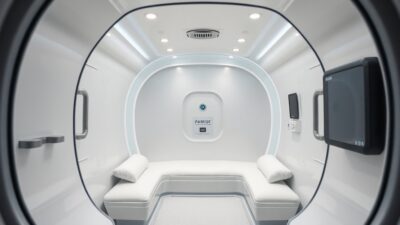
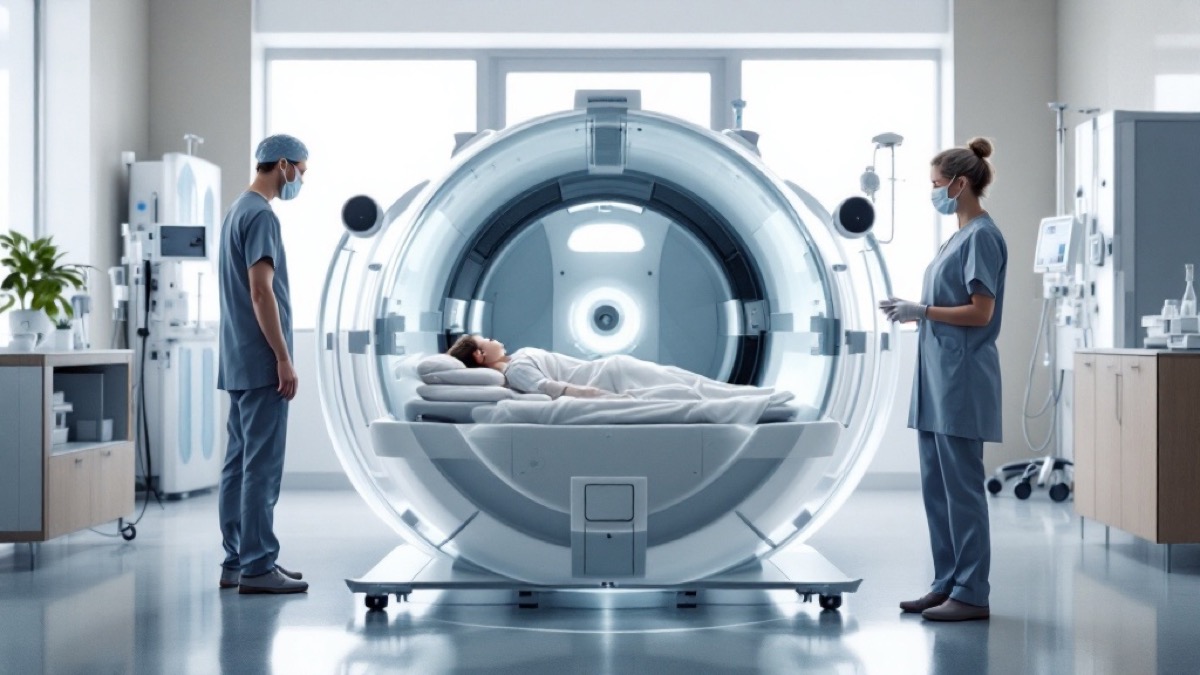
Monoplace units fit a single patient and use 100% oxygen for pressurization. Multiplace chambers fit several patients plus medical staff using compressed air, with patients breathing oxygen through a mask. Neither type uses any liquid. Key design features that prevent accidents include:
- Clear acrylic walls in monoplace chambers, letting operators watch continuously
- Two-way communication systems connecting patients with operators at all times
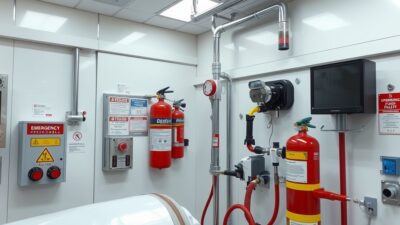
- Emergency release controls that can quickly lower chamber pressure if needed
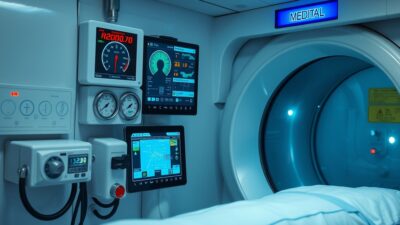
- Medical-grade oxygen delivery with backup supplies and automatic shut-offs
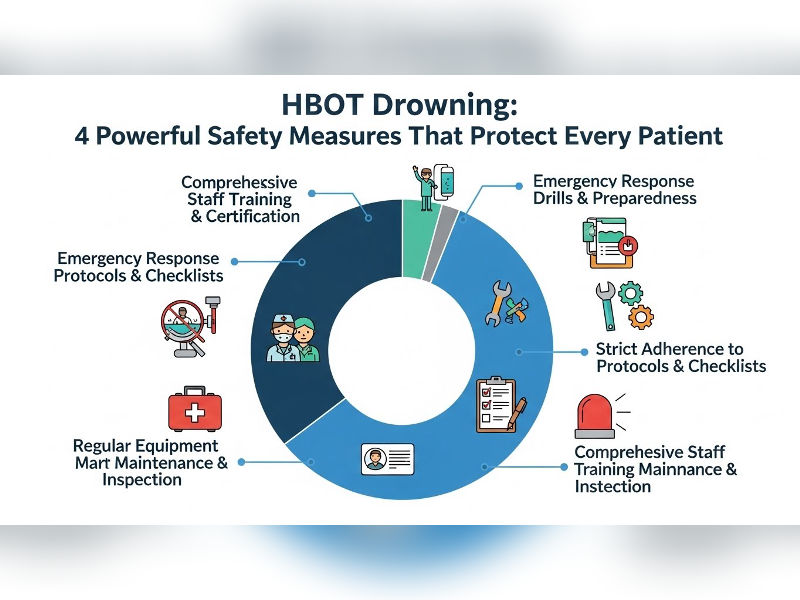
Facilities layer four safety protocols on top of that engineering. First, comprehensive pre-treatment medical screening happens before every session, not just the first, to catch heart, lung, or seizure conditions that raise risk. Second, continuous operator supervision maintains visual and verbal contact throughout. Third, stringent equipment maintenance covers pressure tests, oxygen systems, gauges, and decompression controls on strict schedules. Fourth, every facility runs emergency response drills so staff can react immediately to any medical event.
| Safety Measure | Primary Function | Frequency |
| Patient screening | Find risk factors before treatment | Before each session |
| Operator monitoring | Spot trouble in real time | Continuous during treatment |
| Equipment inspection | Stop mechanical failures | Weekly to monthly |
| Emergency drills | Keep staff ready for crisis response | Quarterly or as required |
HBOT for Near-Drowning: What the Evidence Shows
Near-drowning causes brain injury through cerebral hypoxia, the same pathway HBOT addresses by sharply increasing dissolved oxygen in plasma. That overlap has prompted researchers to test HBOT as an adjunct for drowning survivors with hypoxic-ischemic encephalopathy (HIE). The evidence sits at the case series and case report level. No randomized controlled trials exist for HBOT in near-drowning, and HBOT is not FDA-cleared for drowning or HIE. Standard drowning care (CPR, advanced life support, ICU management) is the immediate priority, with HBOT a secondary, investigational consideration after stabilization.
A 2025 retrospective case series of 21 children with acquired brain injuries, including HIE from drowning, found that HBOT improved Glasgow Coma Scale scores from 10.7 to 12.3 (P = 0.004, effect size r = 0.645), with 72% showing clinically meaningful improvement. Children who started HBOT within four weeks of injury responded significantly better than those who waited longer (P = 0.02).2
An earlier case series specifically in non-fatal drowning HIE reported similar signal, and a case report documented full recovery in a child after cardiac arrest from drowning treated with combined resuscitation and HBOT.14
Near-Drowning HBOT Evidence at a Glance
| Study | Design | N | Outcome |
|---|---|---|---|
| Hajek et al., 2025 | Retrospective case series | 21 children | 72% clinically meaningful improvement; GCS 10.7 to 12.3; best if started within 4 weeks |
| Ribeiro et al., 2021 | Case series | Non-fatal drowning HIE | Functional and neurological gains reported with adjunctive HBOT |
| Harch & Fogarty, 2017 | Case report (serial MRI) | 1 child | Near-complete reversal of cortical atrophy; recovered speech and walking |
| Tsai et al., 2006 | Case report | 1 child | Full recovery after cardiac arrest from drowning plus HBOT |
The single most cited case is a pediatric drowning survivor whose serial MRI scans showed near-complete reversal of cortical brain atrophy following a course of hyperbaric and normobaric oxygen, with the child recovering alertness, speech, and independent walking. Harch and Fogarty documented this case in Medical Gas Research in 2017.3 The rationale is mechanistically sound: drowning injures the brain through oxygen deprivation, and HBOT delivers oxygen at concentrations 10 to 15 times normal, potentially reaching tissue that standard oxygen cannot access through edematous or damaged microvasculature.56 The timing signal, better outcomes within four weeks, is consistent with the neuroplasticity window seen in other HBOT applications for brain injury. The overlap with cerebral hypoxia is why this topic connects to our broader guide on HBOT for brain and neurological conditions.
What Fluid-Related Risks Are Real During HBOT?
Actual HBOT incidents involving fluid are exceptionally rare, and when they happen they are usually signs of an existing medical condition rather than accidents caused by the therapy. Pulmonary edema is the most relevant concern. Fluid can build up in the lungs and make breathing difficult, typically in patients with existing heart or kidney disease, because the hyperbaric environment can shift fluid balance in vulnerable people. That is why cardiac evaluation is a core part of pre-treatment assessment.
Seizures are a second consideration. High-pressure oxygen can trigger seizures in people already at risk, which is why screening for seizure disorders matters and why patients are never left alone during sessions. Sinus and ear barotrauma can also occur if the sinuses or ears do not equalize properly with pressure changes. This is uncomfortable and needs attention, but it is not life-threatening. For population-level numbers on how often adverse events occur, see our data page on HBOT side effect statistics.
What Happens During a Typical Session
You start with a check-in where staff confirm you are feeling well and review your health status. They remind you of the safety rules: no petroleum products, no lighters, nothing that could create a fire risk in the oxygen-rich environment. Our guide to hyperbaric chamber fire safety explains why these rules exist.
Once inside, pressurization starts slowly. You feel pressure changes in your ears, like an airplane descent, and equalize by swallowing or yawning. This slow pressurization lets your body adjust and gives operators time to watch for any reaction. During treatment you breathe 100% oxygen at elevated pressure for 60 to 90 minutes, with the operator watching continuously and reachable by intercom. The decompression phase at the end reverses the process slowly, and staff document how you feel afterward.
Choosing a Safe Treatment Center
Not all hyperbaric centers are equal. Look for facilities accredited by the Undersea and Hyperbaric Medical Society (UHMS) or certified by The Joint Commission. Ask about staff qualifications; hyperbaric technicians should have specialized certification in chamber operation, with a physician on-site or on-call. Check the screening process, since a quality center will not rush you into treatment. Tour the facility if possible, and expect clean equipment, clear emergency exits, proper ventilation, and organized treatment areas.
Be honest about your medical history. Avoid HBOT with an untreated pneumothorax (collapsed lung), because pressure changes could worsen it. Some chemotherapy regimens are incompatible with hyperbaric oxygen, so your oncologist decides on timing. Claustrophobia can be managed with a multiplace chamber or, at some facilities, anti-anxiety medication. HBOT has been used safely in pregnancy for emergencies like carbon monoxide poisoning, but it is not routine because of limited fetal safety data. The broader picture of chamber safety, including comparison against real incident data, is covered in our analysis of hyperbaric chamber deaths and safety data.
Frequently Asked Questions
Can you actually drown in a hyperbaric chamber during treatment?
No. Drowning cannot happen in a hyperbaric chamber because these are dry, gas-pressurized spaces with no water at any stage. The term “HBOT drowning” more accurately describes rare medical complications like pulmonary edema, which can occur in vulnerable patients with existing heart conditions rather than as an accident caused by the chamber. Facilities screen for those cardiac risks before every session precisely to prevent them.
What medical conditions create the highest risk for fluid complications during HBOT?
Uncontrolled heart failure and severe kidney disease carry the highest risk. Pressure can shift fluids and oxygen levels can rise quickly, which may cause pulmonary edema in a vulnerable patient. This is why cardiac and renal evaluation is part of pre-treatment screening, and why patients with these conditions are often excluded or treated only under close monitoring. Screening happens before each session, not only at the first visit.
Can HBOT help with near-drowning brain injuries?
The evidence is at the case series and case report level, but the biological rationale is sound. A 2025 retrospective series of 21 pediatric brain injury patients found 72% showed meaningful improvement after HBOT, with earlier treatment (within four weeks) producing better outcomes (Hajek et al., 2025). HBOT is investigational for this use and is not FDA-cleared for drowning or HIE. It should be discussed with a hyperbaric medicine specialist only after the patient is stabilized with standard life support.
What safety certifications should I look for in a hyperbaric center?
Look for UHMS accreditation or Joint Commission certification, along with certified hyperbaric technicians and physician oversight. These confirm the facility meets established standards for equipment maintenance, staff training, emergency preparedness, and patient screening. Ask how often equipment is inspected and whether a physician is available on-site or on-call during treatment. A center that screens carefully and answers these questions clearly is a safer choice.
Sources
- Ribeiro AF, Vieira J, Moniz M, et al. Hyperbaric oxygen therapy for hypoxic-ischemic encephalopathy in non-fatal drowning. Undersea Hyperb Med. 2021;48(1):49-56. DOI: 10.22462/01.03.2021.6
- Hajek M, et al. Hyperbaric Oxygen Therapy in Children with Brain Injury: A Retrospective Case Series. Int J Med Sci. 2025;22(3):473-483. DOI: 10.7150/ijms.102884
- Harch PG, Fogarty EF. Subacute normobaric oxygen and hyperbaric oxygen therapy in drowning, reversal of brain volume loss: a case report. Med Gas Res. 2017;7(2):144-149. DOI: 10.4103/2045-9912.208521
- Tsai MC, Juan CD, Hwang DY. Successful HBOT for a cardiac arrest child with drowning. J Emerg Med (Taiwan). 2006. Case report; no DOI assigned.
- Li D, et al. The effects of hyperbaric oxygen therapy on neuroprotection and recovery after brain resuscitation. Int J Neurosci. 2024. DOI: 10.1080/00207454.2024.2346172
- Hadanny A, Efrati S. The Hyperoxic-Hypoxic Paradox. Biomolecules. 2020;10(6):958. DOI: 10.3390/biom10060958
Medical Disclaimer
The content on BaricBoost.com is for informational purposes only and is not intended as a substitute for professional medical advice, diagnosis, or treatment. Always seek the advice of your physician or other qualified health provider with any questions you may have regarding a medical condition. Never disregard professional medical advice or delay in seeking it because of something you have read on this website.

Author
Seph Fontane Pennock is the founder of BaricBoost.com and Regenerated.com, a clinic directory for regenerative medicine serving 10,000+ providers across the United States. He previously built and sold PositivePsychology.com, which grew to 19 million users and became the largest evidence-based positive psychology resource on the web. Seph brings direct experience as an HBOT patient, having completed protocols at clinics across three continents while navigating mold illness, systemic inflammation, and autoimmune conditions. His treatment journey includes hyperbaric oxygen therapy, peptide protocols, NAD+ therapy, and consultations with specialists from Dubai to Cape Town to Mexico. This combination of entrepreneurial track record and lived patient experience shapes everything published on BaricBoost.com. Every article is grounded in peer-reviewed research, informed by real clinical encounters, and written for patients making high-stakes treatment decisions. Seph's focus is on bringing transparency, scientific rigor, and practical guidance to the hyperbaric oxygen therapy space.