A Cochrane review of 9 trials found that HBOT relieves acute migraine pain, but the evidence for preventing future attacks is weak.3 In one randomized trial, 9 of 10 patients had significant relief during HBOT sessions.1 The distinction matters: high-flow oxygen is well established for cluster headaches, while HBOT’s role in migraine is still preliminary. It sits among a broader group of pain conditions studied with HBOT.
How Might HBOT Help Migraines?
Migraine pathophysiology is complex and incompletely understood. Current models point to cortical spreading depolarization, neurogenic inflammation, and dysfunction in brainstem pain-modulating circuits. Several proposed mechanisms explain why pressurized oxygen could affect these processes, though each is mechanistic rather than proven in migraine. We explore related brain applications in our page on HBOT for concussion recovery.
Migraine patients found significant relief with HBOT at 2 ATA, versus 1 of 10 with normobaric oxygen, in a small randomized report.
Myers & Myers, Headache, 1995
Reduced Cerebral Inflammation
Neurogenic inflammation plays a central role in migraine attacks. Release of calcitonin gene-related peptide (CGRP) and other neuropeptides triggers vasodilation and inflammation around meningeal blood vessels. HBOT reduces pro-inflammatory cytokines such as TNF-alpha and IL-6 in other settings, and researchers hypothesize that this could dampen the neuroinflammatory cascade in migraine.
Improved Cerebral Blood Flow and Oxygen Delivery
Some migraine patients show cerebral hypoperfusion, particularly during the aura phase. By raising the partial pressure of dissolved oxygen in blood, HBOT delivers oxygen to brain tissue even when hemoglobin-based transport is compromised. This hyperoxygenation may help normalize blood flow patterns and reduce the ischemic-like conditions some researchers link to attacks.
Nitric Oxide Pathway Modulation
Nitric oxide (NO) is a potent vasodilator implicated in migraine. Elevated NO can trigger attacks in susceptible individuals, and several acute medications work partly by counteracting NO-mediated vasodilation. HBOT influences NO metabolism, including nitric oxide synthase activity, which may help regulate the vascular tone disruptions associated with migraine.
Neuroplasticity and Pain Sensitization
Chronic migraine involves central sensitization, where pain-processing networks become increasingly reactive over time. HBOT research in traumatic brain injury and fibromyalgia suggests repeated sessions may promote neuroplastic change in pain-processing regions. Whether this translates to meaningful migraine benefit is an open question. See our page on HBOT for fibromyalgia for the parallel evidence.
What Does the Research Say About HBOT for Migraines?
Research on HBOT specifically for migraine is limited in both quantity and quality. A Cochrane systematic review of normobaric and hyperbaric oxygen for migraine and cluster headache found evidence that HBOT can reduce pain in acute migraine attacks, but the included studies were small and methodologically varied, and the reviewers called for larger randomized trials before any clinical recommendation.3
Individual small studies have reported positive findings, including reduced migraine frequency and severity versus sham and improvements in monthly migraine days.5 These trials typically enrolled fewer than 50 participants, used varying protocols, and had short follow-up. A randomized prophylaxis study by Eftedal and colleagues found no significant preventive benefit, which is why acute relief and prevention are graded differently.4
Sham-controlled HBOT trials are hard to design because participants may detect pressure changes, potentially unblinding the study. That limitation makes it harder to separate true therapeutic effect from expectation-driven improvement. For a broader view of the field, see our HBOT research overview.
Is HBOT the Same as Oxygen Therapy for Headaches?
No, and the difference is the single most important point on this page. High-flow normobaric oxygen for cluster headache is delivered at ordinary atmospheric pressure and is strongly evidence-backed. HBOT for migraine uses a pressurized chamber and has only preliminary evidence. Conflating the two is the most common error in marketing.
Cluster Headache Oxygen vs HBOT for Migraine
| Feature | Cluster headache | Migraine |
|---|---|---|
| Oxygen type | Normobaric high-flow (12-15 L/min mask) | Hyperbaric oxygen (1.5-2.4 ATA chamber) |
| Pressure | Normal atmospheric | Pressurized chamber |
| Evidence level | First-line, RCT-backed | Preliminary, small trials |
| Guideline status | Endorsed (American Headache Society) | No guideline recommendation |
| Typical response | ~70% acute relief | Inconsistent, study-dependent |
High-flow normobaric oxygen (12 to 15 liters per minute via non-rebreather mask for 15 to 20 minutes) is a first-line acute treatment for cluster headache, backed by multiple randomized trials and endorsed by the American Headache Society, with roughly 70% of patients experiencing significant relief. This is not HBOT. If someone says “oxygen therapy works for headaches,” they are usually citing the cluster headache data, which does not transfer to migraine. Be cautious of clinics that blur the two conditions.
What HBOT Protocol Is Used for Migraines?
There is no standardized HBOT protocol for migraine, largely because the research has not defined optimal parameters. Studies and clinics that offer it tend to use the following range:
- Pressure: 1.5 to 2.4 ATA, with most migraine studies between 1.5 and 2.0 ATA
- Session duration: 60 to 90 minutes
- Number of sessions: typically 10 to 20 over 2 to 6 weeks
- Frequency: usually 5 sessions per week
The lack of standardization means experiences vary by provider. For what a course involves, see our guide to HBOT sessions.
What Should You Expect During HBOT?
Before treatment: you will typically have a consultation to review your medical history and migraine patterns. The provider should discuss the limited evidence honestly and set realistic expectations, and will ask about contraindications including untreated pneumothorax, certain ear conditions, and claustrophobia during HBOT.
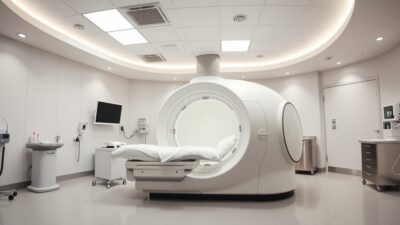
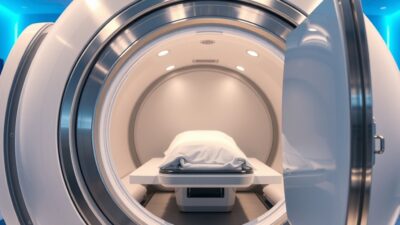
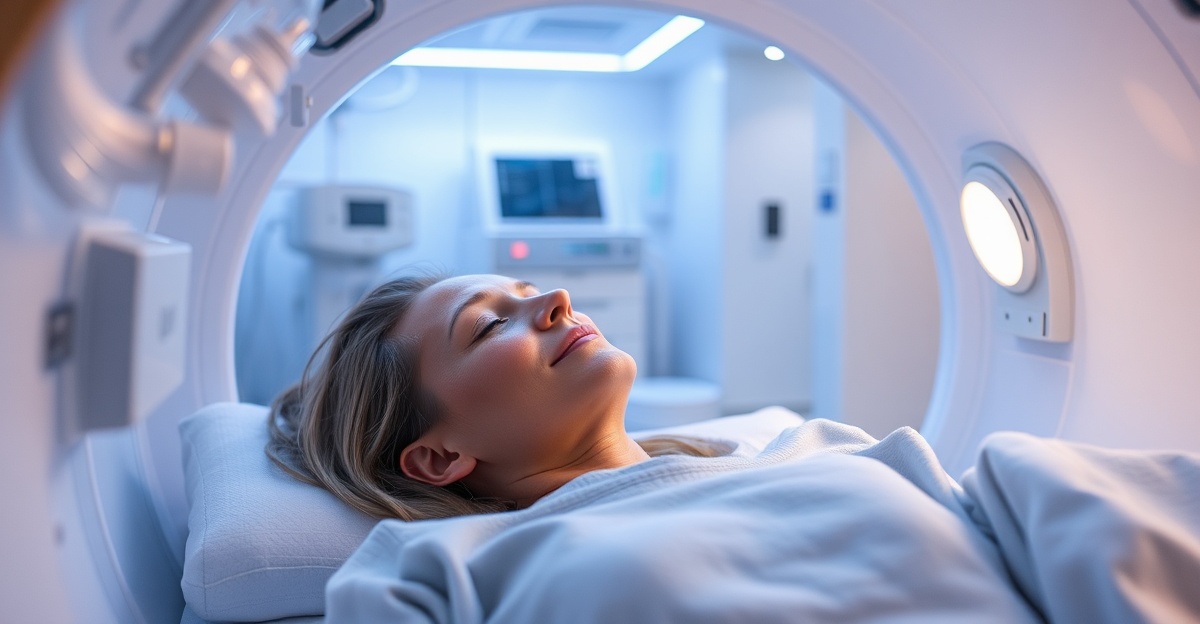
During treatment: you enter a pressurized chamber. As it pressurizes, you feel ear pressure similar to an airplane descent and equalize by swallowing, yawning, or the Valsalva maneuver. At target pressure you breathe normally or through a mask for the prescribed time.
After treatment: sessions are generally well tolerated. Some people feel briefly lightheaded or fatigued, and ear discomfort is the most common side effect. See our guide to HBOT side effects.
Cost: HBOT for migraine is unlikely to be covered by insurance, as it is not an FDA-approved indication. Sessions typically cost $200 to $400 each, so a 20-session course can run $3,000 to $8,000 out of pocket. See our HBOT cost guide and insurance guide for details.
Reviewed in the Cochrane analysis, which found HBOT relieves acute migraine pain but does not demonstrate a preventive effect.
Bennett et al., Cochrane, 2008
Frequently Asked Questions
Can HBOT cure migraines?
There is no evidence that HBOT cures migraines. Some small studies suggest it may reduce the frequency or intensity of attacks in certain patients, but it has not been shown to eliminate migraines (Bennett et al., 2008). Migraine is a complex neurological condition with multiple contributors, and no single treatment cures it for most people. HBOT should be viewed as a potential complementary approach, not a replacement for established migraine management.
Is HBOT safe for people who get migraines with aura?
HBOT is generally considered safe for migraine patients, including those with aura, and a small 1998 study looked specifically at migraine with aura (Wilson et al., 1998). Because aura involves transient cortical changes and some cerebral blood flow alteration, it is reasonable to discuss this with both your neurologist and the HBOT provider before starting. The standard HBOT contraindications apply regardless of migraine subtype.
How many HBOT sessions are needed to see results for migraines?
Most studies used 10 to 20 sessions, with some patients reporting improvement after the first 5 to 10. Individual responses vary widely, and some complete a full course without noticeable benefit. Given the cost per session and the limited evidence, it is worth setting a clear evaluation point with your provider. If you notice no change after 10 sessions, continuing may not be worthwhile.
Sources
- Myers DE, Myers RA. “A Preliminary Report on Hyperbaric Oxygen in the Relief of Migraine Headache.” Headache, 1995. 10.1111/j.1526-4610.1995.hed3504197.x
- Wilson JR, et al. “Hyperbaric Oxygen in the Treatment of Migraine With Aura.” Headache, 1998. 10.1046/j.1526-4610.1998.3802112.x
- Bennett MH, French C, Schnabel A, et al. “Normobaric and hyperbaric oxygen therapy for the treatment and prevention of migraine and cluster headache.” Cochrane Database Syst Rev, 2008. 10.1002/14651858.CD005219.pub2
- Eftedal OS, Lydersen S, Helde G, et al. “A randomized, double blind study of the prophylactic effect of hyperbaric oxygen therapy on migraine.” Cephalalgia, 2004. 10.1111/j.1468-2982.2004.00724.x
- Shafee R, Hamzah MA, Muniandy RK. “A Successful Treatment of Chronic Migraine With Hyperbaric Oxygen Therapy.” EMJ Neurology, 2021. 10.33590/emjneurol/20-00262
- Undersea and Hyperbaric Medical Society. “HBO Therapy Indications, 13th Edition,” 2020. UHMS
Medical Disclaimer
The content on BaricBoost.com is for informational purposes only and is not intended as a substitute for professional medical advice, diagnosis, or treatment. Always seek the advice of your physician or other qualified health provider with any questions you may have regarding a medical condition. Never disregard professional medical advice or delay in seeking it because of something you have read on this website.

Author
Seph Fontane Pennock is the founder of BaricBoost.com and Regenerated.com, a clinic directory for regenerative medicine serving 10,000+ providers across the United States. He previously built and sold PositivePsychology.com, which grew to 19 million users and became the largest evidence-based positive psychology resource on the web. Seph brings direct experience as an HBOT patient, having completed protocols at clinics across three continents while navigating mold illness, systemic inflammation, and autoimmune conditions. His treatment journey includes hyperbaric oxygen therapy, peptide protocols, NAD+ therapy, and consultations with specialists from Dubai to Cape Town to Mexico. This combination of entrepreneurial track record and lived patient experience shapes everything published on BaricBoost.com. Every article is grounded in peer-reviewed research, informed by real clinical encounters, and written for patients making high-stakes treatment decisions. Seph's focus is on bringing transparency, scientific rigor, and practical guidance to the hyperbaric oxygen therapy space.